Evolution of AI Clusters and the Limitations of DAC/AOC
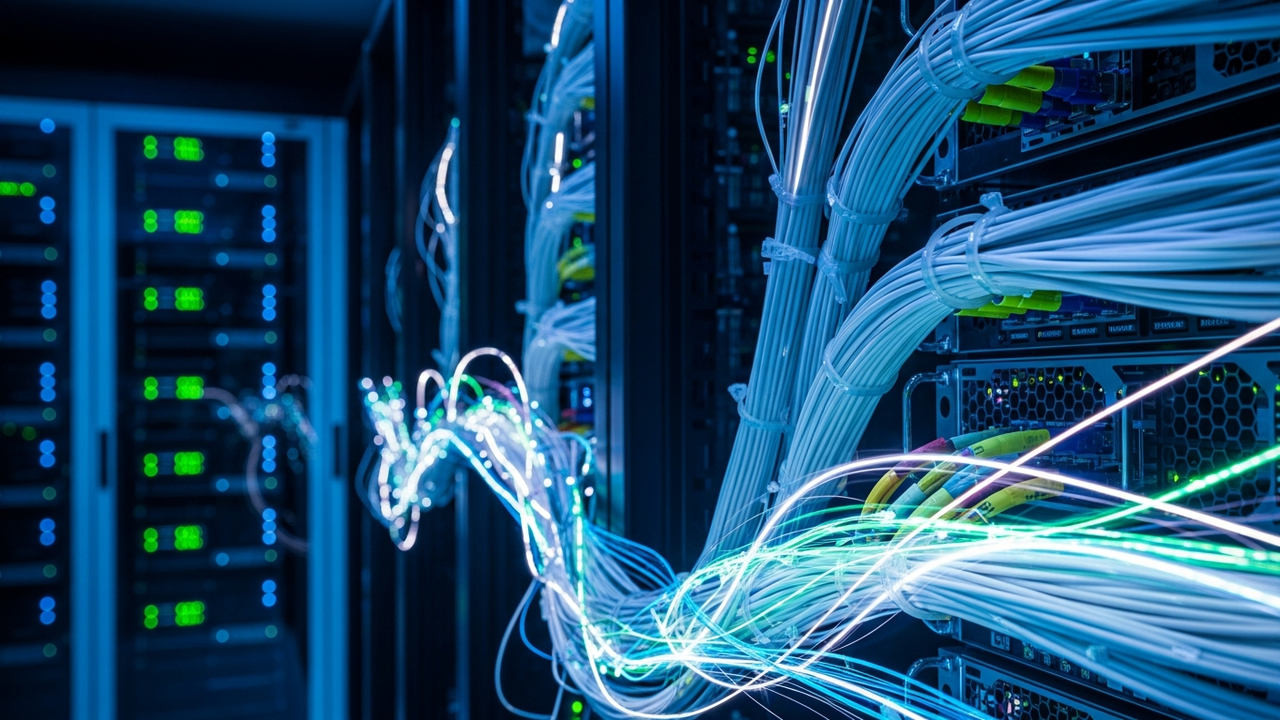
The expansion of generative AI workloads is placing unprecedented demands on data center infrastructure. Large-scale GPU clusters, in particular, require ultra-high-speed, low-latency data transfer between GPUs, servers, and racks. Previously, Direct Attach Cables (DAC) and Active Optical Cables (AOC) were widely used for short-distance connections within server racks and adjacent racks due to their low cost and ease of deployment. However, as next-generation high-speed interconnects like 800G and 1.6T become prevalent, the physical distance limitation of DACs (approximately 5 meters) and the obstruction of airflow within racks by their thick, rigid cables have become apparent. AOCs also face challenges with the trade-off between distance and cost.
The Imperative for Structured Fiber Cabling
As AI clusters scale to tens or hundreds of racks, these limitations of DAC/AOC significantly impede overall system performance and operational efficiency. Therefore, a “structured fiber optic cabling system” that enables longer-distance and higher-density connections has become indispensable. Fiber optic cables surpass DAC/AOCs in the following aspects:
- Reach and Scalability: They can flexibly accommodate long-distance connections of 30m, 50m, 100m, and even beyond, spanning multiple racks and rows. This allows AI clusters to be physically distributed while maintaining high-speed interconnectivity. With 1.6T DR8-2 transceivers, reaches of up to 2000m are possible.
- Improved Airflow and Thermal Design: Thin, flexible fiber optic cables resolve the poor airflow issues caused by thick, rigid DACs, dramatically improving airflow and thermal design within racks. This enhances cooling efficiency and contributes to reducing data center operational costs.
- Future Flexibility: Fiber optic infrastructure provides an easy upgrade path to faster, next-generation transceivers (e.g., 3.2T and beyond), protecting long-term capital investments.
Industry Impact and Future Outlook
In the construction of AI data center physical infrastructure, the transition from DAC/AOC to fiber optic cables and their corresponding structured cabling systems is an inevitable trend. This presents significant business opportunities for optical cable manufacturers and infrastructure solution providers. However, challenges remain, including initial deployment costs, migration costs from existing infrastructure, and the securing of skilled installers. To maximize the performance and efficiency of AI clusters, the importance of structured fiber cabling, which forms the physical backbone for optical transceivers, will continue to grow.





Comments