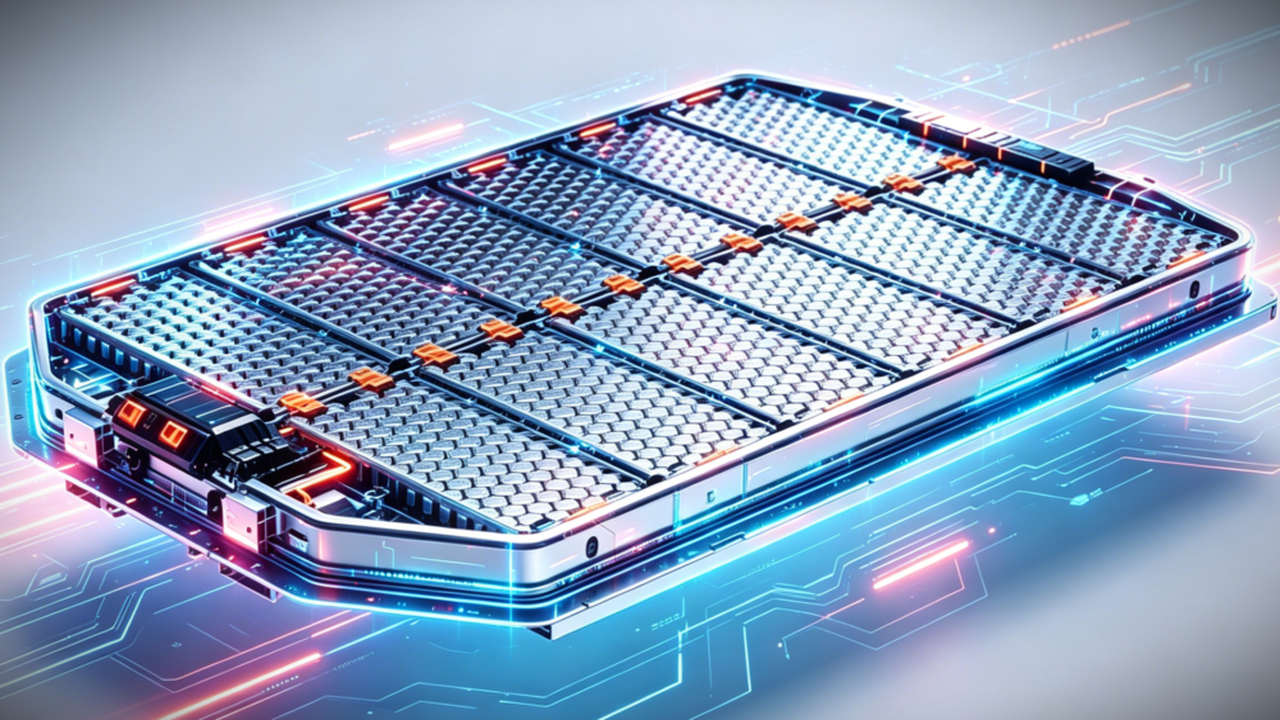
Background and Technical Challenges
The commercialization of all-solid-state batteries (ASSBs) requires breakthroughs in safety, energy density, and manufacturability. Ensuring battery safety, especially under physical damage, is paramount for their widespread adoption in electric vehicles (EVs) and other applications. Furthermore, challenges such as high interfacial resistance between electrodes and solid electrolytes, and the suppression of lithium dendrite formation, remain key technical hurdles for solid-state systems.
Key Findings and Technical Breakthroughs
Pure Lithium New Energy, a Chinese startup, announced that its 500 MWh all-solid-state battery production line in Lankao, Henan, has reached full operational capacity. The company further plans to commission a GWh-scale factory within 2026, indicating rapid progress toward the mass production of ASSBs.
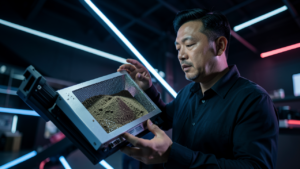
During CIBF 2026, Pure Lithium conducted a live demonstration of its solid-state battery’s superior safety. Even after a cell was physically cut, it continued to supply power to an external device, unequivocally demonstrating the absence of thermal runaway or fire—a critical advantage over traditional liquid electrolyte batteries, particularly for impact-prone applications like EVs.
The first generation of Pure Lithium’s solid-state batteries utilizes a lithium iron phosphate (LFP) cathode and a graphite anode, achieving the following performance metrics:
- Energy Density: 180-190 Wh/kg
- Cycle Life: 6,000-8,000 cycles with capabilities at rates exceeding 1C
- Safety: Continued operation after a cut test; certified by CNAS safety tests.
The company has developed proprietary organic-inorganic composite electrolytes and a supercritical coating process to improve conductivity and interfacial stability between the electrolyte and electrodes. The next generation of their products aims for an energy density exceeding 200 Wh/kg.
Technical Significance and Outlook
Pure Lithium’s announcement signals that ASSBs, offering comparable or superior safety and longevity to existing lithium-ion batteries, are rapidly entering mass production in China. The company prioritizes initial commercial applications in energy storage systems and battery swap stations for two-wheelers, rather than immediate, full-scale EV integration. This strategic approach allows for practical deployment and market penetration before broader EV adoption. While the current energy density of 180-190 Wh/kg is modest for some EV applications, the exceptional safety and extended cycle life offer significant competitive advantages in specific niche markets.
Future challenges include cost reduction and stringent quality control for GWh-scale production, along with further increases in energy density for next-generation products. China’s leading position in this sector is set to significantly reshape the global battery market landscape.



Comments