Background
Perovskite solar cells continue to capture global attention from researchers and industry, touted as a next-generation photovoltaic technology. Their high power conversion efficiency, reaching 27% in the past decade, and low-cost manufacturing potential position them as a strong contender to traditional silicon solar cells, especially in tandem configurations where they promise exceptionally high theoretical efficiencies when combined with silicon. However, despite their remarkable performance, their long-term operational stability remains a critical challenge for practical deployment. The paramount barrier to widespread commercialization has been their inherent instability when exposed to environmental stressors such as humidity, heat, and light. Resolving this stability issue is critical; its breakthrough would accelerate the widespread adoption of perovskite solar cells across diverse applications, from rooftop installations and large-scale solar farms to flexible electronics and Building-Integrated Photovoltaics (BIPV).
Key Findings
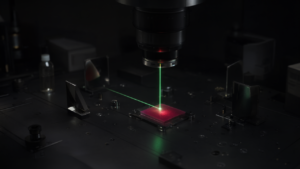
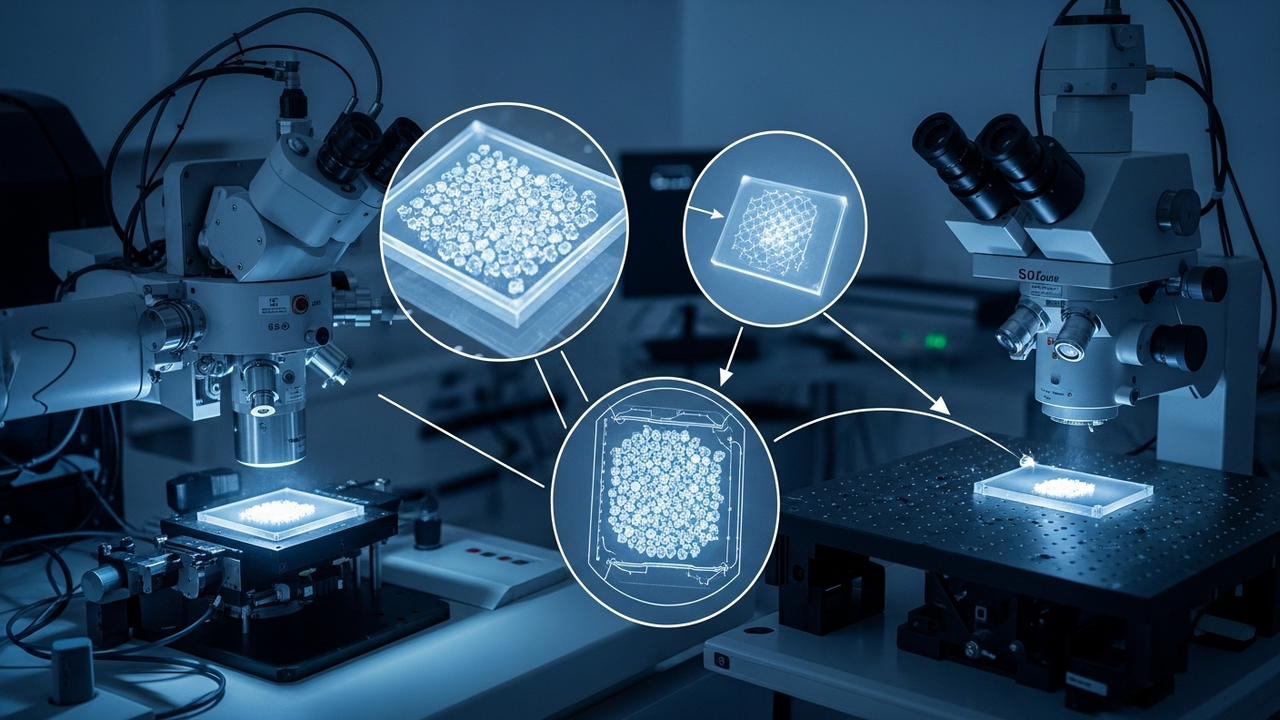
The fundamental challenge to perovskite longevity stems from electric-field-driven ion migration within the device’s conventional vertical structure. This movement precipitates degradation at the interface between the active absorption layer and the electrodes, leading to performance decay and shortened operational lifespan. Recent advancements in back-contacted single-crystal perovskite solar cells offer a compelling solution by radically reconfiguring the device architecture. This design places both electrodes on the same side, a significant departure from traditional vertical setups. Crucially, this arrangement entirely eliminates the need for transparent conductive oxide (TCO) electrodes, which are conventionally costly to manufacture and contribute to resistive losses. By bypassing TCOs, back-contacted designs promise reduced manufacturing energy input and substantial cost savings. Furthermore, this innovative architecture is posited to physically redirect or suppress ion migration pathways, directly mitigating interface degradation and significantly enhancing long-term operational stability. The integration of single-crystal perovskite materials further refines this approach, contributing to intrinsically lower defect densities and optimized charge transport, thus bolstering both efficiency and stability.
This architectural innovation is poised to be a pivotal driver for the commercialization of perovskite technology. By effectively suppressing electrode interface degradation and eliminating the necessity for TCO electrodes, these cells directly contribute to extending device lifespan and significantly reducing manufacturing costs, thereby increasing the overall energy generation lifetime. While acknowledging the need for further optimization and scalable manufacturing processes, the robust achievement of enhanced stability and efficiency positions back-contacted single-crystal perovskite solar cells to become major players in the renewable energy market. This advancement could profoundly accelerate the global energy transition by elevating the cost-effectiveness of solar power to unprecedented levels, paving the way for a more sustainable future.
Source: https://www.mdpi.com/1996-1944/19/11/2415
Get our weekly technology intelligence — free
Receive an infographic that lets you judge at a glance whether each field’s analysis report is worth reading.
Subscribe Free — Weekly Tech Intelligence
By subscribing, you’ll receive Troy-Technical’s weekly technology intelligence newsletter.
- Your email and selected fields are used only to deliver the newsletter.
- We never share your information with third parties.
- You can unsubscribe anytime via the link in each email.
See our Privacy Policy for details.
Takes about a minute · Unsubscribe anytime