Key Findings
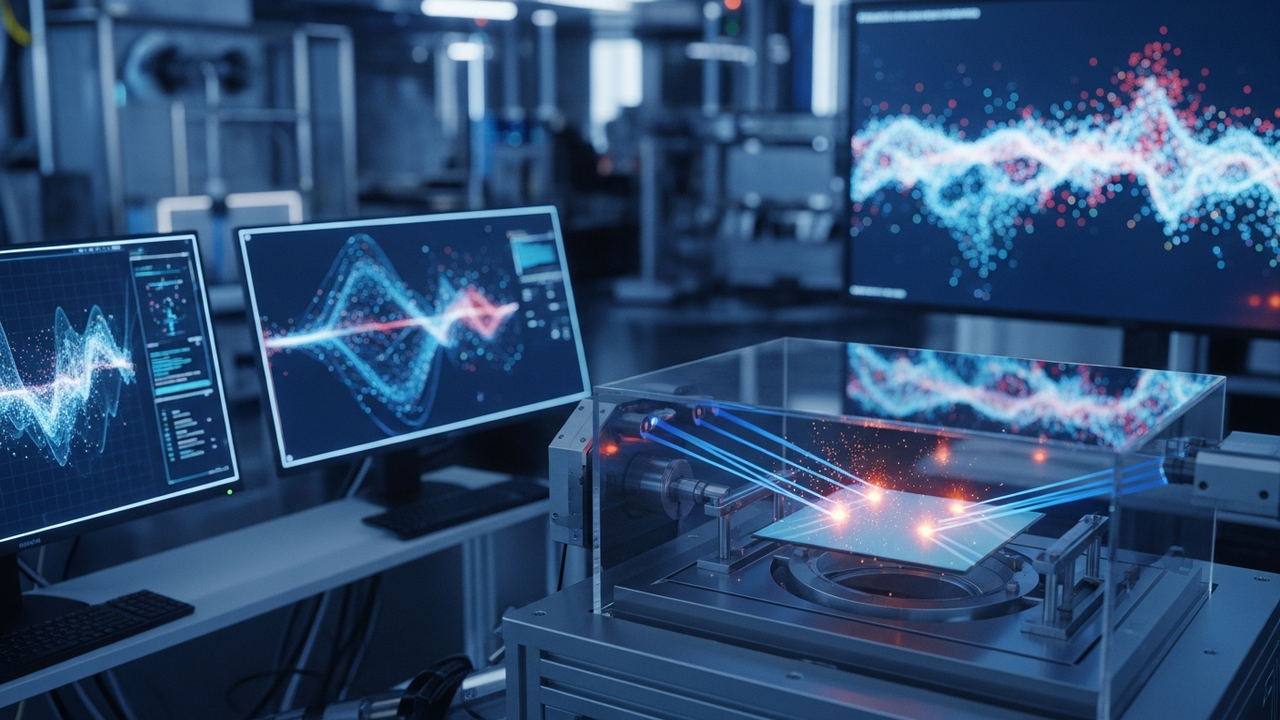
The Universal Machine-Learned Interatomic Potential (MLIP) model, UMA, developed by Meta FAIR, has been demonstrated to accurately model the interactions between tungsten disulfide (WS2) — a two-dimensional (2D) material — and oxygen plasma. Crucially, the study showed that further fine-tuning of this pre-trained general-purpose model significantly improved its predictive performance. This research validates that such models can reproduce key observables in complex physicochemical processes like plasma-surface interactions, successfully reducing the mean absolute errors for both energy and forces. This technology is vital for optimizing plasma etching processes in the precision fabrication and device manufacturing of 2D materials.
Technical / Clinical Details
Plasma-surface interactions are central to various semiconductor manufacturing processes, including thin-film deposition, etching, and surface modification. For 2D materials, whose atomic-scale thinness means surface reactivity directly impacts device performance, a precise understanding of these interactions is indispensable. The UMA model is a universal MLIP built on a massive dataset trained across diverse atomic environments, enabling high predictive performance for a wide range of material systems. Key aspects highlighted in this research include:
- Versatility of the UMA Model: During its pre-training phase, UMA incorporated data from numerous systems containing oxygen and tungsten atoms, endowing it with the fundamental physical and chemical knowledge required to describe WS2-oxygen plasma interactions. This allowed it to reproduce the major plasma-surface interaction behaviors at an initial stage.
- Accuracy Improvement via Fine-Tuning: The UMA model was fine-tuned using a small amount of ab initio calculation data (first-principles calculation data) specific to WS2-oxygen plasma interactions. This process allowed the model to learn detailed interaction patterns specific to this chemical system, successfully reducing the mean absolute error for energy and forces (specific numerical reduction not provided in summary, thus omitted). This enhancement in accuracy dramatically increases the reliability of simulations.
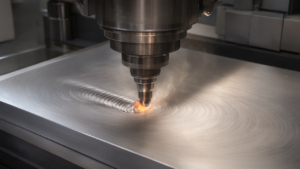
- Implications for Plasma Etching: High-precision MLIPs provide invaluable information for elucidating plasma etching mechanisms at the atomic level, optimizing process parameters such as etch rates, selectivity, and surface damage. This enables more precise process control in the manufacturing of next-generation 2D material-based transistors and sensors.
Background & Context
The semiconductor industry is facing the limits of Moore’s Law and is actively seeking new materials and architectures. 2D materials are considered highly promising candidates for next-generation devices due to their exceptional electrical and mechanical properties. However, establishing precise fabrication techniques, including plasma processes, is crucial for industrial-scale manufacturing of 2D materials. Plasma processes are notoriously complex, and experimental optimization is time-consuming and costly. Computational tools like MLIPs offer an efficient means to explore and optimize process conditions in a virtual environment, addressing this challenge. The involvement of leading AI companies like Meta FAIR underscores the significant technological importance of this field.
Strategic Significance & Outlook
The high-precision modeling of 2D material-plasma interactions achieved by fine-tuning the UMA model will significantly contribute to innovations in semiconductor device manufacturing processes. Future applications are expected to extend to other 2D materials and different plasma species (e.g., fluorine, chlorine). Furthermore, the development of multi-scale simulations incorporating MLIPs will enable predictions from atomic-level interactions to the macroscopic behavior of entire devices. This will facilitate AI-driven plasma process optimization, accelerating the commercialization of new 2D material-based AI chips and sensors, and ultimately shaping the future of the electronics industry.
Source: https://arxiv.org/abs/2606.21632
Get our weekly technology intelligence — free
Receive an infographic that lets you judge at a glance whether each field’s analysis report is worth reading.
Subscribe Free — Weekly Tech Intelligence
By subscribing, you’ll receive Troy-Technical’s weekly technology intelligence newsletter.
- Your email and selected fields are used only to deliver the newsletter.
- We never share your information with third parties.
- You can unsubscribe anytime via the link in each email.
See our Privacy Policy for details.
Takes about a minute · Unsubscribe anytime