Key Findings
Atinary Technologies has showcased a fundamental transformation in research and development processes through closed-loop experiments conducted in self-driving labs (SDLs), which seamlessly integrate AI, robotics, and human scientific expertise. The company’s SDLabs® platform, integrated with existing automation systems such as Chemspeed’s Flex iSynth and Bruker’s NMR, has demonstrated significant achievements in catalyst optimization, enhanced process safety, and resource conservation. This is expected to dramatically boost the efficiency and speed of material development and process optimization within the chemical industry.
Technical / Clinical Details
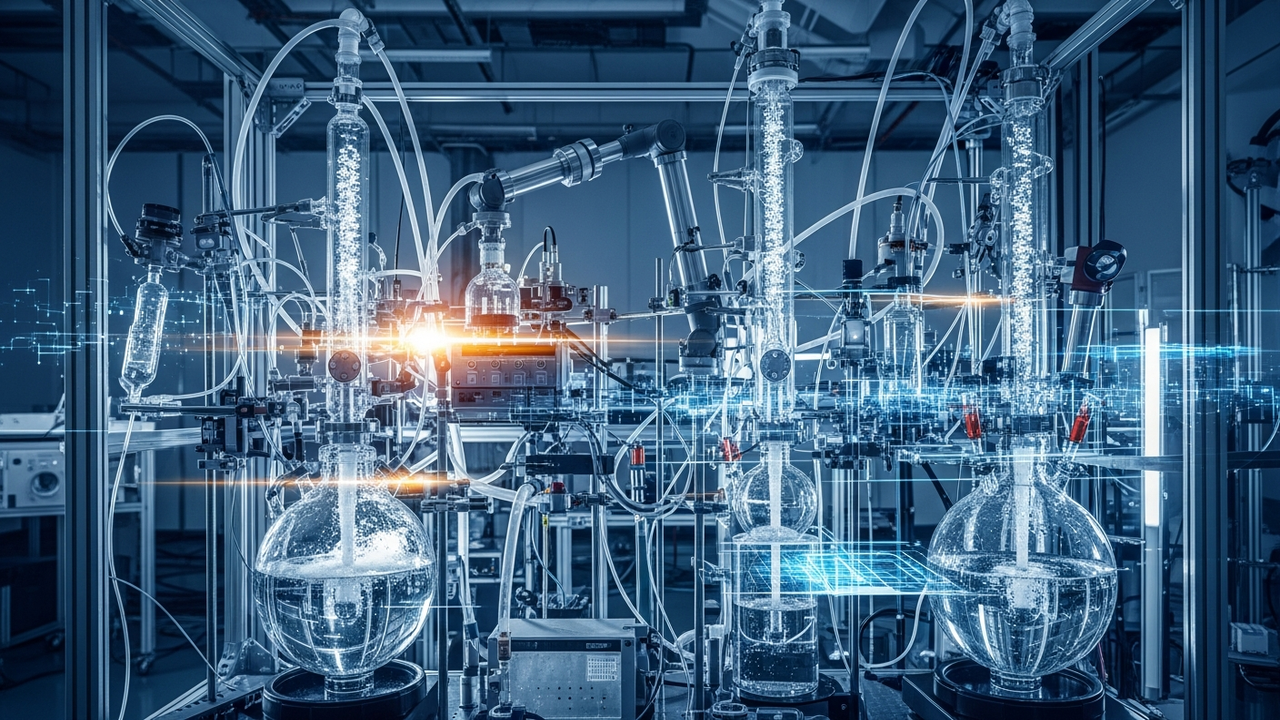
Closed-loop experiments in self-driving labs establish a continuous, autonomous cycle where AI designs experiments, robots execute them, sensors collect data, and AI analyzes that data to inform the next experimental design. Atinary Technologies’ SDLabs® is the intelligent software platform that enables this closed loop. The specific technical approaches include:
- AI-Driven Experimental Design: SDLabs® leverages advanced AI algorithms, such as Bayesian optimization and reinforcement learning, to efficiently explore optimal conditions from limited experimental data. This allows for achieving target properties (e.g., catalyst activity, selectivity, yield) much faster than traditional exhaustive screening or rule-of-thumb approaches.
- Integration with Robotics: Seamless integration with existing lab automation equipment like Chemspeed’s Flex iSynth (a high-throughput synthesis platform) and Bruker’s NMR (Nuclear Magnetic Resonance spectrometer) has been achieved. This allows AI-designed experimental protocols to be executed automatically, enabling a continuous series of processes including synthesis, reaction, and analysis.
- Real-time Data Analysis and Feedback: Real-time data from analytical instruments like NMR is immediately fed back into SDLabs®. The AI analyzes this data to determine the next experimental steps and conditions, thereby accelerating the learning cycle. This makes it possible to identify optimal catalyst compositions and reaction conditions in a shorter timeframe than usual.
- Concrete Achievements: In catalyst development optimization, the platform successfully explored multiple reaction pathways simultaneously and maximized selectivity for specific products. It also contributed to improved process safety by monitoring safety parameters (e.g., exothermic behavior) of reaction conditions in real-time and allowing AI to optimize within safe limits. Furthermore, resource savings were achieved by minimizing reagent usage and reducing the number of experiments.
Background & Context
Research and development in chemistry and materials science inherently face challenges in understanding complex phenomena and finding optimal solutions among an immense number of possibilities. Traditional experimental approaches have been time- and resource-intensive, often serving as bottlenecks. Particularly, catalyst development and optimization of pharmaceutical synthesis processes demand high expertise and significant experimental effort. The advent of self-driving labs offers a powerful solution to overcome these challenges, dramatically improving the efficiency and speed of R&D. This is a crucial factor for industries to rapidly bring innovative products to market and maintain global competitiveness.
Strategic Significance & Outlook
Atinary Technologies’ efforts are highly regarded as shaping the future of chemical research. Moving forward, platforms like SDLabs® are expected to be applied not only to catalyst development but also to broader areas of chemistry and materials science, such as drug discovery, polymer material design, and energy storage material optimization. Furthermore, as AI model accuracy improves, robotics technology becomes more generalized, and interoperability between different lab systems strengthens, it will be possible to address even larger and more complex research challenges. This is expected to free researchers from routine work, allowing them to concentrate on exploring deeper scientific insights and achieving previously impossible breakthroughs. Ultimately, AI-driven closed-loop experimentation is poised to become a core technology accelerating the innovation cycle across the entire chemical industry.
Source: https://atinary.com/blog/the-future-of-chemistry-in-an-ai-world/
Get our weekly technology intelligence — free
Receive an infographic that lets you judge at a glance whether each field’s analysis report is worth reading.
Subscribe Free — Weekly Tech Intelligence
By subscribing, you’ll receive Troy-Technical’s weekly technology intelligence newsletter.
- Your email and selected fields are used only to deliver the newsletter.
- We never share your information with third parties.
- You can unsubscribe anytime via the link in each email.
See our Privacy Policy for details.
Takes about a minute · Unsubscribe anytime