Key Findings
Hanwha Essential, a major South Korean corporation, has announced accelerated progress in its project to localize high-performance build-up film (BuF), a critical component for AI semiconductor substrates. The company is currently in the customer sample evaluation and rigorous quality verification stages. This strategic move aims to challenge the global market monopoly held by Japan’s Ajinomoto Build-up Film and establish South Korea’s technological independence within the AI semiconductor supply chain.
Technical / Clinical Details
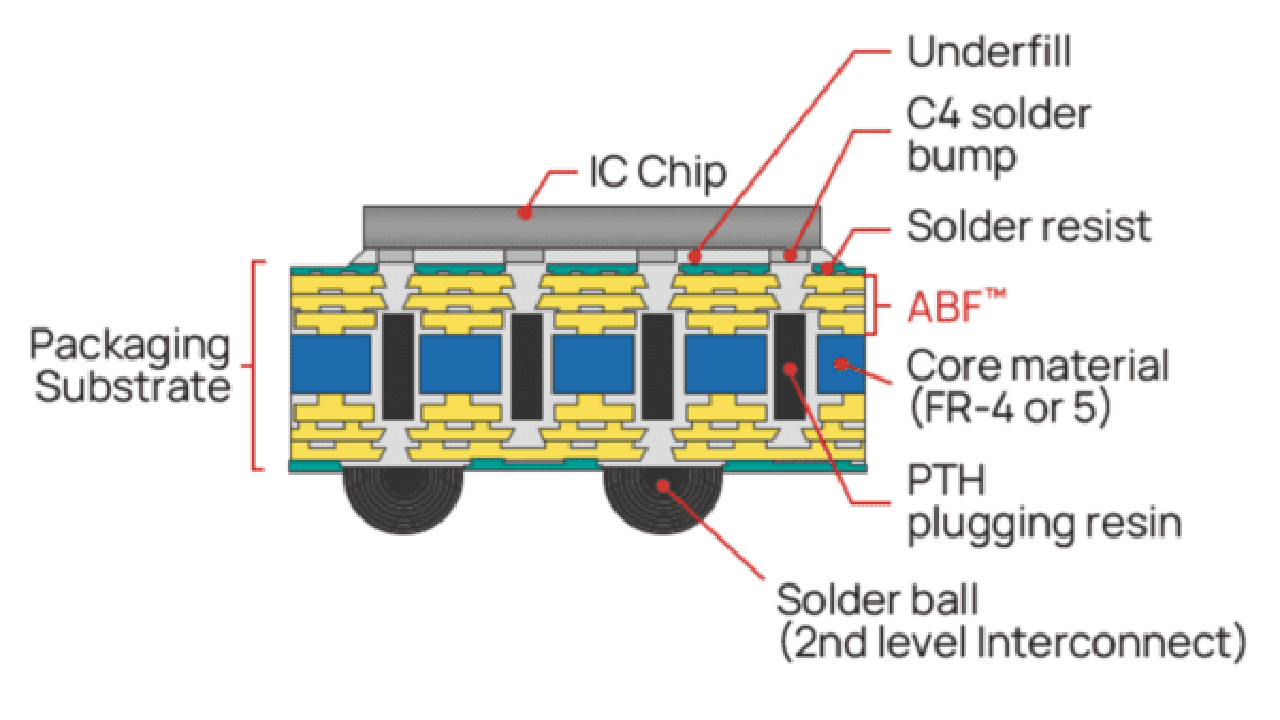
Build-up film (BuF) is an insulating material used in the formation of multi-layer wiring for semiconductor package substrates. For high-performance, high-density semiconductors like AI chips, extremely high reliability and fine-pitch processing capabilities are required. BuF, exemplified by ABF (Ajinomoto Build-up Film), is characterized by its demand for advanced functionalities such as photosensitivity, low dielectric loss, and excellent thermomechanical properties. Hanwha Essential’s ongoing BuF development focuses on meeting these requirements, with critical technical aspects including:
- Fine-Pitch Wiring Compatibility: Enhancing data transmission speed between chips and substrates is essential for improving AI chip performance, which necessitates miniaturization of wiring pitches on the substrate. The BuF under development must achieve high resolution and processability to support this fine-pitch wiring.
- Low Dielectric Loss: To minimize signal attenuation during high-speed data transmission, BuF requires low dielectric constant and low dissipation factor. This directly impacts the energy efficiency of AI chips in data centers and high-performance computing (HPC).
- Thermomechanical Stability: High resistance to the elevated temperatures encountered during semiconductor manufacturing processes and thermal cycling during chip operation is necessary. It is crucial for BuF to have a coefficient of thermal expansion that matches that of semiconductor chips and other packaging materials.
- Customer Sample Evaluation and Quality Verification: Hanwha Essential is conducting sample provision and evaluation with end-product manufacturers, along with thorough internal quality verification. This stage is indispensable for confirming that the product meets stringent semiconductor quality standards and can deliver stable performance.
The success of this localization effort will directly contribute to strengthening the resilience and competitiveness of South Korea’s semiconductor industry.
Background & Context
The rapid advancement of AI has led to an explosive demand for high-performance AI chips, yet the supply chain for the semiconductor substrate materials supporting these chips is dominated by a few specific companies. Specifically, advanced packaging technology is essential for maximizing AI chip performance, and high-performance BuF is at its core. Japan’s Ajinomoto has a long history of technological accumulation and market share in this field. For a major semiconductor power like South Korea, reliance on foreign sources for such critical materials has been a significant challenge from the perspectives of geopolitical risk and supply stability. Hanwha Essential’s challenge to localize BuF is positioned as part of a national effort to mitigate these risks and ensure the further development of South Korea’s semiconductor industry.
Strategic Significance & Outlook
Hanwha Essential’s efforts toward BuF localization will have a profound impact on South Korea’s AI semiconductor industry. If domestically produced BuF successfully enters the market, South Korean semiconductor manufacturers will not only secure a stable material supply source but also benefit from cost reductions and increased flexibility in product development. Furthermore, this could stimulate competition in the BuF market, fostering further technological innovation. In the future, South Korea is expected to establish an integrated supply chain from materials to devices in the AI semiconductor sector, further strengthening its competitiveness in the global market. This move also holds the potential to influence localization strategies for critical materials in other countries.
Source: https://www.thelec.net/news/articleView.html?idxno=11473
Get our weekly technology intelligence — free
Receive an infographic that lets you judge at a glance whether each field’s analysis report is worth reading.
Subscribe Free — Weekly Tech Intelligence
By subscribing, you’ll receive Troy-Technical’s weekly technology intelligence newsletter.
- Your email and selected fields are used only to deliver the newsletter.
- We never share your information with third parties.
- You can unsubscribe anytime via the link in each email.
See our Privacy Policy for details.
Takes about a minute · Unsubscribe anytime