Background
Quantum materials science presents a landscape of fascinating physical phenomena and immense technological potential, encompassing breakthroughs like superconductivity, the quantum Hall effect, and topological insulators. Yet, unraveling the fundamental quantum mechanical behaviors of these materials has proven exceedingly challenging due to their inherent complexity. Quantum simulators are garnering significant attention as potent tools to ‘recreate’ such exotic materials in a controlled laboratory environment, enabling detailed study of their properties. This development represents a crucial stride toward the practical application of quantum technology, even as the broader field of quantum computing remains in its nascent stages. Research institutions globally are engaged in a vigorous competition for the development and deployment of quantum simulators, and the QUASIMODO project stands at the vanguard of this critical endeavor.
Key Findings
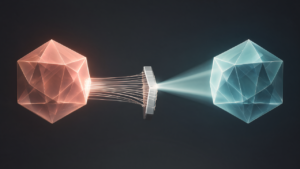
An international research team, including physicists from Vilnius University (VU), is driving the development of next-generation quantum simulators within the framework of the ‘QUASIMODO’ project. This ambitious initiative aims to synthetically create and comprehensively study complex quantum materials and quantum phases—phenomena that have been exceptionally challenging to model accurately with conventional classical computers. The project achieves this by harnessing multicomponent ultracold atoms, allowing for a detailed exploration of their fundamental properties.
Technical Details
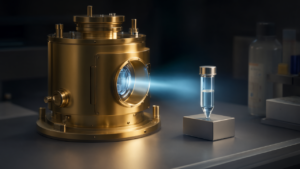
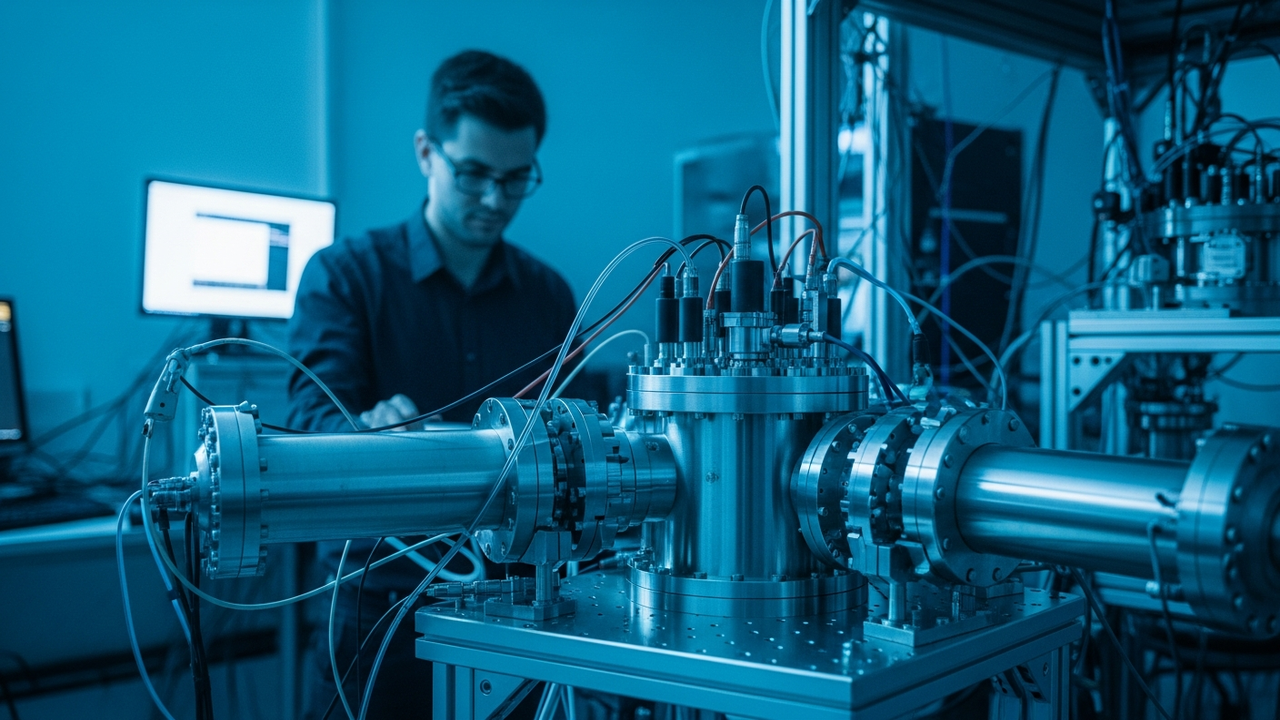
Central to the QUASIMODO project is the application of advanced laser cooling techniques to chill atoms to temperatures approaching absolute zero, followed by their precise manipulation using optical traps. A groundbreaking innovation lies in the construction of ‘multicomponent’ ultracold atomic systems, which integrate not merely a single atomic species but multiple distinct types of atoms. This approach significantly enhances the diversity of interatomic interactions, thereby enabling simulators capable of emulating far more complex quantum phenomena. The system is specifically designed to explore unresolved problems in condensed matter physics, such as Hubbard models and quantum magnets, through direct quantum simulation. While classical computers quickly encounter exponential computational limits when tackling these complex problems, quantum simulators efficiently uncover the properties of these quantum systems by directly ‘reproducing’ their intricate behaviors. This capability holds immense promise for significant breakthroughs in fundamental science, including elucidating the mechanisms of high-temperature superconductivity and accelerating the design of novel topological materials.
Strategic Significance & Outlook
The next-generation quantum simulators developed through the QUASIMODO project are poised to have an immeasurable impact on the future of quantum technology. This advanced technology will not only inform the design principles for improved quantum computing hardware but also directly contribute to the development of more sensitive and robust quantum sensors. Moreover, by enabling the creation of quantum phases and materials that previously existed only in theoretical constructs, these simulators will accelerate new discoveries in fundamental physics, profoundly deepening our understanding of matter. In the long term, these quantum simulators are expected to form the foundational basis for innovative technological applications across diverse fields, including energy storage, information communication, and medical diagnostics. Vilnius University’s pioneering initiative marks a crucial milestone in unlocking the profound societal value that quantum science promises to deliver.
Get our weekly technology intelligence — free
Receive an infographic that lets you judge at a glance whether each field’s analysis report is worth reading.
Subscribe Free — Weekly Tech Intelligence
By subscribing, you’ll receive Troy-Technical’s weekly technology intelligence newsletter.
- Your email and selected fields are used only to deliver the newsletter.
- We never share your information with third parties.
- You can unsubscribe anytime via the link in each email.
See our Privacy Policy for details.
Takes about a minute · Unsubscribe anytime