Key Findings
As artificial intelligence (AI) clusters rapidly scale from thousands to tens of thousands of GPUs, it has become evident that the next major bottleneck limiting AI performance is not the computational power itself, but rather the infrastructure efficiently connecting these vast computing resources. Co-Packaged Optics (CPO) technology, identified as key to resolving this challenge, has swiftly transitioned from a mere research topic to one of the most strategically significant technologies within the semiconductor industry. However, the paramount challenge for this innovative technology lies in its ability to be economically and reliably mass-produced at hyperscale for data centers.
Technical / Clinical Details
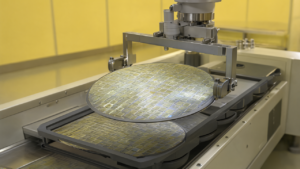
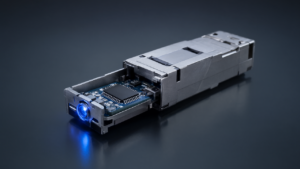
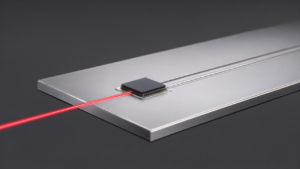
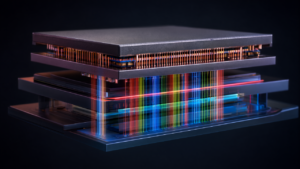
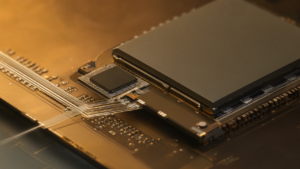
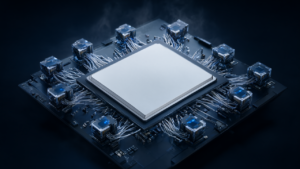
Co-Packaged Optics (CPO) is a technology that integrates high-performance electrical chips, such as switch ASICs and GPU chips, with optical transceivers within the same package. This integration dramatically shortens the length of electrical pathways by converting electrical signals into optical signals before they leave the chip. This shortening significantly ameliorates major electrical interconnect issues like signal degradation, power consumption, and latency. Realizing CPO requires the heterogeneous integration of distinct components—switch ASICs, silicon photonics chips (housing optical waveguides, modulators, and detectors), external laser sources, and fiber interfaces—with extremely high precision. Efficiently managing the heat generated by such high-density integration is also a critical technical challenge for maintaining the reliability and performance of CPO systems.
Background & Context
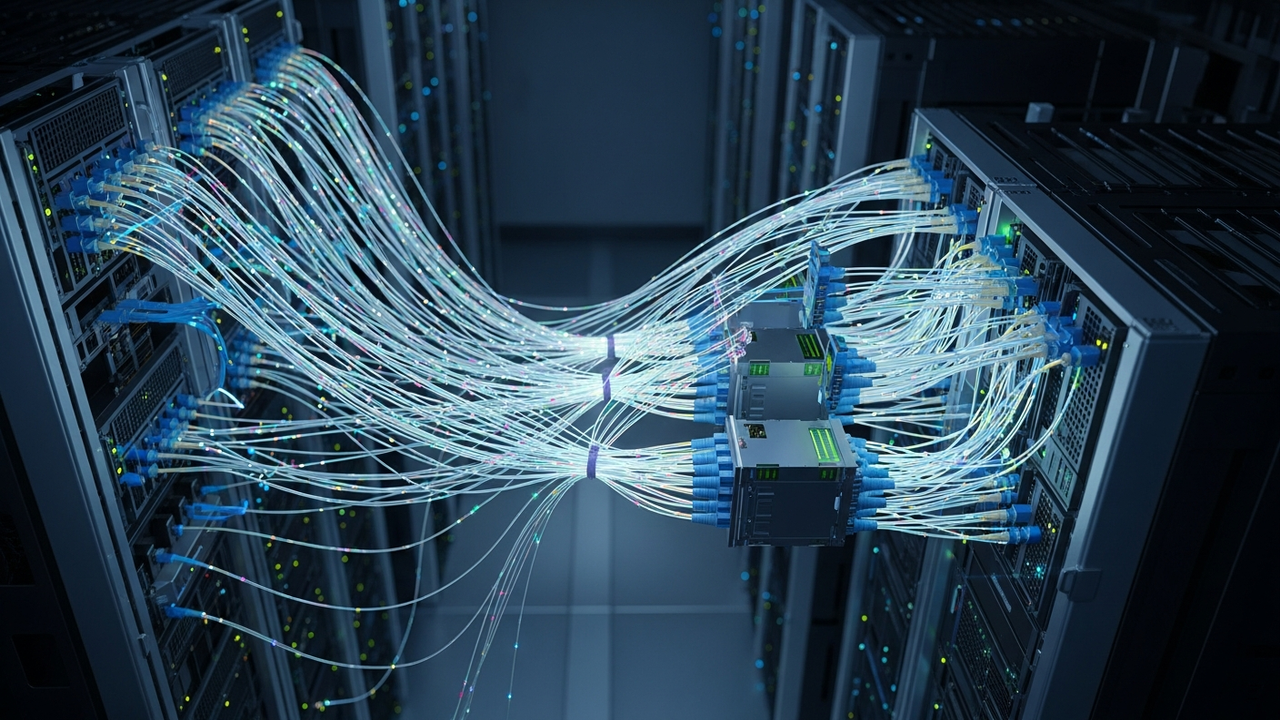
AI workloads, especially the training of large language models (LLMs), involve data movement between GPUs that is several to tens of times greater than traditional levels. Existing pluggable optical modules and copper connections are struggling to meet the required bandwidth, low latency, and, most critically, power efficiency demands. Given that a significant portion of data center power consumption is dedicated to cooling and data movement, technologies like CPO are essential for the sustainable growth of AI. Hyperscalers such as Google, Meta, Microsoft, and Amazon have expressed strong interest in adopting CPO technology, and major semiconductor vendors are accelerating their development efforts.
Strategic Significance & Outlook
The mass production and widespread adoption of CPO will revolutionize AI data center architectures, enabling the construction of higher-performance and more power-efficient AI clusters. If manufacturing challenges, particularly those related to heterogeneous integration and thermal management, can be overcome, CPO has the potential to become the mainstream data center interconnect technology by the late 2020s. The success of this technology will not only support further advancements in AI capabilities and enable the creation of new applications but will also significantly contribute to reducing data center operational costs and environmental impact. CPO is poised to become an indispensable element in shaping the future of AI and laying the foundation for next-generation digital infrastructure.
Get our weekly technology intelligence — free
Receive an infographic that lets you judge at a glance whether each field’s analysis report is worth reading.
Subscribe Free — Weekly Tech Intelligence
By subscribing, you’ll receive Troy-Technical’s weekly technology intelligence newsletter.
- Your email and selected fields are used only to deliver the newsletter.
- We never share your information with third parties.
- You can unsubscribe anytime via the link in each email.
See our Privacy Policy for details.
Takes about a minute · Unsubscribe anytime