Key Findings
A research team led by the University of Michigan has secured $4 million in Phase 2 funding from the National Science Foundation (NSF) to advance their innovative Quantum Photonic Integration and Deployment (QuPID) project. This project focuses on the design and development of robust, plug-and-play quantum photonic chips utilizing scandium aluminum nitride (ScAlN) material.
Technical and Market Details
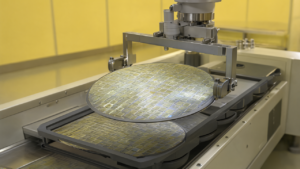
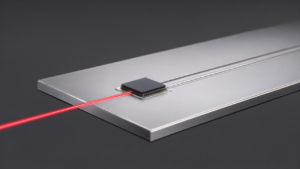
The goal of the QuPID project is to manufacture high-precision and stable quantum photonic chips, as required by fields such as quantum computing and quantum sensing, in a practical form. ScAlN is an emerging material possessing a high electro-optic coefficient, excellent piezoelectric properties, and compatibility with CMOS manufacturing processes, thus opening new possibilities in quantum photonics. Particularly, ScAlN-based devices are expected to contribute to maintaining stable quantum states resilient to temperature fluctuations and external noise, owing to their robustness.
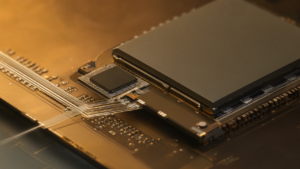
The ‘plug-and-play’ concept signifies that quantum chips can be easily integrated into existing microelectronic systems, promoting widespread application of quantum technology. Specifically, this technology could be utilized for high-precision navigation systems independent of GPS (quantum inertial sensors), more secure quantum communication, and the manipulation of photon-based qubits in quantum computing. The $4 million funding will accelerate the next phase of R&D, including chip design, prototype manufacturing, and functional verification.
Background and Industry Context
Quantum technology holds the potential to revolutionize fields such as computing, sensing, and communication. However, its practical implementation faces significant challenges in overcoming the delicate nature of quantum states and manufacturing scalable, reliable quantum hardware. Traditional quantum systems often require specialized environments like extremely low temperatures or vacuum, leading to high costs and complexity. The combination of new materials like ScAlN and integrated photonics technology offers a promising approach to solve these challenges and make quantum technology more accessible.
Strategic Significance and Outlook
The development of ScAlN-based quantum photonic chips through the QuPID project represents a significant advance towards the practical realization of quantum technology. If robust, plug-and-play quantum chips are achieved, they could enable new applications not only in GPS-free navigation but also in medical diagnostics, materials science, and AI acceleration. This research provides a foundation for integrating quantum technology into microelectronics and building next-generation systems that are higher performing and more secure. The substantial funding from the NSF underscores the national strategic importance of this technology and is expected to help strengthen U.S. leadership in quantum technology.
Source: https://quantumzeitgeist.com/university-michigan-quantum-photonic-chip-boosts/
Get our weekly technology intelligence — free
Receive an infographic that lets you judge at a glance whether each field’s analysis report is worth reading.
Subscribe Free — Weekly Tech Intelligence
By subscribing, you’ll receive Troy-Technical’s weekly technology intelligence newsletter.
- Your email and selected fields are used only to deliver the newsletter.
- We never share your information with third parties.
- You can unsubscribe anytime via the link in each email.
See our Privacy Policy for details.
Takes about a minute · Unsubscribe anytime