Key Findings
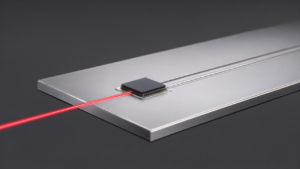
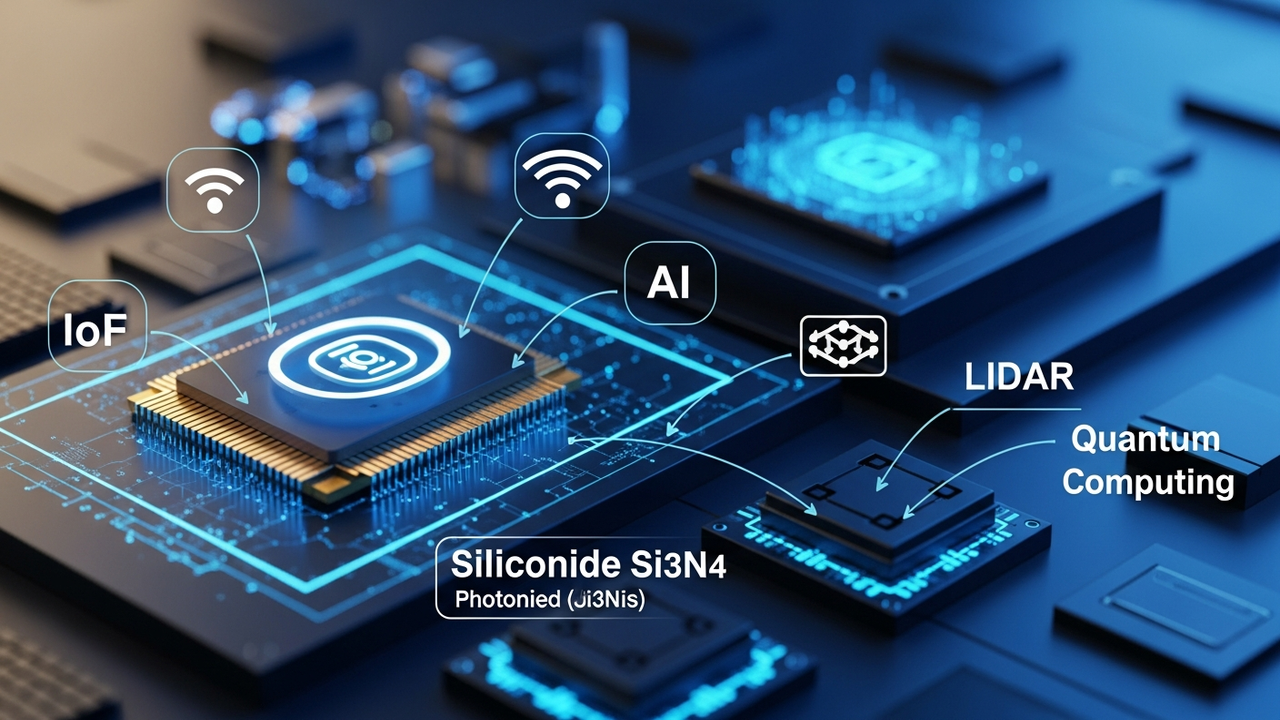
Silicon nitride (Si3N4) photonic integrated circuits (PICs) are attracting widespread attention as a promising platform for a diverse range of cutting-edge applications, including IoT, AI, LiDAR, and quantum computing. This is primarily due to their exceptionally low propagation loss and high integration capabilities. The research suggests that SiN PICs will play a crucial role in forming the foundation of next-generation photonics technology.
Technical and Market Details
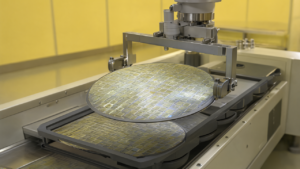
Silicon nitride is an ideal material for various photonics applications due to its wide transparency spectrum, high refractive index contrast (enabling high integration density), and excellent chemical stability. Specifically, SiN PICs can enable high-performance optical sensors, frequency combs, and microwave photonics devices by allowing ultra-low-loss waveguides and high-Q resonators in the millimeter-wave and terahertz bands. Its high compatibility with CMOS manufacturing processes means it can be mass-produced relatively easily using existing semiconductor fabrication lines, offering significant advantages in terms of cost efficiency and scalability.
This article emphasizes the advancements in heterogeneous integration of SiN with other photonic platforms, such as silicon-on-insulator (SOI) and indium phosphide (InP). Heterogeneous integration makes it possible to combine SiN’s low loss with SOI’s electronic circuit integration capabilities or InP’s superior light emission/detection properties. This leads to the development of high-performance photonic devices with complex functionalities not achievable with single materials. Such devices offer innovative solutions in various fields, including integrated quantum light sources for quantum information processing, optical interconnects for AI accelerators, and beam steering arrays in LiDAR systems.
Background and Industry Context
Modern information society demands exponentially increasing data volumes and faster, more energy-efficient information processing capabilities. The proliferation of IoT devices, the evolution of AI, the emergence of high-resolution LiDAR, and advancements in quantum computing research all rely on high-performance photonics technology. Silicon nitride PICs are a key technology for meeting the stringent performance requirements (high bandwidth, low latency, high signal-to-noise ratio, miniaturization) demanded by these fields. Their versatility and scalability offer a powerful solution to the challenges faced by the semiconductor industry.
Strategic Significance and Outlook
The continuous technological development and commercialization of silicon nitride PICs will accelerate the realization of next-generation applications across IoT, AI, LiDAR, and quantum computing. In particular, the further maturation of heterogeneous integration technologies will drive the emergence of ‘system-on-chip’ type photonic devices, where optical and electronic functionalities are highly fused. This is expected to embed optical technology deeply into all aspects of digital infrastructure, providing an indispensable foundation for a smarter, more efficient, and higher-performance future society.
Get our weekly technology intelligence — free
Receive an infographic that lets you judge at a glance whether each field’s analysis report is worth reading.
Subscribe Free — Weekly Tech Intelligence
By subscribing, you’ll receive Troy-Technical’s weekly technology intelligence newsletter.
- Your email and selected fields are used only to deliver the newsletter.
- We never share your information with third parties.
- You can unsubscribe anytime via the link in each email.
See our Privacy Policy for details.
Takes about a minute · Unsubscribe anytime