Key Findings
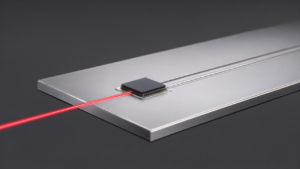
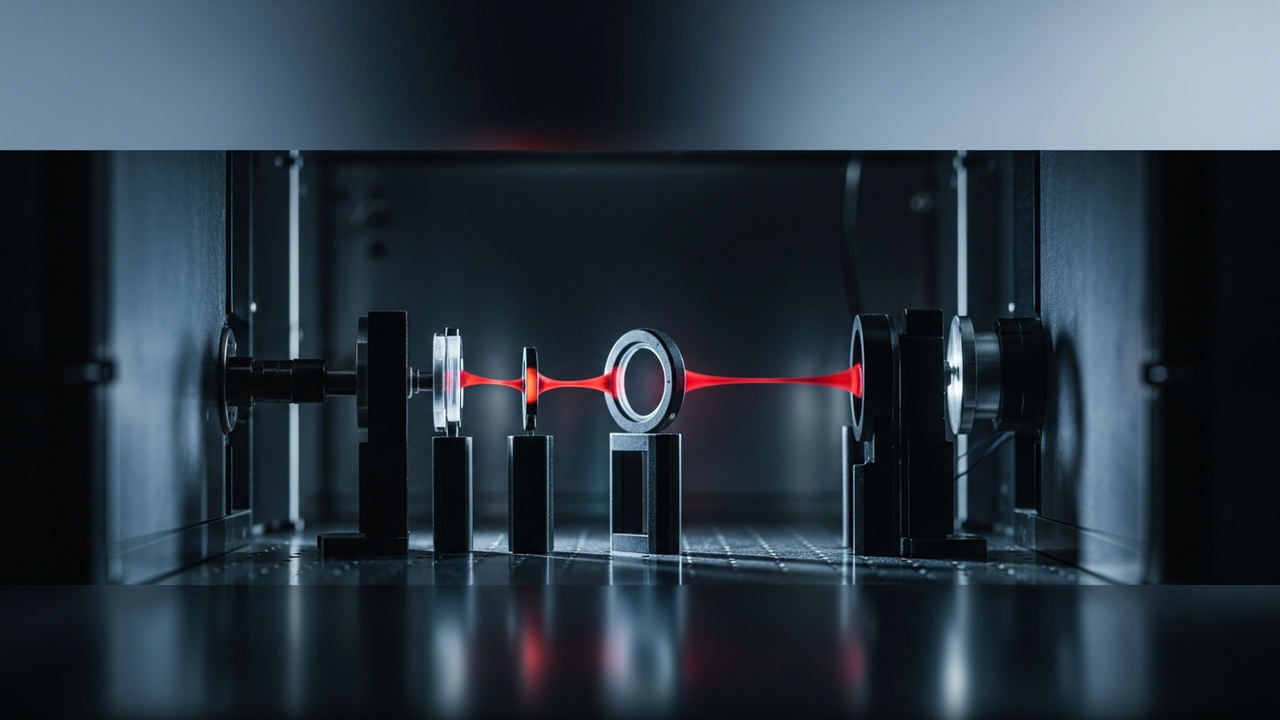
This research explores an innovative method for generating topological optical lattices by ingeniously exploiting material anisotropy in X-cut thin-film lithium niobate (TFLN) microring vortex emitters. The intrinsic birefringence of TFLN introduces an azimuthally varying effective refractive index, which enables continuous azimuthal phase modulation, leading to the efficient generation of coherent topological sideband lattices.
Technical and Market Details
Topological optical lattices are a technology that allows for the realization of robust optical devices by creating ‘topologically protected’ pathways for photons, making them resilient to defects and noise. While conventional optical devices are sensitive to manufacturing imperfections and environmental noise, topological protection promises more stable light propagation.
This study specifically leverages the material properties of TFLN, particularly its anisotropy. TFLN is a material that combines the excellent electro-optic properties of lithium niobate with high integration density and low loss through thin-film technology. X-cut TFLN exhibits different light propagation characteristics depending on the crystal axis orientation. When combined with a microring resonator, this creates an effect where the phase of light is continuously modulated as it circulates the ring. This azimuthal phase modulation is a crucial mechanism for controlling the orbital angular momentum (OAM) states of light, leading to the efficient generation of coherent topological sideband lattices.
This technology holds promise for a wide range of applications, including the generation of entangled photon states in quantum information science, advanced optical sensing, and the design of new optical interconnects for AI computing. Particularly, robust photon sources and photon manipulation devices are critical components for realizing fault-tolerant quantum computers.
Background and Industry Context
In the fields of quantum information science and advanced optical technologies, precisely controlling the state of photons and propagating them robustly against noise is paramount. Topological photonics has garnered significant attention in recent years as a promising approach to this challenge. Thin-film lithium niobate is rapidly establishing itself as a mainstream material for photonic devices due to its exceptional electro-optic properties and CMOS-compatible manufacturing processes. Leveraging the intrinsic anisotropy of this material allows for the effective utilization of previously difficult-to-access degrees of freedom of light, such as OAM.
Strategic Significance and Outlook
The generation of material-anisotropy-driven topological optical lattices in thin-film lithium niobate opens a new paradigm in optical device design. This discovery will directly contribute to the development of more robust and high-performance quantum photonic chips, ultra-high-speed optical communication systems based on new principles, and highly sensitive optical sensors. In particular, controlling the OAM states of photons holds the potential for dramatic increases in information capacity and the realization of more secure quantum communication. As further research and applications of this technology advance, it is expected to become an indispensable component in optical systems for quantum computing and next-generation AI infrastructure.
Source: https://arxiv.org/html/2606.22569v1
Get our weekly technology intelligence — free
Receive an infographic that lets you judge at a glance whether each field’s analysis report is worth reading.
Subscribe Free — Weekly Tech Intelligence
By subscribing, you’ll receive Troy-Technical’s weekly technology intelligence newsletter.
- Your email and selected fields are used only to deliver the newsletter.
- We never share your information with third parties.
- You can unsubscribe anytime via the link in each email.
See our Privacy Policy for details.
Takes about a minute · Unsubscribe anytime