Key Findings
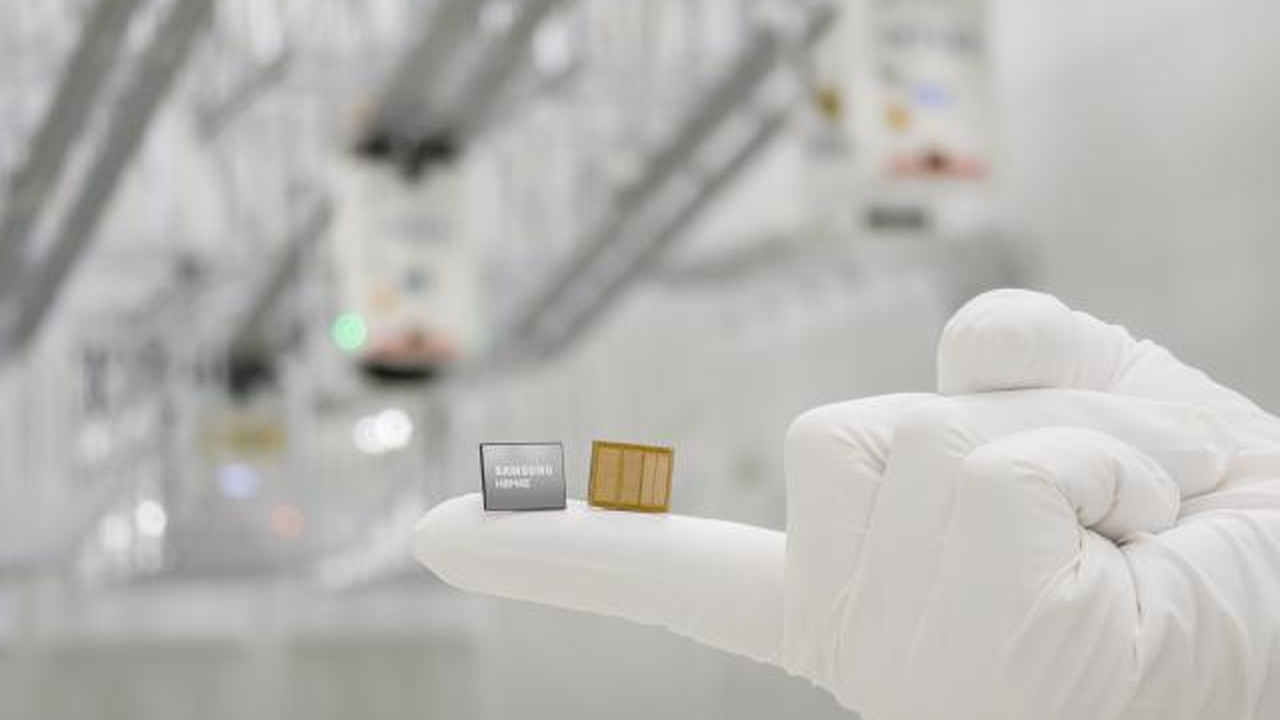
While leading Korean memory manufacturers, SK hynix and Samsung Electronics, have begun shipping samples of 12-layer HBM4E chips to key customers including Nvidia, industry analysts indicate that the real bottleneck in the HBM4E era is TSMC’s CoWoS advanced packaging capacity. Packaging has emerged as a decisive factor, transcending raw memory performance, in determining the market availability of final products.
Technical Details
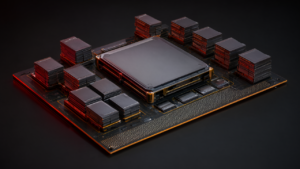
HBM4E, the next-generation High Bandwidth Memory designed for AI accelerators, necessitates highly efficient integration with logic chips (GPUs and AI processors) to unlock its full performance potential. TSMC’s CoWoS (Chip-on-Wafer-on-Substrate) is the primary advanced packaging technology enabling this tight integration of logic and HBM on a silicon interposer, allowing them to function as a single system. This dramatically boosts data transfer rates and reduces power consumption. For high-stack memories like 12-layer HBM4E, thermal management and signal integrity challenges also intensify, making advanced packaging processes like CoWoS a critical bottleneck.
Background & Context
The increasing complexity and scale of AI models have driven unprecedented demand for advanced memory like HBM. While SK hynix and Samsung lead the world in HBM chip development and mass production, these HBM chips require CoWoS-like advanced packaging to be integrated into AI accelerators for customers such as Nvidia. TSMC holds a dominant share in the CoWoS packaging market, making its production capacity the primary determinant of the overall AI chip supply. This situation underscores a new bottleneck in the semiconductor supply chain: regardless of how many high-performance HBMs Korean manufacturers produce, market supply will be constrained unless TSMC’s packaging capacity keeps pace.
Strategic Significance & Outlook
With TSMC’s CoWoS capacity holding the key to AI chip market growth, the company plans to expand its capacity by over 80% annually through 2027, aiming to reduce the AI chip supply gap. However, this bottleneck will remain a significant challenge for competitive strategies in the HBM market, particularly for Korean manufacturers, for the foreseeable future. Memory makers will need to focus not only on HBM chip performance but also on strengthening collaborations with packaging partners and exploring cooperation with Outsourced Semiconductor Assembly and Test (OSAT) providers beyond TSMC to alleviate supply constraints. This challenge also presents an opportunity to accelerate diversification and resilience within the broader semiconductor industry supply chain.
Source: https://www.ajupress.com/view/20260618160856166
Get our weekly technology intelligence — free
Receive an infographic that lets you judge at a glance whether each field’s analysis report is worth reading.
Subscribe Free — Weekly Tech Intelligence
By subscribing, you’ll receive Troy-Technical’s weekly technology intelligence newsletter.
- Your email and selected fields are used only to deliver the newsletter.
- We never share your information with third parties.
- You can unsubscribe anytime via the link in each email.
See our Privacy Policy for details.
Takes about a minute · Unsubscribe anytime