Key Findings
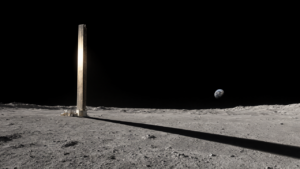
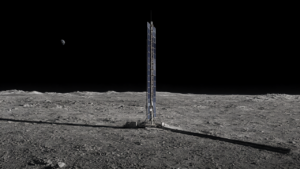
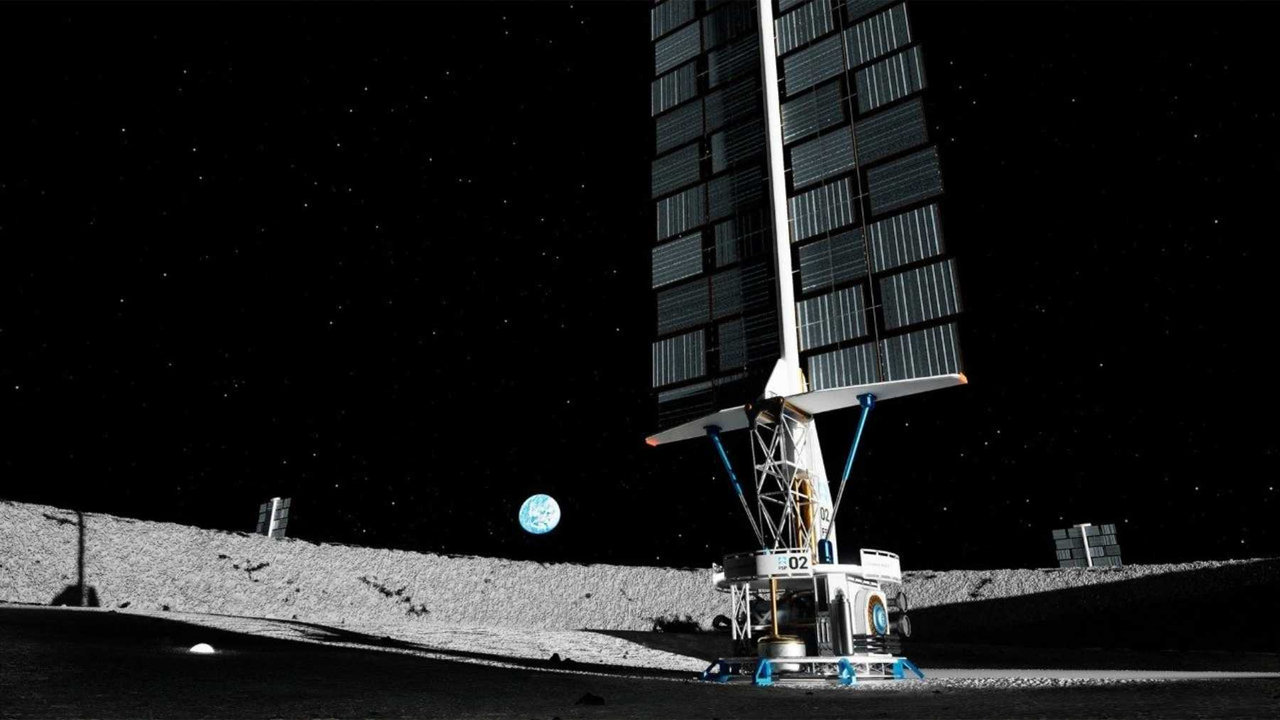
The United States has formally announced a national goal to land a 100-kilowatt nuclear reactor on the Moon by 2030. This objective reflects the intensifying competition in space nuclear energy utilization, following China and Russia’s public declaration of a joint lunar nuclear power plant development between 2033 and 2035. As a critical step towards achieving this goal, NASA is advancing plans to launch the small interplanetary fission reactor ‘Space Reactor-1 Freedom (SR-1 Freedom)’ by late 2028. SR-1 Freedom will be key to energy independence for lunar and deep space exploration.
Technical and Clinical Details
The 100-kilowatt lunar nuclear reactor planned by the U.S. will provide a stable power supply to sustain a base continuously, even during the Moon’s two-week-long nights. This is indispensable in extreme environments where solar power alone is insufficient. SR-1 Freedom is designed to demonstrate Nuclear Electric Propulsion (NEP) in deep space, enabling faster and farther missions with significantly less fuel than traditional chemical propulsion systems. For instance, NEP holds the potential to reduce crewed travel time to Mars to under 90 days. The SR-1 Freedom mission also includes the ‘Skyfall’ payload, delivering three Mars helicopters, which will demonstrate new exploration capabilities in the Martian atmosphere. These systems are designed for high radiation tolerance and remote operability, ensuring safety and reliability in the space environment.
Background and Industry Context
The use of nuclear technology in space is crucial for providing stable power and propulsion for deep space exploration and the construction of lunar and Martian bases. Historically, the U.S. Department of Energy’s (DOE) System for Nuclear Auxiliary Power (SNAP) program pioneered the development of compact reactors, such as SNAP 10A, which generated over 500 watts of power in orbit for 43 days in 1965. China and Russia’s lunar nuclear power plant plans highlight a new race for strategic advantage in space, requiring the U.S. to counter and reassert its technological leadership. NASA’s Artemis program aims to establish a sustained human presence on the Moon, and nuclear energy is an essential component for its realization.
Strategic Significance and Outlook
The U.S. lunar nuclear reactor initiative and the launch of SR-1 Freedom will dramatically enhance the feasibility of long-duration lunar stays and crewed missions to Mars. Stable power supply will provide the foundation for scientific research, resource extraction, and ultimately, the establishment of extraterrestrial habitats. This technological development race is expected to accelerate innovation across the entire space industry, creating new supply chains and commercial opportunities. The safe and efficient use of nuclear energy in space will be one of the most critical steps in enabling humanity’s expansion throughout the solar system.
Source: https://www.autonocion.com/us/america-nuclear-reactor-moon/
Get our weekly technology intelligence — free
Receive an infographic that lets you judge at a glance whether each field’s analysis report is worth reading.
Subscribe Free — Weekly Tech Intelligence
By subscribing, you’ll receive Troy-Technical’s weekly technology intelligence newsletter.
- Your email and selected fields are used only to deliver the newsletter.
- We never share your information with third parties.
- You can unsubscribe anytime via the link in each email.
See our Privacy Policy for details.
Takes about a minute · Unsubscribe anytime