Key Findings
According to TechRadar’s analysis, space is rapidly evolving into the ‘next network edge,’ holding the potential to eliminate bandwidth bottlenecks in data transmission to Earth and enable faster insights. This is achieved by processing a significant portion of the enormous volume of image and sensor data generated by Earth observation systems directly in orbit. This utilization of in-orbit computing capabilities alleviates the burden on terrestrial infrastructure and redefines global data processing capabilities.
Technical and Clinical Details
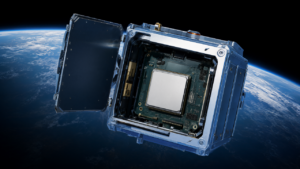
Space edge computing is primarily realized by integrating high-performance processing capabilities into constellations of small satellites deployed in Low Earth Orbit (LEO). These satellites communicate with each other via high-speed laser links, such as Free-Space Optical Inter-Satellite Links (FSO ISL), and interface with terrestrial gateways. Orbital computing resources, unlike terrestrial hyperscale data centers, will feature more compact and specialized designs to accommodate the constraints of the space environment (limited launch capacity, radiation tolerance, power generation, cooling requirements, and physical size). For instance, AI chips must be highly radiation-tolerant and energy-efficient. By pre-processing large volumes of raw data acquired by Earth observation satellites in orbit (e.g., filtering, compression, feature extraction), the amount of data transmitted to Earth can be significantly reduced, allowing users to receive analyzed results in near real-time. This accelerates decision-making in fields such as disaster monitoring, agricultural management, defense, and intelligence gathering.
Background and Industry Context
The number of Earth observation satellites is continuously increasing, with data volumes growing from terabytes to petabytes daily. Efficiently processing this immense data and transforming it into valuable information places a significant burden on terrestrial data centers and communication infrastructure. The deployment of mega-constellations like SpaceX’s Starlink has provided the technological foundation for positioning numerous ‘computing nodes’ in space. Furthermore, the advancement of AI technology enables autonomous data processing at these edge nodes, transforming space from merely a data collection site into a hub for data processing and analysis. Space-based AI infrastructure will integrate with terrestrial cloud computing to play a crucial role in enhancing global data availability and resilience.
Strategic Significance and Outlook
As space becomes the next network edge, high-performance AI services will become available in any location on Earth, particularly in remote areas that previously lacked communication infrastructure. This will contribute to bridging the digital divide and creating new economic opportunities. Furthermore, space-based edge computing can enhance security and privacy, potentially being used for processing sensitive military and intelligence data. Future efforts will focus on improving satellite onboard processing capabilities, further developing optical communication technologies, and establishing an optimal balance between in-orbit data processing and downlink to Earth. Space is expected to become an indispensable infrastructure that dramatically enhances humanity’s global connectivity and information processing capabilities.
Source: https://www.techradar.com/pro/space-as-the-next-network-edge-the-evolution-of-global-connectivity
Get our weekly technology intelligence — free
Receive an infographic that lets you judge at a glance whether each field’s analysis report is worth reading.
Subscribe Free — Weekly Tech Intelligence
By subscribing, you’ll receive Troy-Technical’s weekly technology intelligence newsletter.
- Your email and selected fields are used only to deliver the newsletter.
- We never share your information with third parties.
- You can unsubscribe anytime via the link in each email.
See our Privacy Policy for details.
Takes about a minute · Unsubscribe anytime