Key Findings
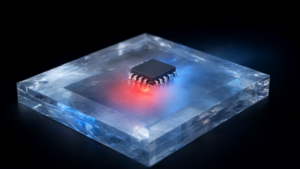
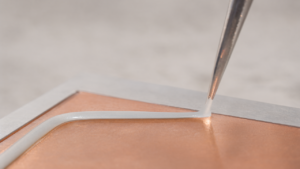
To optimize the performance of thermally conductive epoxy potting compounds, a novel mesogen-containing reactive epoxy monomer (LCE) was designed, synthesized, and integrated into existing commercial formulations. This innovative approach demonstrated effective tunability of the potting compound’s thermal conductivity, rheological properties, mechanical characteristics, and fracture-surface morphology. This represents a significant stride towards addressing the long-standing challenge of simultaneously achieving high thermal conductivity, excellent processability, and long-term reliability in electronic component thermal management.
Technical Details
The LCE monomer, possessing a liquid crystalline mesogen structure, influences the internal microstructure of the material when incorporated into the epoxy network. This structural control allows for maintaining high thermal conductivity while optimizing rheological properties such as viscosity, thereby improving applicability in manufacturing processes. Precise control over the fracture-surface morphology enhances the material’s stress distribution capability and crack propagation resistance, boosting its durability against mechanical impact and thermal cycling. Compared to conventional epoxy potting compounds, LCE-modified materials are expected to exhibit superior thermal stability and stress-relief capabilities, directly contributing to the enhanced reliability of electronic components used under severe thermal conditions, such as high-power semiconductor devices and EV battery modules.
Background & Context
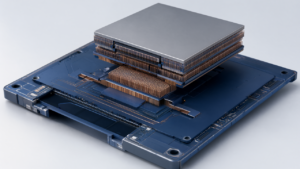
Modern high-performance electronic devices demand increasing integration and operating speeds, leading to significant challenges with escalating heat generation. Effective thermal management is crucial for maintaining device performance, extending lifespan, and ensuring reliability. Thermally conductive potting compounds are vital materials for efficiently dissipating heat from electronic components, but achieving a combination of high thermal conductivity, excellent processability, and mechanical reliability has been technically challenging. This research aims to overcome this trade-off, paving the way for the development of advanced thermal management materials that meet the stringent requirements of next-generation electronic devices.
Strategic Significance & Outlook
The technology of thermally conductive potting compounds incorporating mesogen-containing reactive epoxy monomers (LCE) holds the potential to bring about a paradigm shift in electronic device thermal management. As this technology undergoes further optimization and mass production, it is expected to significantly contribute to the miniaturization, power enhancement, and long-term reliability of high-performance applications such as CPUs, GPUs, power modules, LEDs, and EV batteries. Materials that achieve a high balance of thermal conductivity and mechanical reliability are particularly critical for accelerating the development of advanced technologies like autonomous driving systems and AI chips. This innovation is anticipated to spur innovation across the entire electronics industry.
Source: https://www.mdpi.com/2073-4360/18/12/1503
Get our weekly technology intelligence — free
Receive an infographic that lets you judge at a glance whether each field’s analysis report is worth reading.
Subscribe Free — Weekly Tech Intelligence
By subscribing, you’ll receive Troy-Technical’s weekly technology intelligence newsletter.
- Your email and selected fields are used only to deliver the newsletter.
- We never share your information with third parties.
- You can unsubscribe anytime via the link in each email.
See our Privacy Policy for details.
Takes about a minute · Unsubscribe anytime