Key Findings
With the accelerating adoption of new energy vehicles (NEVs), ensuring the impact safety of power battery undersides has become a critical imperative. This research introduces a novel lightweight bottom plate design utilizing a long glass fiber-reinforced polypropylene (LGF/PP) honeycomb composite. When integrated with high-shear strength structural adhesive bonding technology, this design demonstrably and significantly improves the protection efficiency of battery undersides against ball impacts. This not only enhances the structural safety of EVs and occupant protection but also contributes to the overall lightweighting of the vehicle.
Technical Details
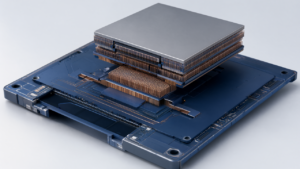
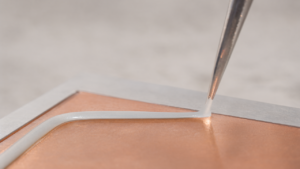
The proposed bottom plate design capitalizes on the LGF/PP honeycomb composite’s superior energy absorption characteristics and inherent lightweight properties. The LGF/PP honeycomb efficiently dissipates and absorbs energy during impact, thereby mitigating direct damage to the battery cells. Compared to conventional metallic bottom plates, this composite material offers substantial weight reduction, contributing to increased vehicle range and improved energy efficiency. Furthermore, the high-shear strength structural adhesive is crucial for inhibiting delamination within the honeycomb composite and maintaining its structural integrity under impact loads. Adhesive bonding reduces stress concentration points more effectively than traditional fastening methods like riveting or welding, promoting a more uniform distribution of impact energy. Experimental results confirm that this combination of composite material and adhesive bonding provides excellent protection performance in ball impact tests, with particular emphasis on its durability against high-speed impacts.
Background & Context
The rapid expansion of the new energy vehicle market places paramount importance on the safety of battery systems, especially their protection performance during collisions. Battery packs are often located at the bottom of vehicles, making them susceptible to impacts from road debris or accidents. Conventional battery protection materials and designs have faced challenges related to increased weight and complex manufacturing processes. The combination of LGF/PP honeycomb composite and structural adhesive bonding proposed in this research offers a novel solution that achieves both lightweighting and enhanced safety, setting a new standard for NEV design. This represents a significant technological advantage for battery system suppliers and automotive manufacturers seeking to boost their competitiveness.
Strategic Significance & Outlook
This battery bottom plate protection technology, employing LGF/PP honeycomb composites and high-shear strength adhesives, holds substantial potential for advancing the safety and efficiency of new energy vehicles. Widespread adoption of this technology in mass-produced vehicles could significantly reduce the risk of battery fires, further bolstering consumer confidence in EVs. Moreover, the benefits of lightweighting extend beyond increased range, contributing to improved vehicle dynamics and making it an indispensable element for achieving high-performance EVs. Future efforts will focus on further optimization and extensive validation across various impact scenarios, with expectations for expanding the application scope of this technology and contributing to higher safety standards across the automotive industry.
Source: https://www.mdpi.com/2504-4494/10/7/218
Get our weekly technology intelligence — free
Receive an infographic that lets you judge at a glance whether each field’s analysis report is worth reading.
Subscribe Free — Weekly Tech Intelligence
By subscribing, you’ll receive Troy-Technical’s weekly technology intelligence newsletter.
- Your email and selected fields are used only to deliver the newsletter.
- We never share your information with third parties.
- You can unsubscribe anytime via the link in each email.
See our Privacy Policy for details.
Takes about a minute · Unsubscribe anytime