Key Findings
Researchers have successfully developed a novel molecularly motivated descriptive model that elucidates the nonlinear rheological behavior of entangled polymers under oscillatory shear deformation. This model provides a critical foundation for understanding how the intricate network structure and intermolecular interactions of polymers influence macroscopic performance, particularly in terms of charge transport and device efficiency.
Technical Details
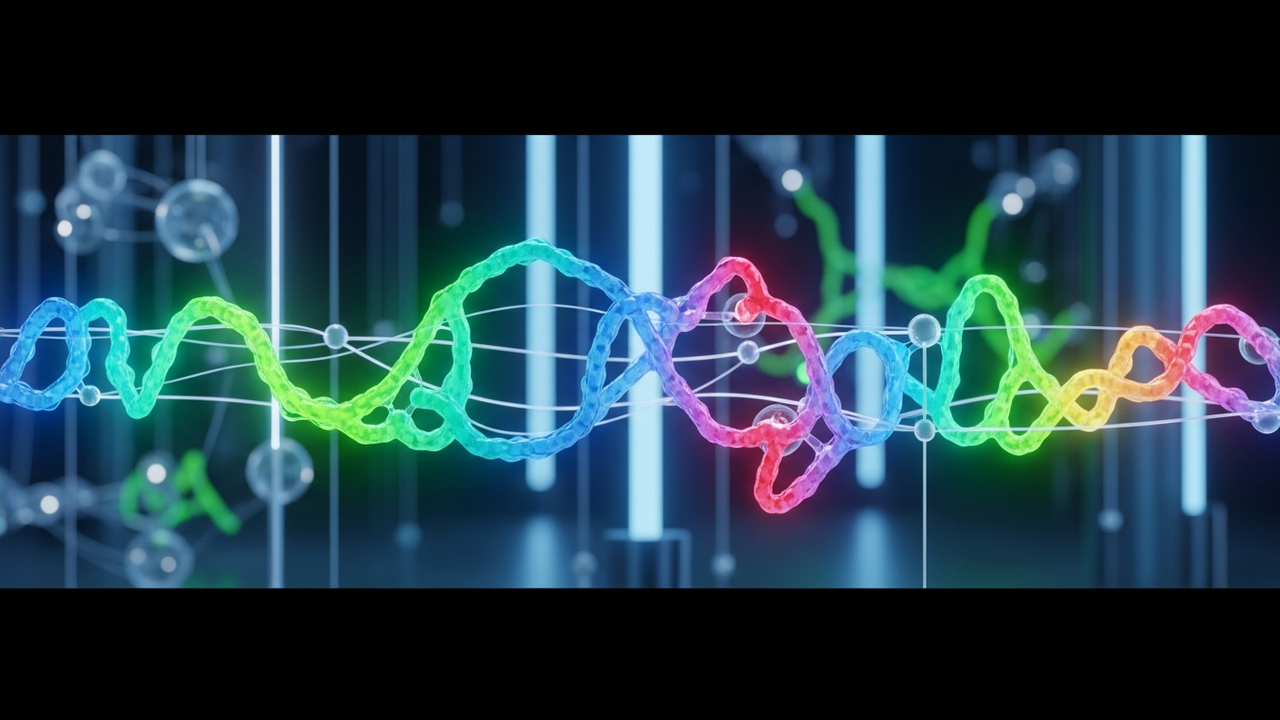
The study combined detailed molecular dynamics simulations with a theoretical approach to analyze how polymer chain entanglements and rearrangements evolve under oscillatory shear stress. A key focus was placed on understanding the origin of higher harmonic components in nonlinear viscoelastic responses and their impact on the microstructure (morphology) within polymer films. This deeper understanding reveals how the subtle morphology of the film – including crystallite size, orientation, and domain structures – directly affects the pathways for electron and hole transport, thereby determining the charge transport efficiency and overall performance of devices such as solar cells, transistors, and sensors. This model offers improved capabilities for predicting the complex nonlinear behavior of polymeric systems that were previously unattainable with conventional models.
Background & Context
Polymeric materials are indispensable components in numerous cutting-edge devices, including flexible displays, organic solar cells, and wearable sensors. The performance of these devices heavily relies on the intricate microstructure (morphology) of the polymer films. However, precisely controlling the morphology formed during processing (e.g., coating, drying, annealing) has been a long-standing challenge. A thorough understanding of polymer behavior in melt or solution states, particularly their nonlinear rheological properties, is paramount for optimizing processing conditions and predicting ultimate device performance.
Strategic Significance & Outlook
The successful development of this molecular description is a landmark achievement in bridging the gap between polymer processing and device performance. By applying these insights, researchers can more precisely control polymer film morphology, leading to improvements in solar cell conversion efficiencies or enhanced response speeds in flexible electronics. This will accelerate the development of next-generation soft matter devices that are both high-performing and durable. In the future, this model is expected to serve as a design guideline for new polymeric materials and contribute to the optimization of entire manufacturing processes.
Source: https://arxiv.org/abs/2606.19384
Get our weekly technology intelligence — free
Receive an infographic that lets you judge at a glance whether each field’s analysis report is worth reading.
Subscribe Free — Weekly Tech Intelligence
By subscribing, you’ll receive Troy-Technical’s weekly technology intelligence newsletter.
- Your email and selected fields are used only to deliver the newsletter.
- We never share your information with third parties.
- You can unsubscribe anytime via the link in each email.
See our Privacy Policy for details.
Takes about a minute · Unsubscribe anytime