Key Findings
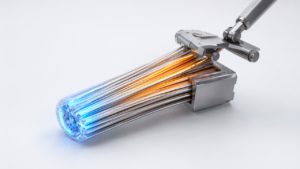
A research team at Pohang University of Science & Technology (POSTECH) has identified a novel mechanism to overcome the efficiency limits of thermoelectric devices that convert waste heat into electricity, utilizing hollow silicon nanotube structures. This groundbreaking discovery is achievable through existing semiconductor manufacturing processes without relying on rare metals, holding significant potential for addressing thermal management challenges in data centers.
Technical / Clinical Details
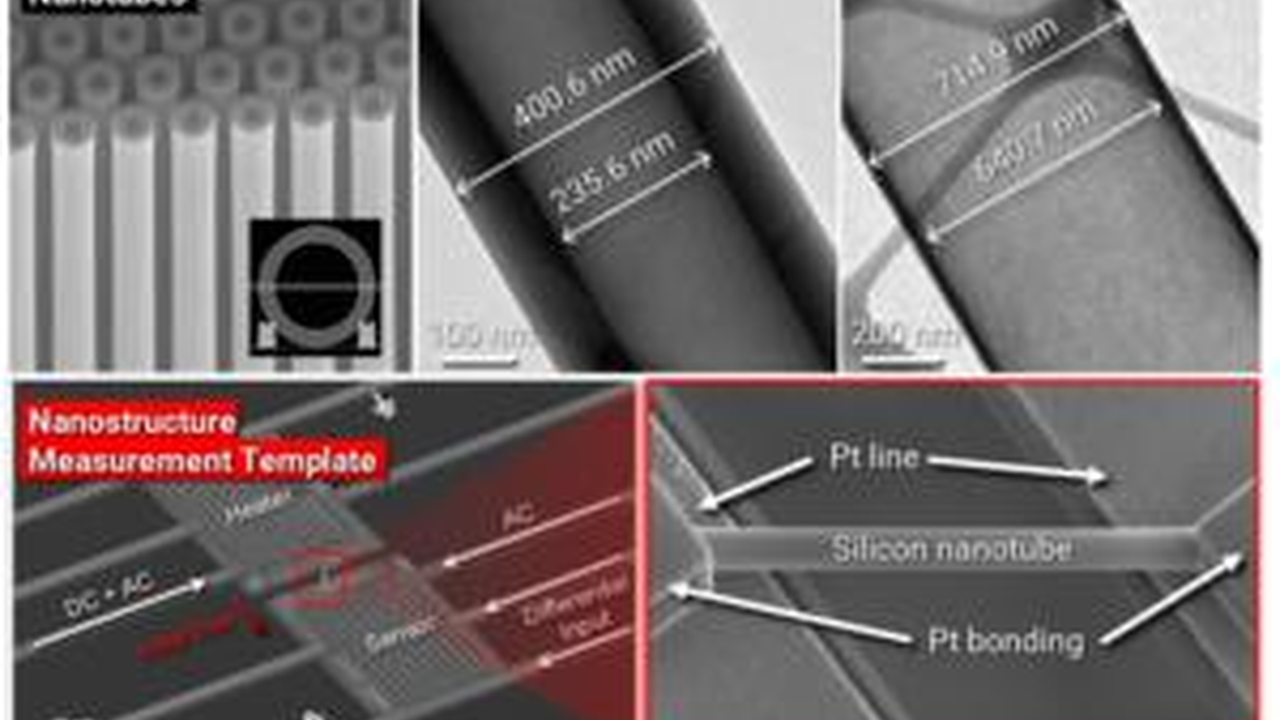
The research team adopted a design principle that significantly reduces thermal conductivity while maintaining electrical conductivity by structuring silicon nanotubes as hollow. Thermoelectric conversion efficiency is maximized in materials with low thermal conductivity and high electrical conductivity (improving the thermoelectric figure of merit, ZT value). Silicon is generally known for its high thermal conductivity, but nanostructuring can promote phonon scattering (quanta that transmit heat) to suppress heat conduction. The hollow structure further amplifies this effect while providing a new pathway to optimize electron transport by increasing surface area.
Specifically, the study revealed that the internal space and narrow wall structure of hollow silicon nanotubes shorten the mean free path of phonons, efficiently blocking heat transport. Simultaneously, proper surface treatment of the nanotubes ensures an efficient path for electrons to move, maintaining high electrical conductivity. This successfully achieved high ZT values that were difficult to attain with conventional bulk materials or other nanostructured materials. Given its high compatibility with existing semiconductor manufacturing technologies (e.g., CMOS processes), this technology is expected to enable large-scale and low-cost production, lowering the barriers to practical application.
Background & Context
With the rapid advancement of AI technology, the power consumption and heat generation of data centers are increasing explosively, making thermal management a pressing global challenge. The energy cost for cooling systems accounts for a significant portion of data center operating expenses, and heat generation increases the risk of server performance degradation and failure. Thermoelectric technology, which effectively converts waste heat into electricity, is one promising solution to this problem, but its practical application has been limited by conversion efficiency and material costs. POSTECH’s research provides a high-efficiency, cost-effective thermoelectric conversion technology, contributing to improved energy efficiency in data centers and the creation of a sustainable information society.
Strategic Significance & Outlook
POSTECH’s research findings open new directions in the design and manufacturing of thermoelectric devices. Moving forward, the development of prototype devices based on this hollow silicon nanotube technology and the evaluation of their long-term stability and durability will be pursued. If commercialized, applications are expected across a wide range of fields, including waste heat recovery from automobiles, industrial waste heat utilization, and even self-powered systems for wearable devices and IoT sensors, beyond data centers. This technology, achieving high-performance thermoelectric conversion with sustainable materials independent of rare metals, holds significant potential to impact energy and environmental issues.
Source: https://www.eurekalert.org/news-releases/1132910
Get our weekly technology intelligence — free
Receive an infographic that lets you judge at a glance whether each field’s analysis report is worth reading.
Subscribe Free — Weekly Tech Intelligence
By subscribing, you’ll receive Troy-Technical’s weekly technology intelligence newsletter.
- Your email and selected fields are used only to deliver the newsletter.
- We never share your information with third parties.
- You can unsubscribe anytime via the link in each email.
See our Privacy Policy for details.
Takes about a minute · Unsubscribe anytime