Key Findings
Battery Energy Storage Systems (BESS) are rapidly transforming into a core design requirement for next-generation data center infrastructure, driven by the unprecedented and fluctuating power demands of AI-driven computing. This evolution positions BESS as a critical solution for addressing key operational challenges within data centers, including extreme load variability, grid reliability risks, and the imperative for improved power quality and grid compatibility.
Technical / Clinical Details
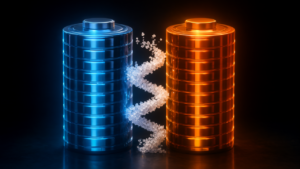
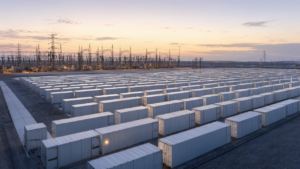
BESS deployment in data centers extends beyond traditional backup power, encompassing sophisticated applications such as peak demand management, grid services, and on-site generation support. To cope with the sudden and massive power draws of AI workloads, battery storage enables rapid, high-capacity power delivery and absorption, thereby stabilizing the grid. Leading data center providers like DataBank are actively deploying utility-scale BESS across multiple facilities, with two of their systems already integrated into Virtual Power Plants (VPPs). These VPP connections enhance grid flexibility and directly contribute to broader electricity market stability. To overcome existing barriers related to cost, performance, and complexity, new technologies like sodium-ion battery chemistries and simplified system architectures are being actively explored and developed, promising future cost reductions and accelerated adoption.
Background & Context
The proliferation of AI models has dramatically escalated data center power consumption. Unlike conventional data centers that assume stable base-load power, AI workloads demand sporadic, high-burst power, creating significant interconnection challenges and posing risks to grid reliability. Battery storage functions as an essential ‘buffer’ for these unpredictable power demands, flattening the load profile on the grid and facilitating faster data center interconnections. Furthermore, through participation in demand response programs, data centers can provide peak-time grid flexibility, thereby enhancing the overall resilience of the electrical network.
Strategic Significance & Outlook
As AI continues its relentless advancement, the power challenges for data centers will only intensify. The role of BESS is transitioning from a mere emergency power source to an active grid asset, making it an indispensable component in next-generation data center design. The commercialization of emerging technologies like sodium-ion batteries, with their potential for improved cost-performance balance, is expected to further accelerate the adoption of battery storage in data centers. This trajectory will foster the development of more sustainable, reliable, and efficient data center infrastructure, laying a crucial foundation for resolving the energy challenges of the AI era.
Get our weekly technology intelligence — free
Receive an infographic that lets you judge at a glance whether each field’s analysis report is worth reading.
Subscribe Free — Weekly Tech Intelligence
By subscribing, you’ll receive Troy-Technical’s weekly technology intelligence newsletter.
- Your email and selected fields are used only to deliver the newsletter.
- We never share your information with third parties.
- You can unsubscribe anytime via the link in each email.
See our Privacy Policy for details.
Takes about a minute · Unsubscribe anytime