Key Findings
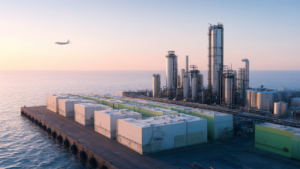
In 2026, the economic rationale for green hydrogen deployment is largely confined to existing hydrogen-consuming industries, including petroleum refining, ammonia production, and methanol synthesis, as well as hard-to-electrify heavy industrial sectors such as steel manufacturing and long-haul maritime shipping. According to analysis by the International Energy Agency (IEA), there is a significant discrepancy between the large volume of announced green hydrogen projects globally and the much smaller number that have reached a Final Investment Decision (FID). This lag suggests that only slightly over 4 million tons of renewable and low-carbon hydrogen are projected to be supplied by 2030 from projects that have secured committed capital.
Technical / Clinical Details
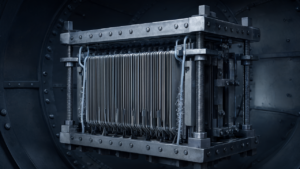
Green hydrogen is produced through water electrolysis powered by renewable electricity (e.g., solar, wind). Its production cost is critically dependent on the price of renewable power and the capital expenditure (CAPEX) of electrolyzers. Currently, these costs remain relatively high, presenting economic competitiveness challenges when compared to fossil fuel-derived hydrogen (grey hydrogen) or natural gas-derived blue hydrogen. Consequently, green hydrogen primarily makes economic sense in applications where carbon emission reductions are imperative and where alternative decarbonization technologies are either more costly or technically unfeasible. Primary target applications include its use in Direct Reduced Iron (DRI) processes for steelmaking, as a feedstock replacement in ammonia and methanol production, and as a fuel in difficult-to-electrify sectors like maritime and aviation.
Background & Context
Governments worldwide have strategically positioned green hydrogen as a key component of their climate change mitigation and energy security agendas, implementing substantial subsidies and incentives. However, the period from policy announcement to actual investment decision and commercial operation often involves extensive lead times. The IEA data suggests that high initial risks, complex permitting processes, and challenges in securing long-term off-takers (buyers) are contributing to these delays in FID. This creates a significant gap between the ‘pipeline’ of announced projects and the actual volume of hydrogen expected to be supplied to the market within the projected timeframe.
Strategic Significance & Outlook
For green hydrogen to achieve widespread adoption as a comprehensive decarbonization solution, further technological maturation and cost reduction are essential. This specifically entails enhancing the manufacturing capacity for large-scale electrolyzers, optimizing integrated renewable energy and hydrogen production systems, and building efficient hydrogen transport and storage infrastructure. While government policy support remains crucial, stable off-take agreements and market-driven demand creation will increasingly become key factors in enabling project FIDs. Post-2030, it is anticipated that a greater number of green hydrogen projects will commence commercial operation, leading to an expansion of economically viable applications and solidifying hydrogen’s role in the global energy transition.
Source: https://futuregreentech.com/blog/green-hydrogen-2026-where-it-makes-sense
Get our weekly technology intelligence — free
Receive an infographic that lets you judge at a glance whether each field’s analysis report is worth reading.
Subscribe Free — Weekly Tech Intelligence
By subscribing, you’ll receive Troy-Technical’s weekly technology intelligence newsletter.
- Your email and selected fields are used only to deliver the newsletter.
- We never share your information with third parties.
- You can unsubscribe anytime via the link in each email.
See our Privacy Policy for details.
Takes about a minute · Unsubscribe anytime