Key Findings
Optimizing protein design for large-scale production is undergoing a revolutionary transformation through the integration of computational algorithms, machine learning, molecular dynamics simulations, and artificial intelligence (AI). These advanced technologies dramatically accelerate development timelines and reduce costs by significantly curtailing the need for experimental trials and streamlining the design process. Specifically, advanced bioprocess optimization, which combines real-time monitoring with predictive control algorithms, demonstrates the potential to cut energy consumption by 20-30%, paving the way for sustainable and economically efficient manufacturing.
Technical / Clinical Details
- Computational Algorithms and Machine Learning: These are leveraged to analyze vast datasets of protein sequences, structures, functions, stability, and expression efficiency to predict optimal design pathways. This enables the identification of candidate proteins far more rapidly and efficiently compared to traditional manual or trial-and-error methods.
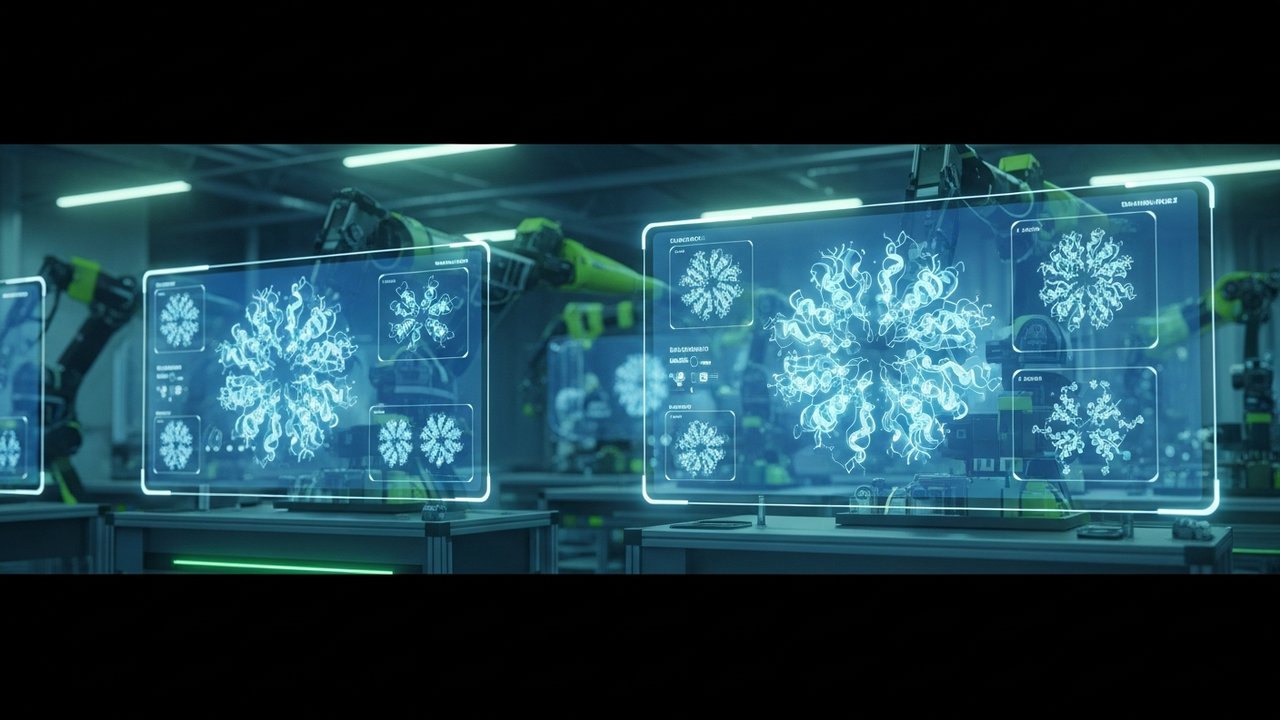
- Molecular Dynamics Simulations: These predict the behavior and stability of designed protein 3D structures at an atomic level, identifying unintended folding or aggregation issues during the design phase. This reduces the risk of problems arising during manufacturing and enhances the predictability of product quality.
- AI for Design Automation: AI possesses the capability to integrate all this data and automate the entire design process. Based on specific objective functions (e.g., maximizing productivity, enhancing stability, reducing costs), AI simultaneously optimizes multiple design variables to generate optimal protein designs.
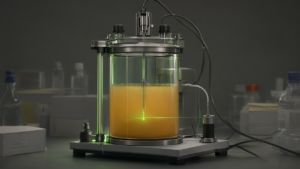
- Advanced Bioprocess Optimization Technologies: Combining real-time monitoring systems (e.g., PAT) with predictive control algorithms continuously monitors Critical Process Parameters (CPPs) of the culture environment, maintaining optimal cell growth and protein production. This not only reduces energy consumption by 20-30% but also ensures yield maximization and quality consistency.
- Improved Cost Efficiency: Optimized protein design contributes to cost reductions at each stage of the manufacturing process through enhanced expression levels, simplified purification processes, and improved stability. For example, proteins expressed with high efficiency can yield the same amount of product with fewer raw materials.
Background & Context
In fields such as biopharmaceuticals, industrial enzymes, and cellular agriculture, the large-scale, cost-effective production of high-quality proteins is indispensable. However, protein design has traditionally been a complex, time-consuming process, often accompanied by high experimental costs. The evolution of digital technologies, particularly AI and machine learning, holds the potential to overcome this bottleneck and open new frontiers in biomanufacturing.
Strategic Significance & Outlook
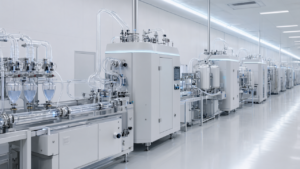
AI and computation biology-driven protein design optimization will dramatically accelerate the ‘Design-Build-Test-Learn (DBTL)’ cycle in biopharmaceutical development. This will shorten the time-to-market for new therapeutics and bioproducts and reduce development costs. Furthermore, improved energy efficiency enhances the sustainability of manufacturing processes and contributes to reducing environmental impact. In the future, these integrated technologies are expected to take another significant step towards realizing autonomously functioning ‘smart biofactories.’
Get our weekly technology intelligence — free
Receive an infographic that lets you judge at a glance whether each field’s analysis report is worth reading.
Subscribe Free — Weekly Tech Intelligence
By subscribing, you’ll receive Troy-Technical’s weekly technology intelligence newsletter.
- Your email and selected fields are used only to deliver the newsletter.
- We never share your information with third parties.
- You can unsubscribe anytime via the link in each email.
See our Privacy Policy for details.
Takes about a minute · Unsubscribe anytime