Background
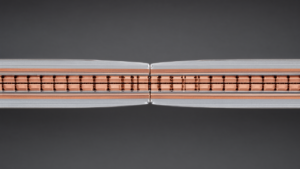
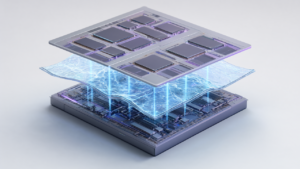
The proliferation of artificial intelligence (AI) necessitates High-Bandwidth Memory (HBM) that can process vast amounts of data at unprecedented speeds. HBM achieves this by vertically stacking multiple DRAM dies, but further increasing stack height and performance demands more advanced, higher-density, and more reliable inter-die bonding technologies than traditional microbump approaches. Hybrid bonding, which directly connects copper lines without bumps, has emerged as a promising solution to meet these stringent requirements.
Key Findings / Results
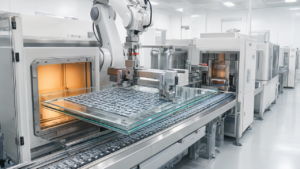
Hanmi Semiconductor, a leading South Korean semiconductor equipment manufacturer, announced the development of its second-generation hybrid bonder, designed to support multi-layer stacking for next-generation HBM. The company plans to unveil a prototype later this year and initiate collaborations with key customers. To support mass production, Hanmi is investing approximately ₩100 billion (around $67.6 million USD) in a new hybrid bonder factory within the Juan National Industrial Complex in Incheon. This 14,570 square meter facility is expected to be completed by the first half of 2025, dedicated to manufacturing HBM hybrid bonders. The core technological innovation of this second-generation system is its ability to perform bump-less, direct copper-to-copper (Cu-to-Cu) bonding between chips and wafers. This significantly reduces connection pitch, enabling HBM stacks with over 20 DRAM layers, which is crucial for HBM3E and future HBM4/HBM5 generations.
Technical Significance & Outlook
Hanmi Semiconductor’s investment in its second-generation hybrid bonder marks a significant advancement for the HBM market. As a dominant player with approximately 70% global market share in HBM-specific TC bonders, Hanmi aims to replicate this leadership in the nascent hybrid bonding segment. This technology is vital for pushing the boundaries of HBM performance, particularly in data transfer rates and power efficiency, which directly translates to more powerful AI accelerators. Amidst ongoing HBM supply shortages, securing advanced bonding equipment capacity is paramount for HBM manufacturers’ competitiveness and time-to-market. Hanmi’s strategic move underscores the expanding role of back-end equipment suppliers in the AI era and reinforces South Korea’s position as a critical innovation hub within the HBM ecosystem.
Source: https://www.chosun.com/english/industry-en/2026/04/10/2EZEOAMZUVAFPGWWTMCDZIZBZU/