Key Findings
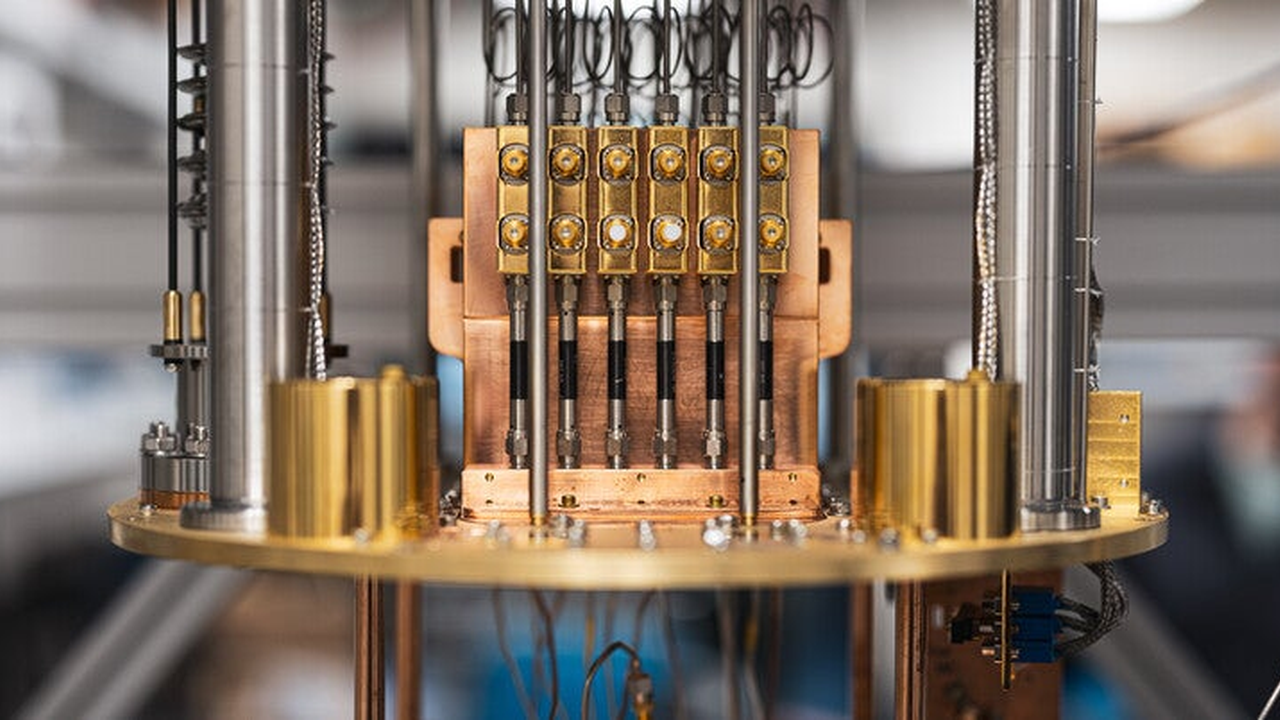
The Yale-led project, “ERASE (Erasure Qubits and Dynamic Circuits for Quantum Advantage),” has received a new $4 million grant from the National Science Foundation (NSF). This funding will significantly accelerate the development of a large-scale, error-correcting quantum computer, marking a crucial step towards realizing practical quantum computing capabilities.
Technical / Clinical Details
- Development of “Erasure Flag” Qubits: Central to the ERASE project is the innovative concept of “erasure flag” qubits. Traditional qubits face challenges with complex error correction when errors occur. “Erasure flag” qubits dramatically simplify and enhance the efficiency of the error correction process by clearly “flagging” information when an error occurs. This innovation is expected to improve the scalability and reliability of quantum computers.
- Initial Blueprint for Hardware and Software: The grant will support the development of an initial blueprint for hardware and software based on this new qubit architecture. This includes detailed plans for physical qubit design, control circuits, and the implementation of quantum error correction codes.
- Partnership with D-Wave Quantum and Workforce Development: The ERASE project will also contribute to the development of the quantum technology workforce in Connecticut through a strategic partnership with D-Wave Quantum, a pioneer in quantum annealing. This academic-industry collaboration provides students and researchers with opportunities to engage in cutting-edge quantum technology development, fostering future experts for the quantum ecosystem.
Background & Context
Quantum computing is expected to offer unprecedented computational power in fields like drug discovery, materials science, finance, and artificial intelligence. However, current quantum devices face challenges such as susceptibility to noise and extreme difficulty in error correction (the NISQ era). To realize truly practical, fault-tolerant quantum computers, efficient and scalable error correction technology is indispensable. Yale University is at the forefront of superconducting qubit research, and this support from NSF reflects its importance in the U.S. national quantum technology development strategy.
Strategic Significance & Outlook
This Phase II funding and the development of “erasure flag” qubits hold the potential for a significant breakthrough in realizing error-correcting quantum computers. Establishing more efficient error correction mechanisms will accelerate the construction of larger and more reliable quantum computers, expediting the development of practical applications that can achieve quantum advantage. The partnership between Yale University and D-Wave Quantum is expected to accelerate progress in quantum computing from both hardware and software perspectives, bringing significant societal impact.
Source: https://news.yale.edu/2026/06/25/new-vision-quantum-computing-takes-big-step-forward-new-grant
Get our weekly technology intelligence — free
Receive an infographic that lets you judge at a glance whether each field’s analysis report is worth reading.
Subscribe Free — Weekly Tech Intelligence
By subscribing, you’ll receive Troy-Technical’s weekly technology intelligence newsletter.
- Your email and selected fields are used only to deliver the newsletter.
- We never share your information with third parties.
- You can unsubscribe anytime via the link in each email.
See our Privacy Policy for details.
Takes about a minute · Unsubscribe anytime