Key Findings
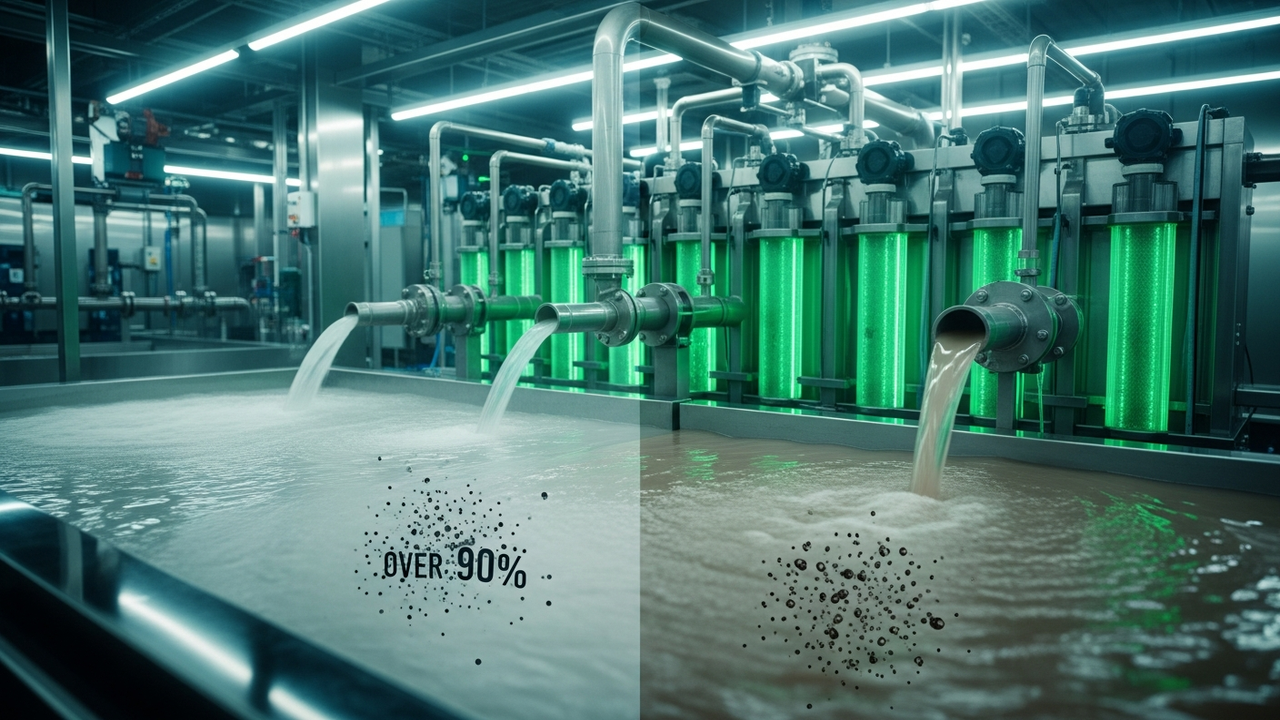
A review article published by Emerald Publishing underscores the significant promise of nanocellulose (NC) filtration membranes for industrial wastewater treatment. The article emphasizes NC’s exceptional mechanical strength, high surface area, and environmentally friendly biocompatibility, indicating that NC composite materials, in various forms, can achieve over 90% removal efficiency for diverse contaminants including bacteria, heavy metals, and oils.
Technical / Clinical Details
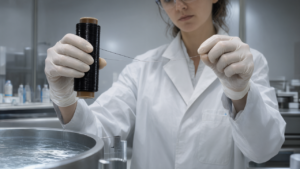
Nanocellulose, a nanoscale material extracted from plant cellulose fibers, includes forms such as cellulose nanofibrils (CNF) and cellulose nanocrystals (CNC). These NCs possess extremely high tensile strength due to their hydrogen bonding network, offering mechanical stability comparable to or superior to conventional synthetic polymer membranes. Furthermore, NCs exhibit a high specific surface area, providing abundant adsorption sites for efficient capture of heavy metal ions, dyes, and organic pollutants. The review explores NC-based filtration membranes not only as pure NC films but also as composites with other materials (e.g., graphene, metal oxides). Their configurations span membranes suitable for microfiltration, ultrafiltration, and nanofiltration, as well as highly porous aerogels and hydrogels. By introducing chemical functional groups to the surface or hybridizing with polymers, membrane properties like hydrophilicity/hydrophobicity, charge, and pore size distribution can be tailored, further improving selectivity and separation efficiency for specific pollutants. For example, NC membranes with antimicrobial properties can inhibit microbial growth (biofouling) on membrane surfaces, contributing to long-term performance maintenance.
Background & Context
Industrial wastewater contains various hazardous pollutants, including heavy metals, organic chemicals, and recalcitrant substances, posing serious environmental and human health risks. With increasing global environmental regulations and growing awareness of sustainable water resource management, the development of effective and eco-friendly wastewater treatment technologies is an urgent priority. Nanotechnology, due to its unique material properties, is expected to offer innovative solutions in this field. Nanocellulose, being derived from renewable resources (wood, agricultural waste), has low environmental impact and is biodegradable, making it particularly attractive as a sustainable material. This review suggests that nanocellulose is establishing its position as a next-generation material that can replace or complement conventional synthetic membrane materials.
Strategic Significance & Outlook
Nanocellulose filtration membrane technology is expected to be applied to an even wider range of industrial wastewater treatments (e.g., pulp and paper, textiles, food processing, chemical industries) through future research and development. Crucially, the establishment of high-performance, cost-effective large-scale production techniques will be vital for commercialization. Additionally, detailed evaluations of membrane long-term stability, fouling resistance, and performance under high-pressure conditions are necessary. If this technology is successfully implemented, it holds the potential to significantly contribute to sustainable societal development by improving wastewater treatment efficiency and promoting the circular use of water resources. This would represent a groundbreaking technology aligned with the principles of ‘green chemistry’ and a ‘circular economy.’
Get our weekly technology intelligence — free
Receive an infographic that lets you judge at a glance whether each field’s analysis report is worth reading.
Subscribe Free — Weekly Tech Intelligence
By subscribing, you’ll receive Troy-Technical’s weekly technology intelligence newsletter.
- Your email and selected fields are used only to deliver the newsletter.
- We never share your information with third parties.
- You can unsubscribe anytime via the link in each email.
See our Privacy Policy for details.
Takes about a minute · Unsubscribe anytime