Key Findings
An article published by Inspenet highlights the significant potential of carbon nanomaterials, particularly graphene, when integrated into advanced separation systems for industrial wastewater treatment. This approach promises to substantially contribute to the removal of organic pollutants, suppression of microbial adhesion (biofouling), and protection of membrane filtration units, thereby dramatically enhancing the efficiency and sustainability of wastewater treatment processes.
Technical / Clinical Details
The article emphasizes the multifunctional roles of carbon nanomaterials, especially graphene and its derivatives (e.g., graphene oxide), in wastewater treatment. Specific functions include:
- Selective Adsorbents: Graphene’s high specific surface area and tunable surface chemistry allow for efficient adsorption and removal of specific pollutants such as heavy metal ions, dyes, and pharmaceutical residues.
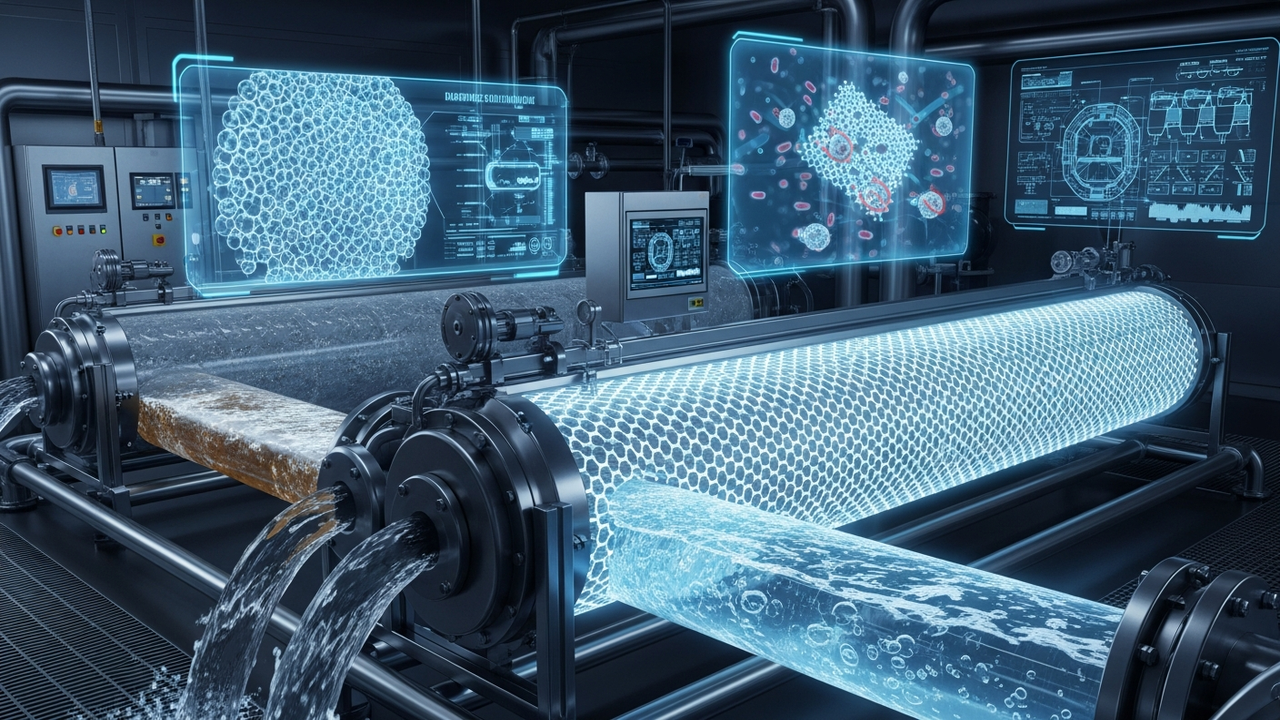
- Modified Active Layers: In membrane filtration technology, incorporating graphene as a surface layer or a component in composite membranes enables precise control of pore size distribution and improved permeability.
- Catalytic Supports: In photocatalytic and electrocatalytic reactions, graphene’s high electrical conductivity and large surface area facilitate the dispersion of catalytic active species, enhancing reaction efficiency.
- Antifouling Surfaces: Graphene-based materials exhibit antifouling properties due to their specific surface characteristics, inhibiting the adhesion of microorganisms and organic matter to membrane surfaces, thereby extending membrane lifespan and reducing maintenance costs.
These functions collectively enable graphene to effectively reduce organic loads in wastewater, prevent membrane clogging, and stabilize the overall treatment process.
Background & Context
Global industrialization leads to the discharge of vast volumes of industrial wastewater, which is a major contributor to water pollution. Existing wastewater treatment technologies face challenges such as high costs, limited treatment efficiency, and secondary environmental issues. In particular, the removal of recalcitrant organic pollutants and emerging contaminants requires advanced technologies. Nanotechnology, with its unique material properties, is expected to offer innovative solutions to these challenges, with graphene being a particularly noteworthy material. Amid increasing environmental regulations and demands for sustainable water resource management, graphene-based wastewater treatment technologies address urgent needs for both industry and society.
Strategic Significance & Outlook
Wastewater treatment systems integrating graphene and carbon nanomaterials are expected to see further research, development, and commercialization. Key challenges will include reducing large-scale manufacturing costs, ensuring long-term material stability, and evaluating performance in actual wastewater environments. If successfully commercialized, this technology could dramatically improve the efficiency and sustainability of wastewater treatment across diverse industrial sectors such as paper, textile, chemical, and pharmaceutical manufacturing. This would contribute significantly to water resource conservation and global environmental protection, becoming a foundational technology to support sustainable industrial development.
Source: https://inspenet.com/en/articles/industrial-water-treatment-graphene/
Get our weekly technology intelligence — free
Receive an infographic that lets you judge at a glance whether each field’s analysis report is worth reading.
Subscribe Free — Weekly Tech Intelligence
By subscribing, you’ll receive Troy-Technical’s weekly technology intelligence newsletter.
- Your email and selected fields are used only to deliver the newsletter.
- We never share your information with third parties.
- You can unsubscribe anytime via the link in each email.
See our Privacy Policy for details.
Takes about a minute · Unsubscribe anytime