Key Findings
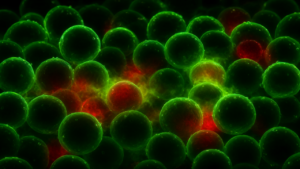
Researchers have developed gene-encoded fluorescent biosensors utilizing a split GFP/YFP system, enabling specific labeling and dynamic observation of membrane contact sites between the endoplasmic reticulum (ER) and Golgi apparatus within cells in real-time. These innovative probes offer a powerful tool for elucidating the structural dynamics of these contact sites in living cells through super-resolution imaging.
Technical/Clinical Details
This biosensor system functions by splitting a fluorescent protein, green fluorescent protein (GFP) or yellow fluorescent protein (YFP), into two non-fluorescent fragments. Each fragment is fused to proteins specifically localized to the ER membrane and the Golgi membrane, respectively. When the ER and Golgi come into close contact, the two fragments re-associate to emit fluorescence, making the membrane contact sites visible. This ‘split fluorescent protein’ approach allows for high-resolution tracking of minute membrane contact structures and their dynamic changes at the tens-of-nanometer level. It was successfully demonstrated to effectively capture dynamics during critical cellular events, such as the reorganization of ER-Golgi contacts during cell division, changes during ER stress response, and the disappearance of ER-Golgi contacts during mammalian neuronal development. This opens new avenues for understanding how interactions between intracellular organelles are deeply involved in various physiological and pathological processes.
Background & Context
Membrane contact sites between intracellular organelles are known to play central roles in crucial cellular functions like lipid metabolism, calcium signaling, and autophagy. However, these contact sites are highly transient, dynamic, and exist in minuscule spaces, making real-time observation of their behavior in live cells a long-standing technical challenge. This technology provides a groundbreaking tool to address this significant biological problem and brings a new perspective to cell biology research.
Strategic Significance & Outlook
This split GFP-based fluorescent biosensor holds great potential to contribute significantly to elucidating the mechanisms of diseases involving ER-Golgi interactions, such as neurodegenerative diseases and metabolic disorders. Its ability to visualize membrane contact dynamics in real-time makes it a promising tool for drug screening to evaluate the effects of drug candidates on interactions between intracellular organelles and to identify new therapeutic targets. In the future, this technology is expected to be extended to elucidate contact sites between other intracellular organelles, deepening the comprehensive understanding of cellular functions and contributing to the development of novel intervention strategies for a wider range of diseases.
Get our weekly technology intelligence — free
Receive an infographic that lets you judge at a glance whether each field’s analysis report is worth reading.
Subscribe Free — Weekly Tech Intelligence
By subscribing, you’ll receive Troy-Technical’s weekly technology intelligence newsletter.
- Your email and selected fields are used only to deliver the newsletter.
- We never share your information with third parties.
- You can unsubscribe anytime via the link in each email.
See our Privacy Policy for details.
Takes about a minute · Unsubscribe anytime