Background
Thermoelectric materials, capable of directly interconverting thermal and electrical energy, are unique functional materials with diverse applications. For instance, they can enhance energy efficiency by converting waste heat from industrial processes or automobiles into electricity, or enable environmentally friendly solid-state refrigerators and localized cooling devices without using refrigerants like CFCs. These technologies hold the potential to contribute significantly to building a sustainable society and resolving energy issues. However, the dimensionless figure of merit (ZT value), which quantifies thermoelectric performance, remains insufficient for current bulk materials, necessitating substantial improvements for practical implementation. A major challenge lies in simultaneously achieving high electrical conductivity and low thermal conductivity, which are often contradictory properties.
Key Findings / Results
To address the challenge of improving thermoelectric ZT values, researchers at the Massachusetts Institute of Technology (MIT) are focusing on a nanostructuring approach, specifically exploring the potential of nanoporous silicon (nanoporous Si). The core aspects of their research are as follows:
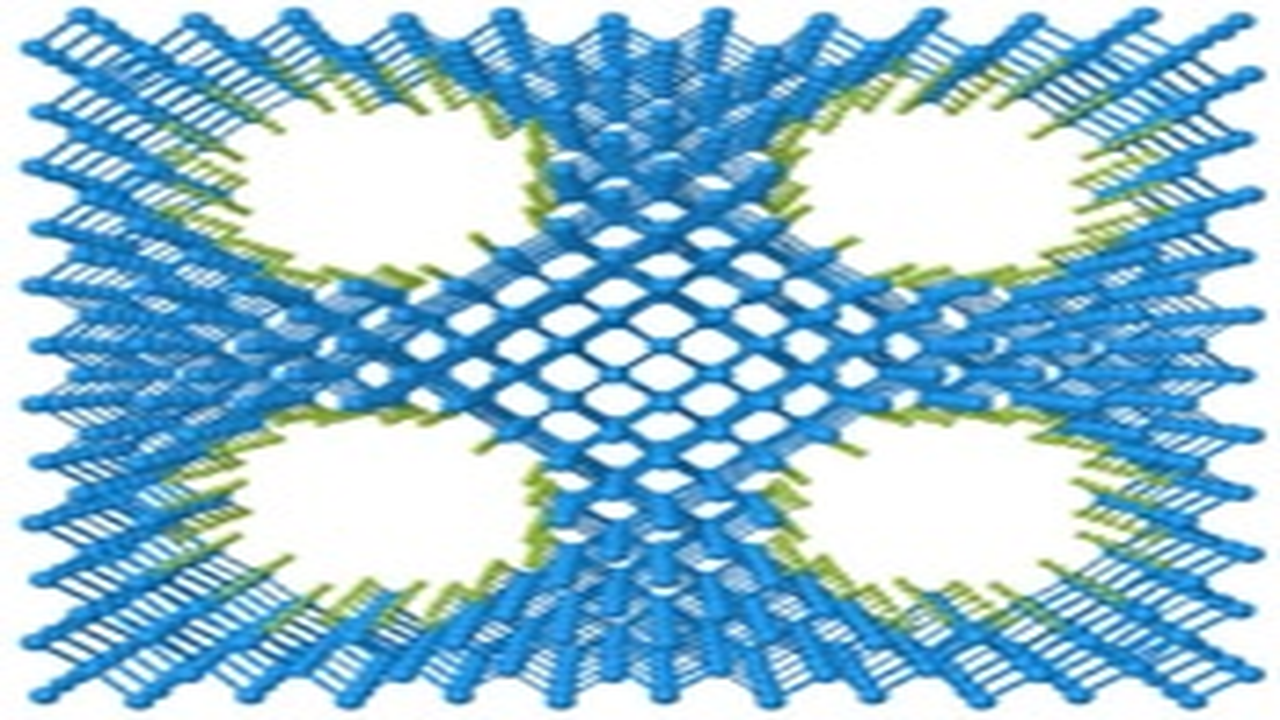
- Design of Nanoporous Structures: The research team proposes a structure where nanometer-sized cylindrical pores are periodically arranged within a silicon substrate. This precisely designed nanostructure significantly influences the behavior of phonons, the primary carriers of heat conduction.
- Dramatic Reduction in Thermal Conductivity: Numerical simulations have shown that the thermal conductivity of this nanoporous silicon can be reduced by up to 300 times compared to bulk silicon. This extremely low thermal conductivity is primarily attributed to increased phonon scattering at the pore walls. When phonon wavelengths interact with nanoscale structures, they deviate from their usual conduction pathways, resulting in reduced heat transfer.
- Expectation for Enhanced ZT Values: The thermoelectric figure of merit ZT is expressed by the equation ZT = S²σT/κ (where S is the Seebeck coefficient, σ is electrical conductivity, T is absolute temperature, and κ is thermal conductivity). By dramatically reducing thermal conductivity while maintaining electrical conductivity, it becomes possible to significantly improve the ZT value. While a ZT value of 3 or higher is desirable for many thermoelectric applications, current bulk materials typically have ZT values around 1. Nanoporous silicon is considered a promising candidate for achieving this target.
This research serves as an excellent example of how nanoscale material design can profoundly impact macroscopic properties, showcasing the synergy between fundamental physics and applied engineering.
Technical Significance & Outlook
MIT’s research on nanoporous silicon has the potential to significantly impact the field of thermoelectric conversion technology. If this material can indeed achieve high ZT values, the following innovative applications are anticipated:
- Energy Harvesting: Efficiently recovering electricity from various unused heat sources, such as automotive exhaust heat, industrial waste heat, and data center waste heat, thereby reducing energy consumption.
- Eco-Friendly Cooling Technology: Accelerating the widespread adoption of solid-state cooling systems (thermoelectric cooling) that do not use greenhouse gases like CFCs, contributing to environmental burden reduction.
- Miniature and Wearable Devices: Small, efficient thermoelectric devices can contribute to the self-powering of wearable electronics and sensors, potentially solving battery life challenges.
Future research challenges include transitioning from the numerical simulation phase to actual material synthesis and performance demonstration, as well as verifying feasibility and cost-effectiveness in large-scale manufacturing processes. Precise control over nanoporous structures and ensuring long-term stability are also crucial. This fundamental research is building a foundation for innovative energy technologies toward a sustainable future and is attracting significant global attention.