Key Findings
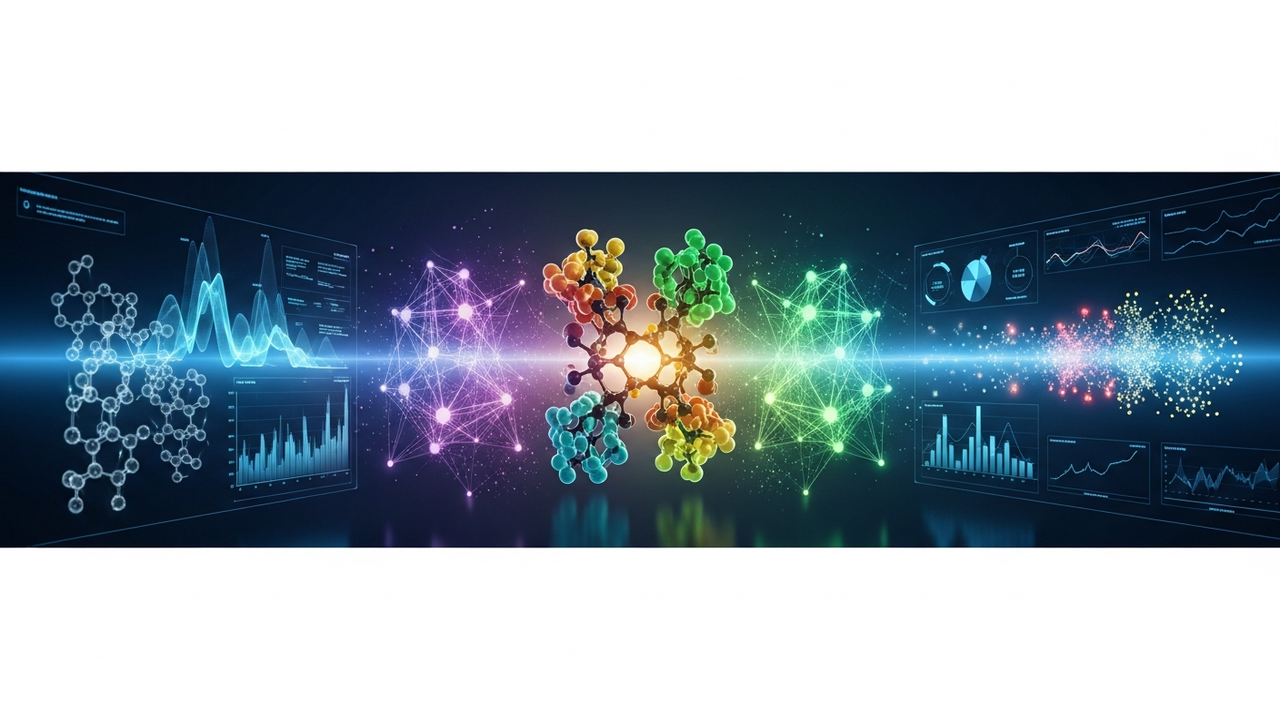
In the realm of molecular discovery, foundation models and generative AI are fundamentally reshaping how molecules are predicted, explored, and designed across chemistry, biology, and materials science. This research has developed data-centric learning methodologies and molecular foundation models, enabling molecular discovery under complex conditions characterized by limited data, multimodal observations, and multi-objective design goals. This significantly improves the accuracy of virtual screening and the controllability of generative models.
Technical/Clinical Details
The methodologies developed in this study focus on three primary aspects. First, a data-centric learning approach maximizes learning efficiency from limited data through curation, augmentation, and noise reduction, thereby enhancing the model’s generalization capabilities. Second, the ability to integrate and leverage different types of data (multimodal observations), such as spectroscopic data, image data, and textual information, leads to a more comprehensive understanding of molecular properties and improved prediction accuracy. Third, the framework addresses multi-objective design goals, simultaneously optimizing for properties like binding affinity, toxicity, and synthesizability. These methods demonstrate higher accuracy and interpretability in virtual screening predictive models compared to conventional approaches. Furthermore, for molecular design, they show improved control in generating not only specific functional molecular structures but also their corresponding synthetic pathways.
Background & Context
Traditional molecular discovery processes have been characterized by extensive experimental trial and error, consuming vast amounts of time and resources, often with low success rates. In drug discovery and new material development, particularly, the enormous design space makes efficient exploration critically important. The recent advancements in deep learning and AI technologies have opened up significant possibilities for accelerating these processes. Foundation models, especially generative AI, by learning from existing data and having the capacity to ‘create’ new molecules, are expected to lead to the discovery of innovative molecular structures previously unimaginable by humans. The data-centric approach is built on the understanding that data quality and management directly impact model performance, making it essential for enhancing the reliability and practicality of AI models.
Strategic Significance & Outlook
The advancements in data-centric learning and molecular foundation models presented in this research are expected to have wide-ranging applications, including accelerating drug pipelines, rapid development of novel materials, and optimization of chemical reactions. In pharmaceutical development, specifically, these technologies will play a crucial role in early identification of safer and more effective drug candidates, thereby reducing development timelines and costs. In materials science, they will contribute to the discovery of high-performance new materials and the design of molecular structures with specific functionalities. Future challenges include training these models on even larger datasets and validating their applicability to complex real-world problems. The continuous evolution of this field is poised to push the frontiers of science and technology, bringing significant societal impact.
Get our weekly technology intelligence — free
Receive an infographic that lets you judge at a glance whether each field’s analysis report is worth reading.
Subscribe Free — Weekly Tech Intelligence
By subscribing, you’ll receive Troy-Technical’s weekly technology intelligence newsletter.
- Your email and selected fields are used only to deliver the newsletter.
- We never share your information with third parties.
- You can unsubscribe anytime via the link in each email.
See our Privacy Policy for details.
Takes about a minute · Unsubscribe anytime





Comments