Key Findings
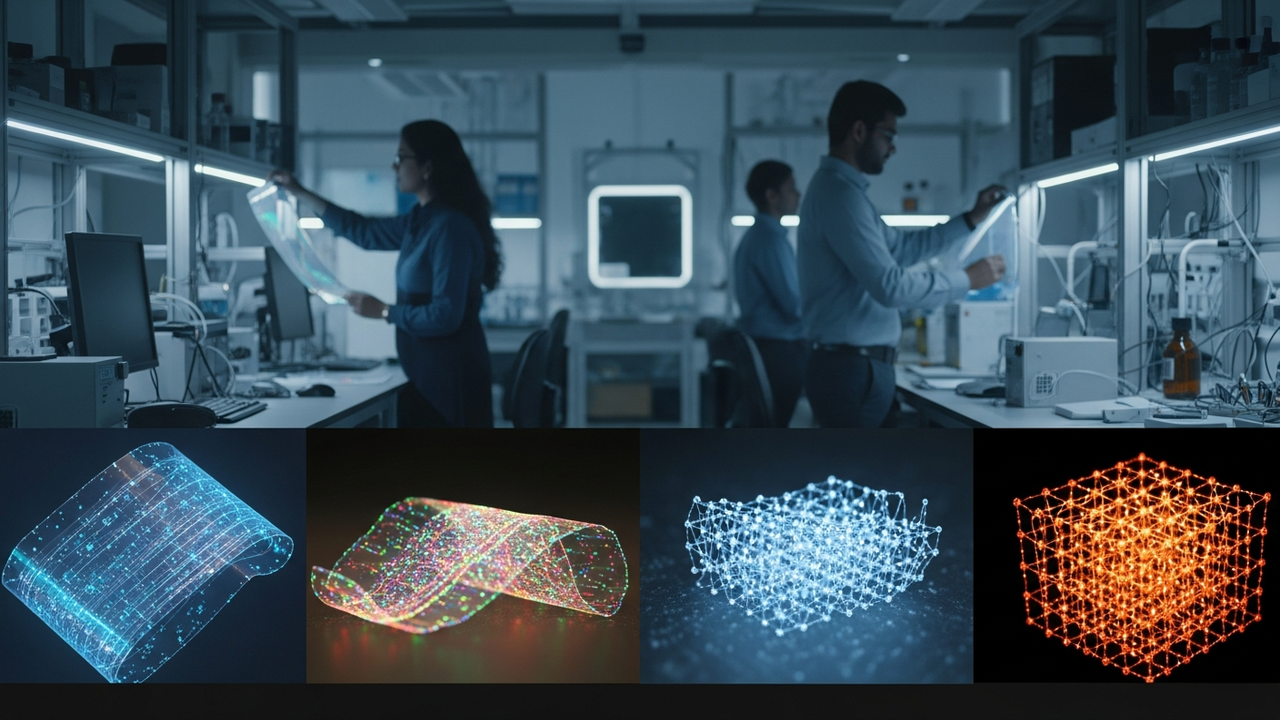
A research team at the Indian Institute of Science (IISc) has developed a new class of smart materials capable of reversibly changing their physical properties in response to external stimuli such as light, heat, and mechanical pressure. This breakthrough marks a critical step towards the realization of next-generation quantum processors and high-precision industrial sensors, with particular emphasis on the successful synthesis of a novel chemical framework that enables magnetic switching.
Technical / Clinical Details
The IISc researchers synthesized a specific group of compounds with complex molecular structures, demonstrating that these materials exhibit distinct responses to light (e.g., specific wavelengths), heat (e.g., temperature changes), and mechanical pressure. The internal structure of the material rearranges under these external stimuli, leading to reversible changes in physical parameters such as electrical conductivity, optical properties, and magnetic characteristics. This reversibility ensures the material can switch and restore its functions multiple times.
Crucially, the team successfully developed a new chemical framework that facilitates magnetic switching. This indicates the ability to precisely control the material’s magnetic state using external magnetic fields or other stimuli, a property essential for quantum information storage and processing. This material is expected to improve the stability of qubits, the fundamental units of quantum computing, and enable faster, more energy-efficient data storage devices.
Background & Context
Smart materials, particularly those whose functions change in response to external stimuli, are drawing significant attention across diverse fields including electronics, sensors, energy, and medicine. With the advancement of quantum technologies, devices like quantum processors and sensors require materials with specific functions that are difficult to achieve with conventional materials, often facing limitations in responsiveness or reversibility. The IISc research offers a promising solution to these challenges.
India is making rapid progress in scientific and technological research, with leading institutions like IISc enhancing their international competitiveness in advanced materials. Such materials contribute to improving error correction in quantum computing and enhancing the precision of industrial sensors, potentially forming foundational technologies for future societal infrastructure such as smart cities and autonomous driving. This positions India at the forefront of developing materials for the next technological revolution.
Strategic Significance & Outlook
The smart materials developed are expected to directly contribute to enhancing the performance of quantum processors, building next-generation data storage units, and developing highly sensitive, self-adjusting sensors. The research team is anticipated to move towards optimizing the synthesis processes for these materials and validating their scalability for larger-scale production. Further evaluation of the materials’ stability, durability, and cost-effectiveness will be crucial for practical implementation. This technology is poised to drive innovation across a broad range of applications, including wearable devices and environmental monitoring systems.
Get our weekly technology intelligence — free
Receive an infographic that lets you judge at a glance whether each field’s analysis report is worth reading.
Subscribe Free — Weekly Tech Intelligence
By subscribing, you’ll receive Troy-Technical’s weekly technology intelligence newsletter.
- Your email and selected fields are used only to deliver the newsletter.
- We never share your information with third parties.
- You can unsubscribe anytime via the link in each email.
See our Privacy Policy for details.
Takes about a minute · Unsubscribe anytime