Background and Strategic Imperative
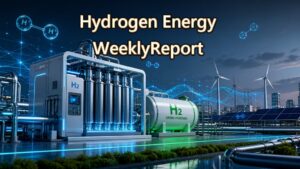
The European Union has positioned green hydrogen as a cornerstone of its ambitious climate and energy independence strategies. The European Hydrogen Bank was established to de-risk early-stage hydrogen projects and accelerate market development by providing financial incentives to overcome initial cost disparities. The recent announcement of the third auction results underscores the EU’s firm commitment to tangible project execution and scaling up domestic clean hydrogen production capabilities.
Key Allocations and Project Scope
The European Commission has committed approximately €1.09 billion from the EU Innovation Fund to nine hydrogen production projects spanning seven countries. These include significant ventures such as MorGen Energy’s 300 MWe NJK project and Hy2gen Nordic AS’s 100 MWe ALBA project in Denmark, and Vetyalfa Oy’s Cloudberry project in Finland. Collectively, these projects will add approximately 1.1 gigawatts (GW) of electrolysis capacity, with an expected production of over 1.3 million tonnes of renewable and low-carbon hydrogen over their first ten years. This is anticipated to avert roughly 9 million tonnes of CO2 equivalent emissions.
The financial support is structured as a fixed premium, ranging from €0.44 to €3.81 per kilogram of certified hydrogen, disbursed for up to ten years. This mechanism is designed to enhance the economic viability of clean hydrogen projects, making them more attractive for private investment and enabling large-scale deployment. Notably, the lowest bid was secured by Finland’s Vetyalfa Oy at €0.44/kg, highlighting increasing cost competitiveness in the sector.
Technical Significance and Outlook
This substantial funding marks a critical step towards accelerating the commercialization of large-scale renewable hydrogen production technologies across Europe. The deployment of over a gigawatt of electrolyzer capacity will support the decarbonization of hard-to-abate industrial sectors, facilitate hydrogen integration in transport (maritime, aviation), and enable the production of green chemicals. Developers are mandated to secure full financing within 2.5 years and commence operations within 5 years of grant agreement signature, imposing a rigorous timeline for project delivery. Success in these endeavors will solidify Europe’s position as a global leader in the emerging clean hydrogen economy.
- The fixed premium model effectively mitigates financial risks for nascent hydrogen projects, fostering market entry.
- The aggregated 1.1 GW electrolysis capacity significantly contributes to the EU’s RePowerEU targets.
- Inclusion of electrolytically produced low-carbon hydrogen expands the scope of eligible projects, supporting diverse clean production pathways.