Key Findings
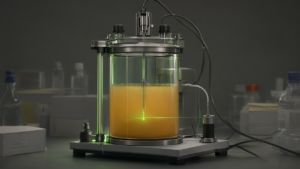
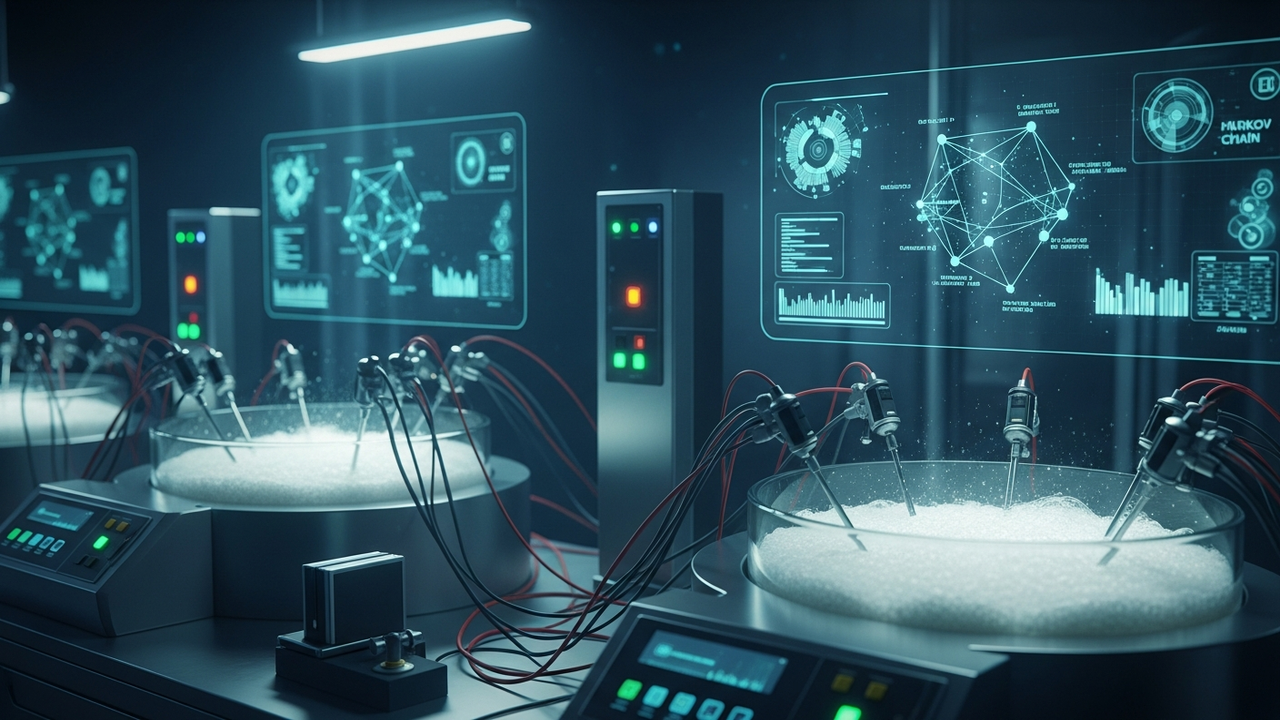
A recent paper published in MDPI introduces a novel digital twin framework that leverages IoT sensor data and a Markov chain-based metric, termed ‘Reliability Reserve,’ to provide real-time operator decision support in Ayran fermentation. This innovative system integrates a physical bioreactor with a sophisticated virtual model, utilizing pH and temperature sensor data alongside machine learning components for predictive analysis and optimization, significantly enhancing process control and efficiency.
Technical / Clinical Details
This digital twin framework is composed of the following key elements:
- IoT Sensor Data Acquisition: Internet of Things (IoT) sensors are deployed to collect real-time data on critical process parameters, such as pH and temperature, from the Ayran fermentation process. These sensors provide continuous, high-frequency data, capturing subtle changes in the process dynamics.
- Digital Twin Construction: A digital twin is built to accurately replicate the behavior of the physical Ayran fermentation bioreactor in a virtual environment. This virtual model is dynamically updated based on the acquired real-time data, allowing for simulations of the process’s current state and future behavior.
- Markov Chain-Based ‘Reliability Reserve’ Metric: Markov chains are applied to probabilistically model the state transitions of the fermentation process. This allows for the derivation of a new metric, ‘Reliability Reserve,’ which quantitatively assesses whether the process is progressing stably within acceptable limits or if there is a risk of deviation. A low Reliability Reserve indicates a higher probability of process instability.
- Machine Learning and Predictive Analytics: Machine learning components learn from historical and real-time data to predict future process states and quality parameters. This capability enables operators to identify potential issues proactively and implement optimal corrective actions, improving process outcomes.
- Real-Time Decision Support: The digital twin, in conjunction with the Reliability Reserve metric and predictive analytics, provides actionable information to operators. This supports timely and data-driven decisions regarding process adjustments (e.g., temperature modifications, mixing speed, extension of fermentation time), optimizing the overall bioprocess.
Background & Context
In the food and beverage industry, particularly in fermentation processes, ensuring consistent product quality and efficient production has been a persistent challenge. Traditional quality control often relies on offline analysis at the end or intermediate stages of a batch, making real-time process optimization difficult. The integration of digital twin and AI/ML technologies is gaining attention as a significant advancement to overcome these challenges, enhancing process transparency and building more flexible and responsive manufacturing systems.
Strategic Significance & Outlook
This digital twin framework holds immense potential for application not only in Ayran fermentation but also across other fermentation and broader bioprocess industries, promising significant transformation. Enhanced real-time monitoring and predictive analytics are expected to optimize processes, reduce energy consumption, minimize waste, and improve product quality consistency. Consequently, bioprocess engineering is set to evolve towards smarter and more sustainable manufacturing, contributing to strengthened industrial competitiveness.
Source: https://www.mdpi.com/2227-9709/13/7/105
Get our weekly technology intelligence — free
Receive an infographic that lets you judge at a glance whether each field’s analysis report is worth reading.
Subscribe Free — Weekly Tech Intelligence
By subscribing, you’ll receive Troy-Technical’s weekly technology intelligence newsletter.
- Your email and selected fields are used only to deliver the newsletter.
- We never share your information with third parties.
- You can unsubscribe anytime via the link in each email.
See our Privacy Policy for details.
Takes about a minute · Unsubscribe anytime