Key Findings
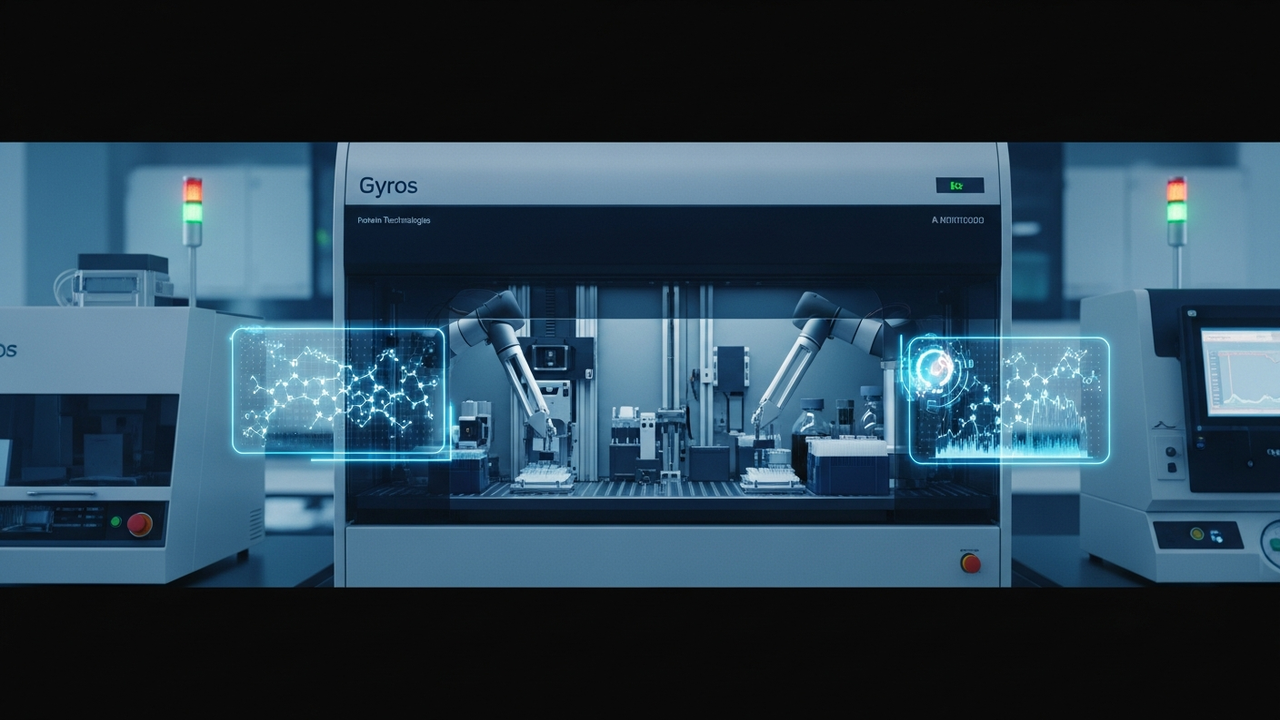
Gyros Protein Technologies has revolutionized the reproducibility and efficiency of impurity testing in biotherapeutic development through its Gyrolab automated immunoassay platform. This advanced system drastically reduces manual intervention and operator-induced variability, thereby efficiently supporting the high-throughput demands for titer determination and process impurity testing workflows for next-generation biopharmaceuticals, including monoclonal antibodies (mAbs), antibody-drug conjugates (ADCs), and bispecific antibodies.
Technical and Clinical Details
The Gyrolab platform combines microfluidics technology with automation, offering several advantages over traditional manual immunoassays like ELISA. The system allows for analysis with picometer to nanoliter sample volumes, minimizing consumption of precious samples and reducing reagent costs. The automated workflow, executed under consistent conditions from sample preparation to data analysis, dramatically reduces variability due to human error. Particularly in the quantification of process impurities (e.g., host cell proteins (HCPs), DNA, leached proteins), Gyrolab delivers rapid results with high sensitivity and a broad dynamic range. This enables quick decision-making during bioprocess development and early management of impurity carry-over to downstream processes. For instance, accurate monitoring of HCPs is crucial for product safety and quality, as they can impact immunogenicity and product stability.
Background and Industry Context
The development of biotherapeutics, owing to their complex molecular structures and manufacturing processes, necessitates thorough quality control and characterization. Specifically, the presence of impurities during the process can affect product safety, efficacy, and stability, leading regulatory bodies (such as the FDA and EMA) to demand rigorous monitoring and control of these impurities. Conventional impurity testing methods have often been manual, time-consuming, labor-intensive, and prone to reproducibility issues. Such challenges have contributed to delays in the biopharmaceutical development cycle and prolonged time-to-market. Pharmaceutical and biotechnology companies are seeking more efficient and reliable analytical solutions to accelerate their development pipelines and improve cost-efficiency.
Strategic Significance and Outlook
The adoption of technologies like the Gyrolab automated immunoassay platform will play a critical role in enhancing the efficiency of biotherapeutic development. Future advancements are expected to involve further development and validation of assays to accommodate a wider range of biopharmaceuticals and process impurities. The integration of AI and machine learning could further enhance data analysis automation and predictive capabilities, accelerating quality control and process optimization. This will shorten development cycles and enable safer, more effective biotherapeutics to reach patients more rapidly and cost-effectively. Automated impurity testing will become an indispensable component for the biopharmaceutical industry to meet both regulatory requirements and market entry pressures.
Get our weekly technology intelligence — free
Receive an infographic that lets you judge at a glance whether each field’s analysis report is worth reading.
Subscribe Free — Weekly Tech Intelligence
By subscribing, you’ll receive Troy-Technical’s weekly technology intelligence newsletter.
- Your email and selected fields are used only to deliver the newsletter.
- We never share your information with third parties.
- You can unsubscribe anytime via the link in each email.
See our Privacy Policy for details.
Takes about a minute · Unsubscribe anytime