Background
In wound care, persistent challenges include infection, excessive inflammation, and chronic wounds, with conditions such as diabetic ulcers and pressure sores significantly degrading patients’ quality of life and imposing substantial burdens on healthcare systems. Traditional wound dressings have primarily offered protective and absorptive functions. However, recent years have seen a growing demand for ‘smart wound dressings’ capable of actively promoting the healing process. The development of this Janus nanofibrous membrane represents an interdisciplinary triumph, merging polymer science, nanotechnology, and biomedical engineering to transform wound dressings from passive physical barriers into active therapeutic intervention tools.
Key Findings
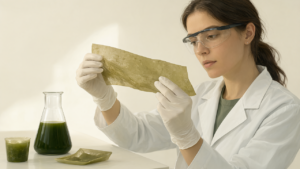
A recent research paper details the development of a Janus nanofibrous membrane poised to significantly enhance wound healing processes. Fabricated using electrospinning technology, this innovative material features distinct hydrophobic and hydrophilic properties on opposing sides. This dual-sided design enables efficient unidirectional fluid transport away from the wound while simultaneously facilitating the sustained release of antimicrobial agents. This dual-action approach effectively addresses the critical challenges of infection prevention and oxidative stress reduction, providing a novel platform for next-generation multifunctional wound dressings and a broader array of biomaterial applications.
Technical & Clinical Details
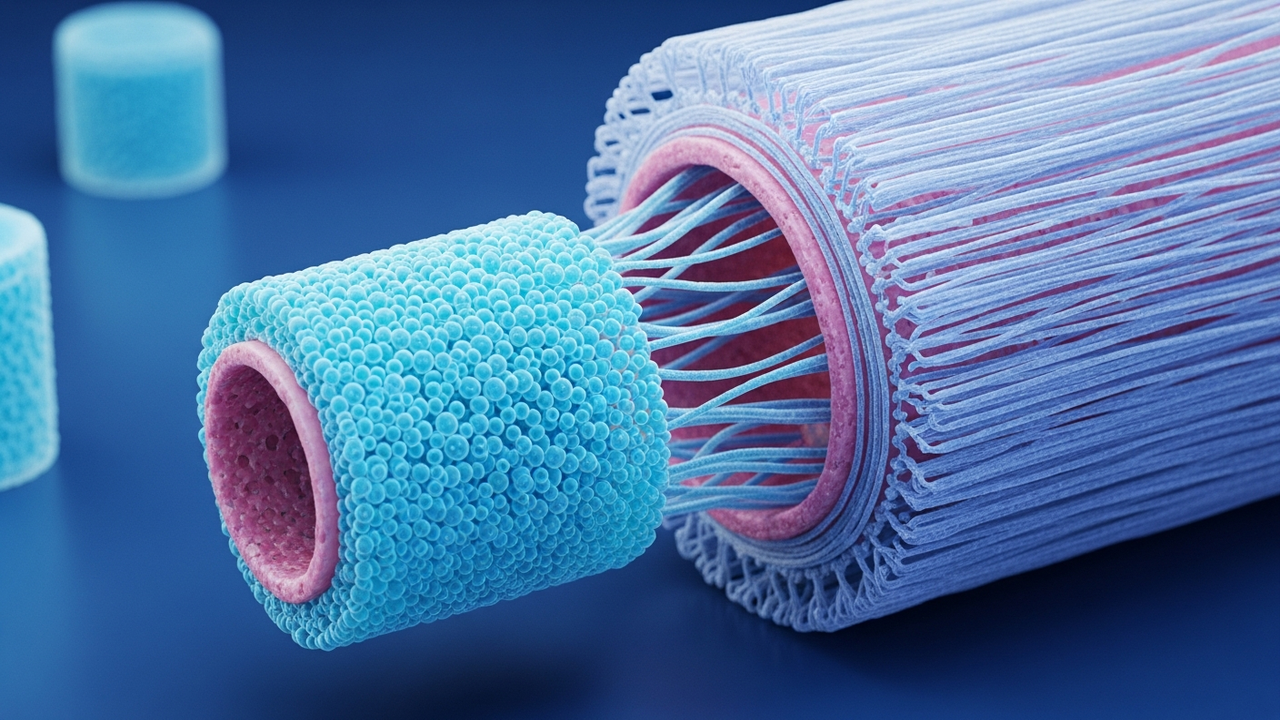
Inspired by the Roman god Janus, the nanofibrous membrane is characterized by its distinct, opposing surface properties. Its fabrication leverages electrospinning, a technique that applies high voltage to a polymer solution to produce ultrafine fibers with precise nanoscale structural control. In this application, electrospinning was used to layer or graft distinct hydrophobic and hydrophilic polymer layers, enabling sophisticated unidirectional fluid management. The wound-facing side is engineered to be hydrophilic, effectively absorbing exudates, while the outer surface is hydrophobic, acting as a barrier against external contaminants and water ingress. Crucially, the membrane is engineered to incorporate antimicrobial agents to reduce infection risk, alongside cell growth factors and antioxidants to mitigate oxidative stress. These active agents are designed for sustained release, ensuring an optimal microenvironment throughout all stages of wound healing. Biocompatibility tests have further confirmed the membrane’s potential for practical clinical application, demonstrating its ability to promote cell adhesion and proliferation without inducing inflammatory responses.
Strategic Significance & Outlook
The Janus nanofibrous membrane technology holds promise for applications extending beyond direct wound dressings, encompassing diverse biomaterial fields. Potential uses include advanced drug delivery systems, scaffold materials for tissue regeneration, and antimicrobial coatings for medical devices where infection control is paramount. The technology is particularly well-suited for the evolving landscape of personalized medicine, offering accelerated development of customizable dressings tailored to individual patient wound conditions and healing stages. Future efforts will focus on validating its efficacy and safety through large-scale clinical trials, paving the way for eventual market introduction. This innovative technology is poised to significantly improve wound healing outcomes for patients globally and contribute to healthcare cost reduction.
Get our weekly technology intelligence — free
Receive an infographic that lets you judge at a glance whether each field’s analysis report is worth reading.
Subscribe Free — Weekly Tech Intelligence
By subscribing, you’ll receive Troy-Technical’s weekly technology intelligence newsletter.
- Your email and selected fields are used only to deliver the newsletter.
- We never share your information with third parties.
- You can unsubscribe anytime via the link in each email.
See our Privacy Policy for details.
Takes about a minute · Unsubscribe anytime