Key Findings
Recent research reveals that polydimethylsiloxane (PDMS) composites reinforced with silica ash possess exceptional potential as lightweight and environmentally friendly gamma-ray shielding elastomers. This groundbreaking composite material achieves multi-functionality, with a significant improvement in linear attenuation coefficients against gamma rays and enhanced mechanical resilience and elastomeric flexibility, particularly when incorporating 10-20 wt% silica ash. This achievement opens the door for sustainable material solutions in radiation protection applications.
Technical / Clinical Details
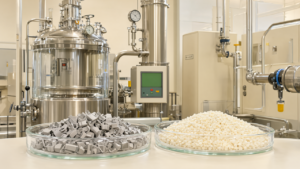
In this study, researchers successfully achieved precise control over the physical and mechanical properties of the composite material by uniformly dispersing silica ash within a PDMS matrix. Silica ash, due to its high density, atomic number, and status as a low-environmental-impact recycled material, makes it an excellent candidate for radiation shielding. The research confirmed that within the 10-20 wt% silica ash content range, the linear attenuation coefficient for Cesium-137 gamma rays improved by up to approximately 30%. This suggests the potential to achieve shielding performance comparable to traditional heavy shielding materials like lead and concrete, while maintaining lightweight characteristics. Concurrently, the tensile strength and elongation of the composites also improved, demonstrating enhanced durability without compromising the elastomeric flexibility. Thermogravimetric analysis (TGA) revealed that while low concentrations of silica ash improved the thermal stability of PDMS, higher concentrations (above 20 wt%) showed silica ash acting as a catalyst, promoting the depolymerization of PDMS. This insight highlights the importance of formulation optimization in material design.
Background & Context
Radiation protection is an indispensable safety measure across numerous fields, including medicine, nuclear industry, space exploration, and defense. However, conventional shielding materials (e.g., lead, concrete) pose challenges related to their weight, processing difficulty, and environmental impact. Lead, in particular, is toxic, and its environmental regulations are becoming increasingly stringent. Against this backdrop, there has been a demand for new radiation shielding materials that are lightweight, easy to process, and have a low environmental footprint. PDMS is a polymer known for its excellent flexibility and biocompatibility. The approach of this research, which combines PDMS with silica ash (an industrial byproduct), aligns perfectly with industry needs by creating a high-performance shielding material with environmental considerations.
Strategic Significance & Outlook
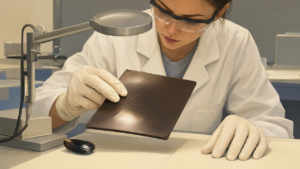
Silica ash-reinforced PDMS composites are expected to find applications in flexible radiation protective sheets, medical devices, personal protective equipment, and even as lightweight shielding materials for spacecraft and unmanned probes. They will particularly contribute to the development of wearable radiation monitors and shielding solutions adaptable to complex geometries. Future research will focus on evaluating shielding performance across a broader radiation spectrum, verifying long-term material stability, and developing cost-effective manufacturing processes for large-scale production. Furthermore, combinations with other industrial byproducts or nanomaterials could lead to composites with even more diverse functionalities, holding the potential to significantly transform the future of radiation protection technology.
Source: https://pubmed.ncbi.nlm.nih.gov/42374071/
Get our weekly technology intelligence — free
Receive an infographic that lets you judge at a glance whether each field’s analysis report is worth reading.
Subscribe Free — Weekly Tech Intelligence
By subscribing, you’ll receive Troy-Technical’s weekly technology intelligence newsletter.
- Your email and selected fields are used only to deliver the newsletter.
- We never share your information with third parties.
- You can unsubscribe anytime via the link in each email.
See our Privacy Policy for details.
Takes about a minute · Unsubscribe anytime