Background and the Urgency for Industrialization
The burgeoning field of cell and gene therapies (CGTs) holds immense promise for treating a wide array of diseases. However, translating these complex, often personalized, treatments from research breakthroughs to widely available commercial products faces significant manufacturing hurdles. The Advanced Therapies USA conference in May 2026 underscored a pivotal transition: moving beyond mere feasibility to establishing robust, scalable, and cost-effective manufacturing processes. The consensus was clear—industrialization is no longer optional but an urgent imperative for the sustainable commercialization of CGTs.
Traditional CGT manufacturing often relies on manual, open processes, leading to high variability, elevated costs, and limited scalability. The conference highlighted the industry’s collective effort to overcome these challenges through strategic advancements in bioprocessing.
Key Discussions and Technical Advances
Central to the conference discussions were several interconnected strategies for achieving industrial-scale CGT manufacturing:
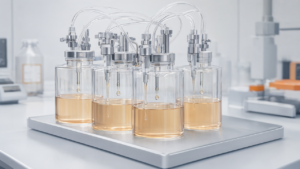
- Process Consolidation and Closed Automation: Speakers emphasized the need to reduce operational complexity by integrating discrete unit operations into streamlined, automated workflows. Implementing closed-system automation minimizes human intervention, thereby significantly reducing contamination risks and enhancing process reproducibility, critical for regulatory compliance.
- Modular Facilities: The development of modular, flexible manufacturing facilities was a key theme, allowing for rapid deployment and adaptable production capacities. This approach is particularly beneficial for accommodating the diverse and evolving needs of various CGT products.
- Real-time Quality Systems and AI Integration: The integration of artificial intelligence (AI) with real-time Process Analytical Technologies (PATs) was presented as essential for continuous quality monitoring and reducing batch-to-batch variability. For therapies derived from induced pluripotent stem cells (iPSCs), automated, closed-loop bioreactors are crucial to maintain phenotypic stability, shifting from end-of-process quality control to in-process assurance.
- Early Manufacturing Readiness (Quality by Design – QbD): A recurring motif was the importance of considering manufacturing readiness early in the development cycle, rather than as an afterthought. Adopting a Quality by Design (QbD) framework ensures that manufacturability, scalability, and quality attributes are engineered into the product and process from discovery, thus preventing costly delays in later stages.
Industry Impact and Outlook
The industrialization of CGT manufacturing carries profound implications for the entire biopharmaceutical ecosystem. Enhanced efficiency, reduced costs, and improved product consistency will not only accelerate regulatory approvals but also make these life-saving therapies more accessible and affordable for patients globally. This shift is crucial for CGTs to transition from bespoke treatments to a standard of care.
Furthermore, the focus on intensifying downstream purification and implementing advanced PATs reflects a maturing industry driven by the need for robust, high-quality products. The strategies discussed at the Advanced Therapies USA conference provide a clear roadmap for the CGT sector to achieve sustainable growth, meet global demand, and solidify its position as a cornerstone of modern medicine. This concerted effort towards industrialization is expected to establish new benchmarks for next-generation biopharmaceutical manufacturing.