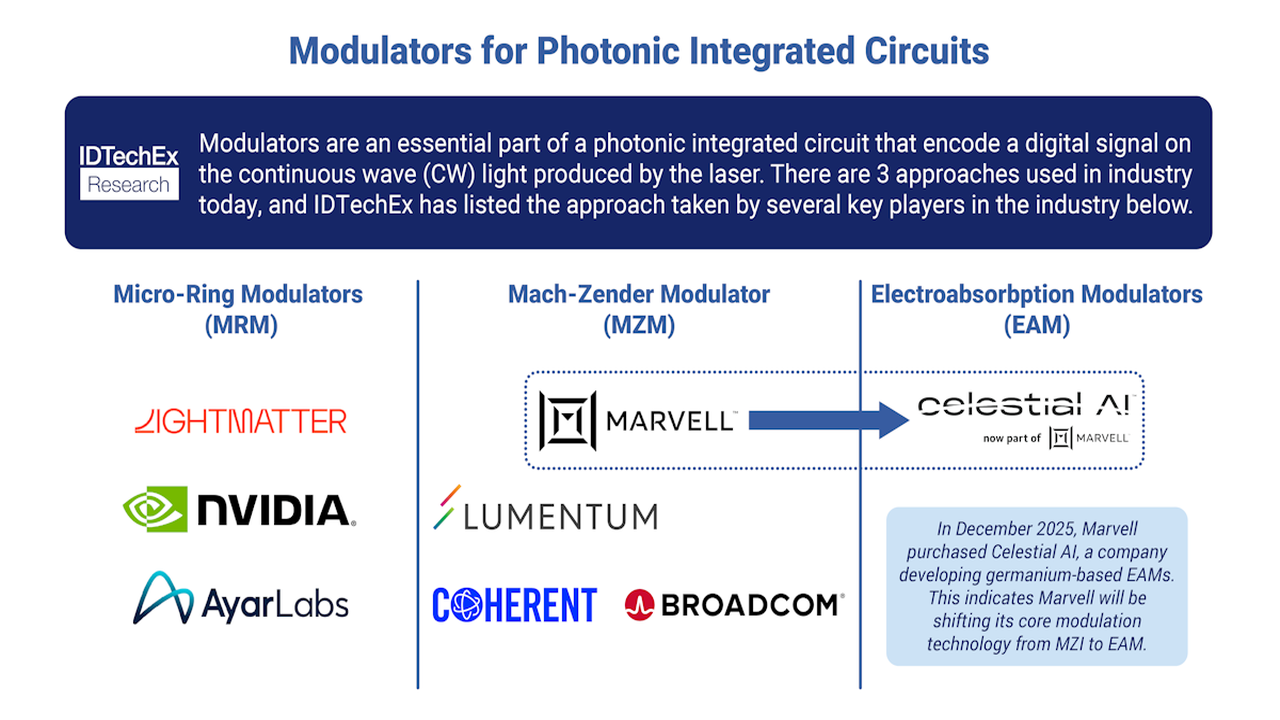
Increasing Strategic Value of Optical Connectivity in AI Data Centers
The explosive growth of generative AI workloads is forcing a fundamental transformation in AI data center infrastructure design. Specifically, the need to transmit vast amounts of data at high speeds and efficiency within and between GPU clusters is pushing traditional copper interconnects to their physical limits in terms of power consumption, bandwidth, and latency. In this context, the strategic value of optical interconnect technology is rapidly increasing, stimulating active investment and M&A activities in the photonics sector by leading semiconductor companies.
Marvell’s Acquisition of Celestial AI
Embodying this trend, in December 2025, semiconductor giant Marvell acquired Celestial AI, a developer of photonics chip technology, for a substantial $3.25 billion. Similar to NVIDIA’s $2 billion investments in optical component suppliers Coherent and Lumentum to secure supply, this suggests that AI-era optical connectivity is an indispensable competitive advantage for chip manufacturers. Marvell’s acquisition strongly indicates the recognition that optoelectronic integration technology, particularly optical I/O and photonic fabrics, will be central to next-generation AI chips and data center architectures.
Photonic Integrated Circuits (PICs) and Silicon Photonics
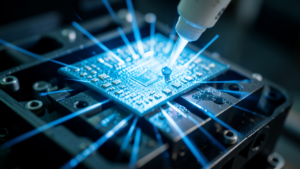
Central to this field are Photonic Integrated Circuits (PICs). PICs are integrated circuits capable of processing both optical and electrical signals, with optical transceivers emerging as their primary application. Silicon photonics, a type of PIC, offers the significant advantage of leveraging existing silicon semiconductor manufacturing infrastructure. This enables efficient scale-up and cost reduction of photonic devices, accelerating their mass deployment in AI data centers.
Industry Impact and Future Outlook
Marvell’s acquisition of Celestial AI highlights how the explosive growth of AI data centers is accelerating the industrialization of optical connectivity technology, with key players consolidating intellectual property and capabilities through vertical integration and strategic partnerships. However, technical challenges, such as integrating light sources (lasers) in silicon photonics and the complexity of integrating different technologies, still remain to be solved. As AI infrastructure evolves, the importance of optical connectivity technology, which offers higher bandwidth and power efficiency, will further increase, and competition and innovation in this sector are expected to accelerate.



Comments