Background
Modern medical technology has made remarkable strides in disease diagnosis, treatment, and prevention. However, many medical devices, particularly implantable and wearable ones, still rely on external batteries for power. These batteries have limited lifespans, require replacement, or pose constraints on miniaturization and flexibility. Consequently, there is significant interest in “energy harvesting” technologies that can collect bio-derived energy—such as movement, vibration, and temperature changes from within or outside the human body—to self-power devices. This capability is seen as a key to revolutionizing next-generation healthcare systems, offering solutions that enhance convenience and reduce intervention.
Key Findings / Results
This review elaborates on how nanogenerators, particularly those based on piezoelectric and triboelectric mechanisms, hold the potential to revolutionize self-powered healthcare systems in the biomedical frontier. These nanogenerators possess the following characteristics:
- Piezoelectric Nanogenerators (PENGs): Piezoelectric materials have the property (piezoelectric effect) of generating an electrical charge when subjected to mechanical stress or vibration. PENGs can convert various forms of biomechanical energy, such as heartbeats, blood vessel pulsations, muscle movements, and breathing, into electrical energy. These materials typically exhibit rapid responses and high electromechanical coupling efficiency.
- Triboelectric Nanogenerators (TENGs): The triboelectric effect involves charge transfer and subsequent power generation via electrostatic induction when different materials come into contact and separate. TENGs excel at collecting power from a wide range of mechanical energy sources, including body movements and minute external vibrations.
- Key Materials and Challenges: Piezoelectric polymers like polyvinylidene fluoride (PVDF) are considered promising candidate materials for PENGs due to their flexibility, excellent biocompatibility, and relatively easy manufacturing processes. However, PVDF-based devices face the challenge of low output displacement due to their inherent properties. Further innovation in material science and optimization of structural design are needed to provide stronger power generation and haptic feedback.
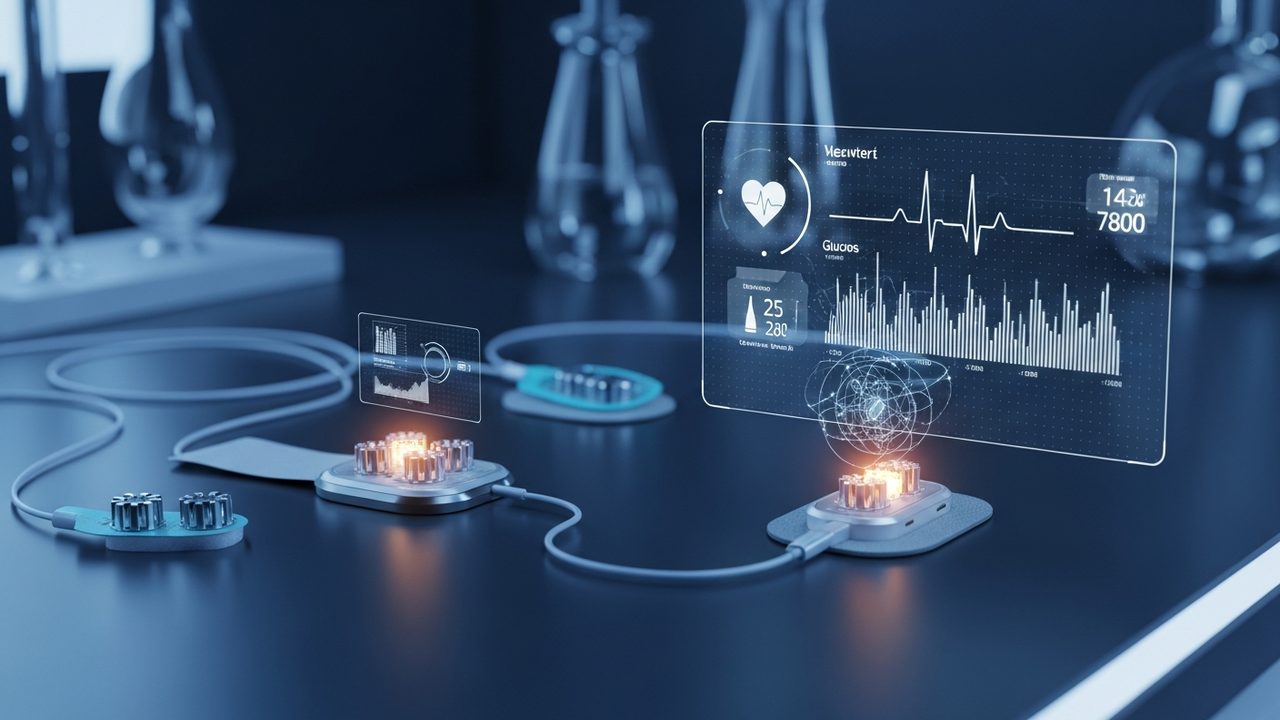
These nanogenerators hold potential for applications in implantable medical scaffolds (providing power while supporting tissue regeneration), wearable health monitors (continuous physiological monitoring), therapeutic patches (self-powered drug delivery), and various other self-powered electronic devices.
Technical Significance & Outlook
Advances in nanogenerator technology will have a profound impact on the healthcare sector. By enabling devices to autonomously power themselves, the need for battery replacement or recharging is eliminated, enhancing patient convenience and reducing surgical risks. Continuous monitoring capabilities will contribute to early disease detection, the advancement of personalized medicine, and improved quality of life. Furthermore, their application in ultra-low power wearable sensors and IoT devices will accelerate the construction of smart healthcare infrastructure.
Future research must focus on further improving the energy conversion efficiency of PENGs and TENGs, particularly in developing new material designs and nanostructuring techniques to overcome the limitations of output displacement and vibrational force in materials like PVDF. Long-term evaluation of biocompatibility, stability, and reduction of manufacturing costs are also crucial challenges. If these challenges are addressed, nanogenerators have the potential to become the foundation of sustainable and intelligent next-generation healthcare systems.