
Background and Technical Challenges
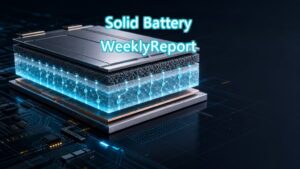
All-solid-state batteries (ASSBs) are heralded as the leading contenders for next-generation battery technology, promising substantial improvements in energy density, inherent safety (non-flammability), and fast-charging capabilities compared to conventional liquid-electrolyte lithium-ion batteries (LIBs). These characteristics directly contribute to significantly extended electric vehicle (EV) ranges, simplified charging infrastructure, and enhanced battery safety. However, the commercialization of ASSBs faces several critical technical barriers: high ‘solid-solid interfacial resistance’ between solid electrolytes and electrodes, the persistent issue of ‘dendrite growth’ with lithium metal anodes, and complex, high-cost manufacturing processes.
Key Findings and Technical Breakthroughs
As of 2026, all-solid-state battery technology is beginning to emerge in the market, primarily in the form of semi-solid batteries (hybrid solid-liquid electrolytes). For instance, China’s NIO already sells EVs equipped with a 150 kWh battery pack featuring WeLion-manufactured semi-solid cells, achieving approximately 930 km of range and an energy density of 300-350 Wh/kg. Gotion Hi-Tech has also successfully passed nail penetration tests with its semi-solid ‘G-Dome’ cells and plans for a 12 GWh semi-solid production line by 2025, indicating that this intermediate technology is gaining commercial traction.
Concurrently, the development of fully all-solid-state batteries is making steady progress:
- Prototype Targets: Major players such as Toyota and CATL aim to introduce 400 Wh/kg ASSB prototypes by 2027.
- Mass Production Targets: By 2030, these companies target the mass production of ASSBs with a high energy density of 500 Wh/kg.
- Charging Speed: ASSBs are targeting a charging time of 10-15 minutes to reach 80% capacity, which would significantly reduce current LIB charging durations.
Nevertheless, fully all-solid-state batteries remain largely in small-scale pilot production as of 2026, with industry roadmaps suggesting that initial EV integration will begin as a first milestone in 2027 or later.
Technical Significance and Outlook
The strong industry consensus indicates that ASSB commercialization will proceed in phases, starting with semi-solid batteries and gradually transitioning to fully solid-state variants. This phased approach suggests that market impact will be realized progressively from an early stage. Initially, due to their high performance and safety, ASSBs are expected to be adopted in high-end luxury EVs and specific niche industrial applications (e.g., drones, medical devices).
From a long-term perspective, ASSBs are poised to revolutionize the EV market by alleviating consumer concerns regarding range and safety. However, a significant current challenge is the high cost, estimated to be 3-5 times that of existing LIBs, due to expensive materials and complex manufacturing processes. Therefore, cost reduction and yield improvement are indispensable for achieving large-scale mass production. Continuous optimization across materials science, manufacturing technology, and the entire supply chain will be required for the widespread adoption of this technology.
Source: https://www.bonnenbatteries.com/solid-state-batteries-advances-challenges-future-use-cases/






Comments