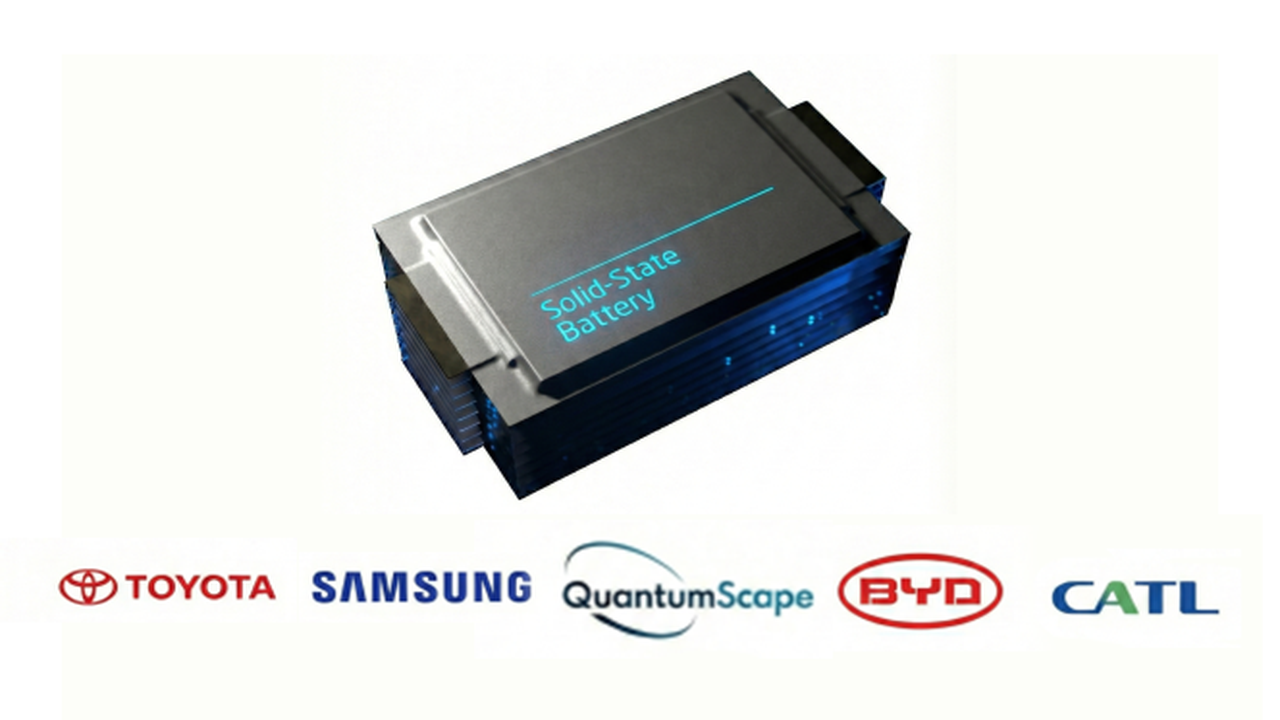
Background and Technical Challenges
With the rapid expansion of the electric vehicle (EV) market, demand for enhanced battery performance and safety is continuously escalating. Current lithium-ion batteries (LIBs) are nearing maturity, and all-solid-state batteries (ASSBs) are drawing significant attention as the next-generation technology poised to surpass their limitations. ASSBs offer the potential for fundamental improvements in safety (due to non-flammable solid electrolytes), higher energy density, and faster charging capabilities. However, several factors have historically hindered their commercialization, including high interfacial resistance between solid electrolytes and electrodes, the growth of lithium dendrites under high current densities, and the complexity and high cost of manufacturing processes.
Key Findings and Technical Breakthroughs
As of 2026, all-solid-state battery technology is moving beyond the laboratory phase and making significant strides toward real-world production and commercialization. A notable development is China’s plan to release its first national standard for all-solid-state batteries in July 2026, which is expected to strongly propel industrialization in this sector.
Leading battery manufacturers and automotive OEMs have announced specific roadmaps and performance targets:
- CATL: Plans to initiate initial production in 2027 and full-scale mass production by 2030.
- BYD: Aims for initial production in 2027, targeting an energy density of 400 Wh/kg and 5C charging capability (full charge in 12 minutes).
- Dongfeng: Projects mass production of 350 Wh/kg solid-state batteries by the end of 2026.
- Toyota: Plans to begin small-scale production between 2027 and 2028, targeting an energy density of 450-500 Wh/kg.
- Samsung SDI: Aims to achieve technology capable of 80% charge in 9 minutes by 2027.
- QuantumScape: Reports maintaining over 80% capacity after 400 cycles, indicating high durability.
These targets highlight the superior advantages of all-solid-state batteries over existing LIBs in terms of safety (thermal event onset temperature of 247°C vs. 90°C), target energy density of 400-500 Wh/kg, and fast-charging capabilities.
Technical Significance and Outlook
The commercialization of ASSBs is not expected to be an overnight event but rather a gradual transition, with semi-solid and advanced hybrid batteries preceding the full market entry of pure all-solid-state batteries in the late 2020s to early 2030s. This phased approach represents a pragmatic strategy to steadily address technical challenges and reduce costs.
China’s establishment of national standards will likely stimulate rapid domestic market growth and further intensify global competition. ASSBs are poised to dramatically improve EV performance and, in the long term, reduce battery fire risks, contributing to more sustainable transportation systems. However, manufacturing complexities, particularly managing the air-sensitive nature of sulfide electrolytes, and persistently high production costs (currently several times that of LIBs) remain challenges. Resolving these issues will be key to the large-scale adoption of all-solid-state batteries.
Source: https://to7motor.com/solid-state-batteries-2026-commercial-reality


Comments