


Key Findings
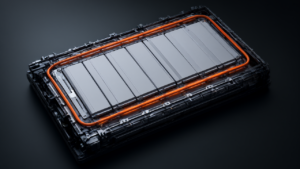
A collaborative study by the Tianmu Lake Advanced Energy Storage Technology Research Institute and Suzhou Laboratory has produced a solid-state lithium metal battery achieving an energy density of 515 Wh kg⁻¹. This was realized using a multi-layer pouch cell featuring a 50 µm ultra-thin lithium anode and a high-loading NCM90 cathode (approximately 56 mg cm⁻²). The battery demonstrated stability over 30 cycles at 0.05 C within a voltage range of 2.8 to 4.3 V.
Technical Details
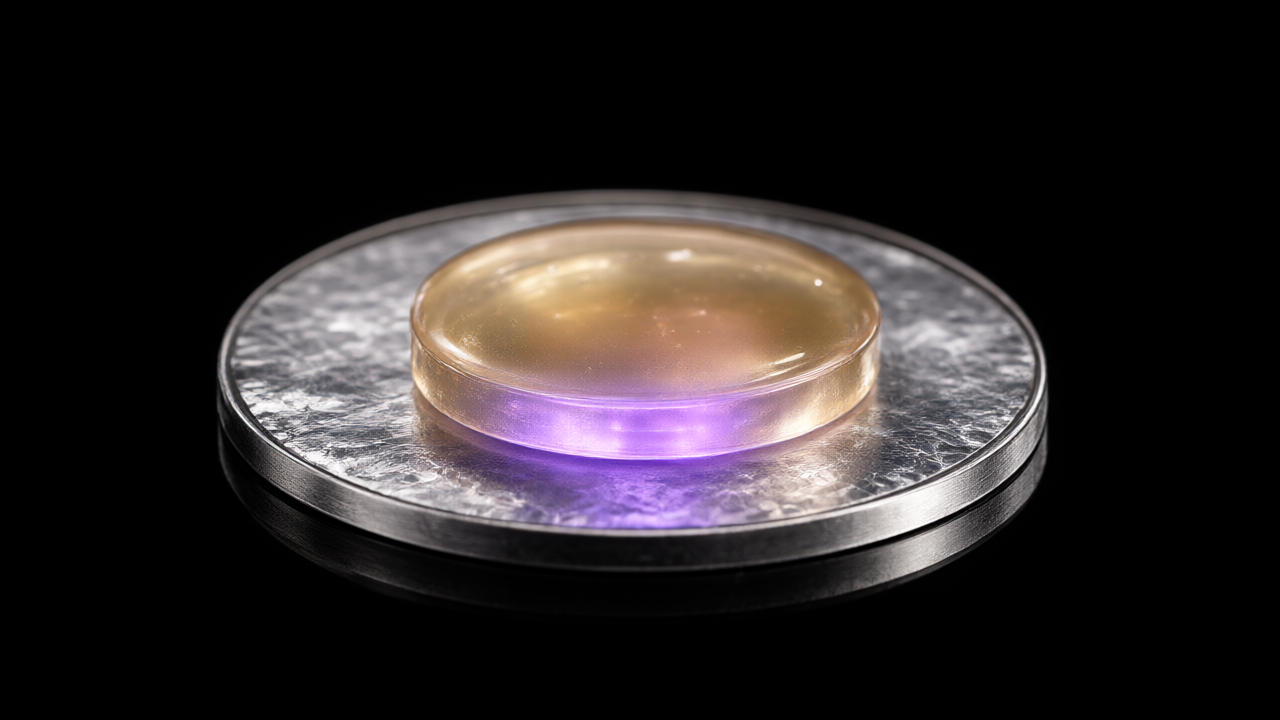
The researchers synthesized a copolymer of 2,2,3,3,4,4,5,5-perfluoropentyl acrylate and N-methyl-N-allylpyrrolidinium bis(fluorosulfonyl)imide. This design creates an “ionic-ligand-assisted transport” framework where PIL cation groups anchor FSI⁻ anions, facilitating Li⁺ “hopping” transport. Key technical specifications include:
- Ionic Conductivity: 0.38 mS cm⁻¹ at 30°C.
- Li⁺ Transference Number: 0.77.
- Electrochemical Window: Extended to 4.94 V.
- Cycle Life: Li||NCM90 cells maintained approximately 81.0% capacity after 600 cycles at 4.3 V and 83.1% after 200 cycles at 4.5 V.
- Interface Stability: Li||Cu cells showed an average Coulombic efficiency of 99.1% over 400 cycles.
Analysis via SEM, XPS, and TOF-SIMS revealed that the electrolyte promotes an inorganic-rich SEI on the lithium anode and a thin, uniform CEI (reduced from 26 nm to 7 nm) on the NCM90 cathode.
Safety and Performance
The fluorinated PIL framework provides significant safety improvements. In nail penetration tests, the pouch cell showed no significant temperature rise and remained structurally intact, whereas the liquid electrolyte control burned with temperatures exceeding 1200°C. ARC tests showed the self-heating start temperature increased from 91.1°C to 119.5°C, and the thermal runaway threshold rose from 117.5°C to 208.0°C.
Significance
This research decouples Li⁺ transport from the slow large-scale movement of the polymer matrix. By combining high cathode loading, a low N/P ratio (approximately 0.85), and low electrolyte mass loading (approximately 1.5 g Ah⁻¹), the study provides a material strategy for high-energy-density, high-safety solid-state batteries.
Source: https://news.qq.com/rain/a/20261030A02VMM00
Get our weekly technology intelligence — free
Receive an infographic that lets you judge at a glance whether each field’s analysis report is worth reading.
Subscribe Free — Weekly Tech Intelligence
By subscribing, you’ll receive Troy-Technical’s weekly technology intelligence newsletter.
- Your email and selected fields are used only to deliver the newsletter.
- We never share your information with third parties.
- You can unsubscribe anytime via the link in each email.
See our Privacy Policy for details.
Takes about a minute · Unsubscribe anytime