Key Findings
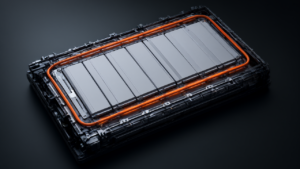
CATL has reached a development milestone by advancing its all-solid-state battery cells to 20 Ah. The company is targeting an energy density of 500 Wh/kg and expects to initiate small-scale production in 2027, with full mass production projected for 2030.
Technical Details
CATL utilizes a sulfide-based solid electrolyte system, selected for its high deformability and ionic conductivity. However, the company notes that maintaining stable contact between solid components remains a technical hurdle. To provide context on the maturity of the technology, CATL Chairman and CEO Robin Zeng stated in June that all-solid-state batteries have currently reached level four on a scale of one to nine.
Industry Context and Competition
Several other major players are pursuing similar timelines for all-solid-state commercialization:
- Toyota: Aims to launch the first all-solid-state EV in 2027 or 2028. Toyota claims a prototype capable of a 745 miles (1,200 km) range and charging in under 10 minutes, utilizing a “highly durable cathode material” developed with Sumitomo Metal Mining’s powder synthesis technology.
- Samsung SDI: Targets mass production of its SolidStack batteries in the second half of 2027.
- BYD: Plans to launch its first solid-state vehicle in 2027. Its battery division, FinDreams, intends to produce sulfide-based all-solid-state batteries in limited batches in 2027, ramping up to mass production by 2030.
Significance and Outlook
While all-solid-state batteries are viewed as a “holy grail” for increasing range and charging speeds, they coexist with other chemistry advancements. CATL and BYD continue to develop lithium iron phosphate (LFP) and sodium-ion batteries to provide lower-cost options. For instance, BYD’s second-generation Blade LFP batteries already achieve over 1,000 km (621 miles) of CLTC range. The transition to these new chemistries is expected to incrementally improve EV efficiency and performance across different market segments.
Source: https://electrek.co/2026/10/28/catl-pushes-ahead-20-ah-solid-state-ev-batteries-500-wh-kg/
Get our weekly technology intelligence — free
Receive an infographic that lets you judge at a glance whether each field’s analysis report is worth reading.
Subscribe Free — Weekly Tech Intelligence
By subscribing, you’ll receive Troy-Technical’s weekly technology intelligence newsletter.
- Your email and selected fields are used only to deliver the newsletter.
- We never share your information with third parties.
- You can unsubscribe anytime via the link in each email.
See our Privacy Policy for details.
Takes about a minute · Unsubscribe anytime