Key Findings
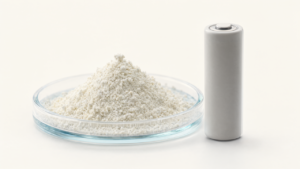
A recent review article published in Nano Letters systematically elucidates the innovative potential of High-Entropy Sulfides (HESs) in electrochemical energy storage, especially in the realm of solid electrolytes for all-solid-state batteries. HESs integrate the intrinsic high ionic conductivity of sulfide materials with the extensive structural tunability offered by high-entropy design. This fusion provides a promising avenue to overcome critical challenges associated with conventional sulfide solid electrolytes, such as their susceptibility to air/moisture sensitivity and interfacial instability.
Technical and Research Details
- Concept of High-Entropy Sulfides (HESs): HESs apply the concept of high-entropy alloys—where four or more cationic elements occupy crystal lattice sites in near-equimolar ratios—to sulfide materials. This multi-component mixing increases the configurational disorder (entropy) within the crystal structure, leading to unique physicochemical properties such, as lattice distortion, a cocktail effect, and sluggish diffusion kinetics.
- Advantages of HESs as All-Solid-State Electrolytes:
- High Ionic Conductivity: While traditional sulfide-based solid electrolytes are known for excellent lithium ion conductivity (e.g., Li6PS5Cl at several mS/cm), HESs hold the potential to further optimize ion transport pathways.
- Enhanced Stability: The high-entropy effect can improve crystal structural stability, potentially reducing sensitivity to atmospheric moisture and oxygen. This has been a major practical barrier for sulfide electrolytes.
- Improved Interfacial Compatibility: By tuning the composition and structure of HESs, it may be possible to suppress parasitic side reactions at the interface with electrode materials, thereby reducing interfacial resistance.
- Key Breakthroughs and Challenges: The review highlights breakthroughs achieved by HESs in ionic conductivity, cycle life, and rate capability. Concurrently, it points out challenges such as optimizing high-entropy design, complex synthesis processes, and detailed evaluation of long-term stability.
Background and Industry Context
All-solid-state batteries are anticipated as the ultimate battery technology to enhance the range, safety, and charging speed of electric vehicles (EVs). Sulfide-based solid electrolytes are considered closest to practical application due to their high ionic conductivity, but their sensitivity to air/moisture and interfacial instability with electrodes have been major hurdles. Research into HESs seeks to resolve these challenges through a novel materials science approach, making it highly significant for accelerating the commercialization of all-solid-state batteries. This review systematically synthesizes advancements in this cutting-edge field, offering new perspectives for researchers and engineers.
Future Outlook
This review on high-entropy sulfides opens new frontiers in the development of high-performance solid electrolytes for all-solid-state batteries. Future research will likely explore the HES compositional space to discover optimal materials that balance ionic conductivity and stability. Furthermore, simplifying synthesis processes and establishing scalable manufacturing techniques will be critical for practical implementation. If HESs can overcome the limitations of conventional sulfide solid electrolytes and enable high-energy-density, high-safety, and long-life all-solid-state batteries, they are expected to bring innovation across various sectors, including the EV industry, and significantly contribute to the realization of a sustainable energy society.
Get our weekly technology intelligence — free
Receive an infographic that lets you judge at a glance whether each field’s analysis report is worth reading.
Subscribe Free — Weekly Tech Intelligence
By subscribing, you’ll receive Troy-Technical’s weekly technology intelligence newsletter.
- Your email and selected fields are used only to deliver the newsletter.
- We never share your information with third parties.
- You can unsubscribe anytime via the link in each email.
See our Privacy Policy for details.
Takes about a minute · Unsubscribe anytime