Key Findings
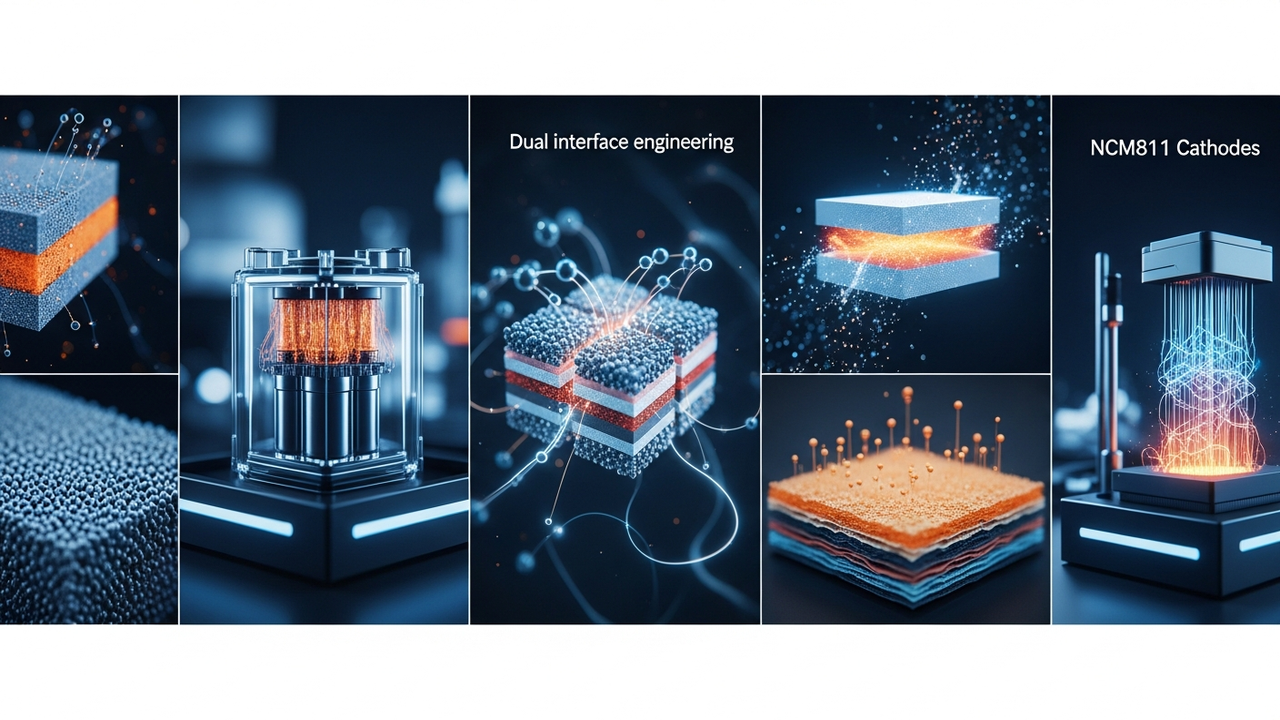
An innovative dual-interface engineering strategy has been developed to dramatically enhance the performance and stability of high-voltage all-solid-state lithium batteries. This synergistic approach, which combines surface-modified cathodes with an optimized composite polymer electrolyte, has successfully improved the interfacial compatibility between high-voltage cathodes and solid electrolytes, leading to increased battery energy density and cycle life. This represents a significant breakthrough towards the practical implementation of all-solid-state batteries.
Technical and Research Details
- Dual-Interface Engineering Strategy: The core of this research lies in simultaneously optimizing two crucial interfaces within the battery system: the cathode/electrolyte interface and the electrolyte/anode interface. This strategy aims to overcome the limitations of individual materials and maximize the performance of the entire system.
- Cathode Modification (Li3PO4 Coating): A uniform thin film of Li3PO4 (lithium phosphate) was coated onto the surface of the NCM811 high-voltage cathode material using atomic layer deposition (ALD) technology. This Li3PO4 layer effectively:
- Suppresses High-Voltage Phase Transitions: Prevents NCM811 cathode from exhibiting structural instability under high voltage conditions, thereby inhibiting material degradation.
- Mitigates Electrolyte Oxidation: Suppresses undesirable electrolyte decomposition reactions at the cathode surface, enhancing interface stability.
- Development of Composite Polymer Electrolyte (CPE): An in-situ polymerized PEGDME (polyethylene glycol dimethyl ether)-based composite polymer electrolyte was fabricated, incorporating 7.5 wt% of the garnet-type solid electrolyte LLZTO (lithium lanthanum zirconia oxide) filler. This CPE exhibited the following properties:
- High Ionic Conductivity: Achieved an excellent ionic conductivity of 3.47 × 10⁻⁴ S cm–1 at 60 °C.
- High Li+ Transference Number: Demonstrated a high lithium ion transference number of 0.665, indicating efficient transport of lithium ions.
- Battery Performance: All-solid-state batteries applying this dual-interface engineering strategy delivered a high discharge capacity of 152.0 mAh g–1 at a 0.5C rate and maintained 77.88% of their capacity after 170 cycles. This represents a significant improvement compared to conventional polymer electrolyte-based batteries using high-voltage cathodes.
Background and Industry Context
All-solid-state lithium batteries hold immense potential as next-generation energy storage technology for improving the safety and energy density of electric vehicles (EVs) and portable electronic devices. However, interfacial instability (side reactions, poor contact) between high-voltage cathodes and solid electrolytes has been a major barrier to their practical implementation. Specifically, cathode material degradation and electrolyte oxidation under high voltage conditions adversely affect battery lifespan and performance. This research’s dual-interface engineering offers a comprehensive and effective solution to these challenges, which is crucial for accelerating the commercialization of all-solid-state batteries.
Future Outlook
The dual-interface engineering strategy developed in this study provides a promising pathway for enhancing the performance of high-voltage all-solid-state lithium batteries. Future efforts will focus on further optimizing this technology, exploring its applicability to different electrode materials and electrolyte systems, and developing cost-effective manufacturing processes. Particularly, validation of long-term cycling stability and performance evaluation under more extreme conditions are essential for practical implementation. This achievement is expected to accelerate the realization of next-generation batteries that combine high energy density and safety, contributing to a sustainable society. Researchers, engineers, and investors will closely monitor further advancements of this groundbreaking approach.
Get our weekly technology intelligence — free
Receive an infographic that lets you judge at a glance whether each field’s analysis report is worth reading.
Subscribe Free — Weekly Tech Intelligence
By subscribing, you’ll receive Troy-Technical’s weekly technology intelligence newsletter.
- Your email and selected fields are used only to deliver the newsletter.
- We never share your information with third parties.
- You can unsubscribe anytime via the link in each email.
See our Privacy Policy for details.
Takes about a minute · Unsubscribe anytime