Key Findings
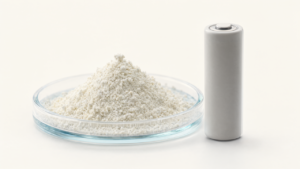
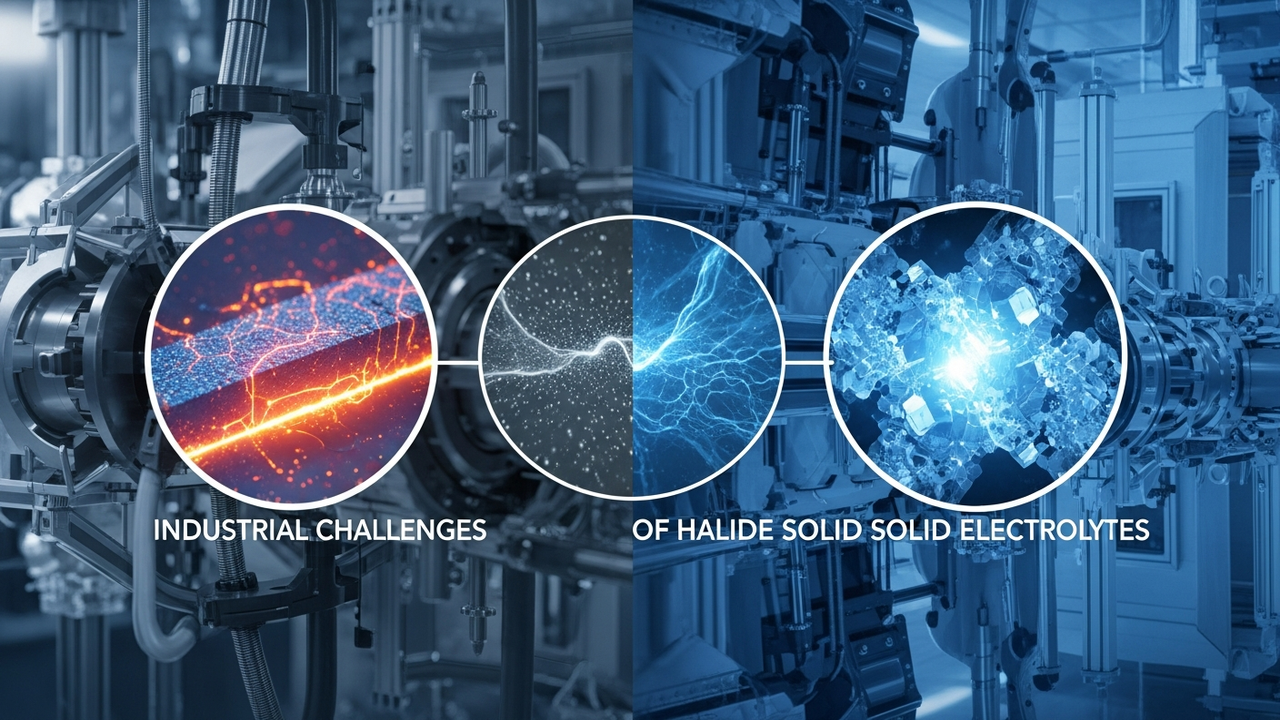
One of the most significant bottlenecks for the realization of all-solid-state batteries is the lithium metal anode, which, while key to achieving high energy density, faces severe challenges such as dendrite growth and interfacial instability. This review critically examines the industrial challenges of metal battery anodes and the progress of halide solid electrolytes as a promising solution. Notably, halide solid electrolytes like Li3YCl6 and Li3YBr6, discovered in 2018, have attracted considerable attention due to their excellent ionic conductivities at room temperature (0.51 mS/cm and 1.7 mS/cm, respectively) and good compatibility with oxide cathodes.
Technical and Research Details
- Challenges of Lithium Metal Anodes: Lithium metal is considered an ideal material for maximizing battery energy density due to its extremely high theoretical capacity (3860 mAh g⁻¹) and low potential (-3.04 V vs. SHE) compared to graphite, currently used as an anode in lithium-ion batteries. However, the uncontrolled growth of lithium dendrites during charge-discharge cycles poses a major problem, leading to safety risks from internal short circuits, reduced Coulombic efficiency, and shortened cycle life. Additionally, the instability of the interface between lithium metal and the electrolyte is a primary cause of performance degradation.
- Advancements in Halide Solid Electrolytes:
- High Ionic Conductivity: Halide solid electrolytes, such as Li3YCl6 and Li3YBr6, discovered in 2018, have achieved impressive lithium ion conductivities of 0.51 mS/cm and 1.7 mS/cm, respectively, at room temperature. These values are comparable to some liquid electrolytes and are crucial for the fast charge-discharge capabilities of all-solid-state batteries.
- Compatibility with Oxide Cathodes: These halide solid electrolytes have been shown to exhibit good chemical and electrochemical compatibility with high-voltage oxide cathode materials (e.g., NMC, LCO). This represents a significant advantage in the design of high-energy-density all-solid-state batteries.
- Improved Air Tolerance: Compared to sulfide-based solid electrolytes, halide systems are considered to have relatively higher air tolerance, which could simplify manufacturing and handling processes.
- Remaining Challenges: Despite the advances in halide solid electrolytes, fundamental suppression of lithium dendrite growth, further improvement in Coulombic efficiency, and the establishment of stable interfaces between lithium metal and electrolytes remain the biggest challenges for practical implementation.
Background and Industry Context
With the expansion of the electric vehicle (EV) market, improving battery energy density and safety has become an urgent priority. The combination of lithium metal anodes and all-solid-state electrolytes is anticipated as the “ultimate battery” to simultaneously solve these challenges, but the instability of lithium metal anodes has hindered its practical application. The discovery of halide solid electrolytes holds the potential to significantly change this landscape and is considered a crucial factor in accelerating the transition from liquid to solid electrolytes. This review provides valuable information for researchers, engineers, and investors to understand the current status and future potential of this field.
Future Outlook
Halide solid electrolytes show a promising path towards the commercialization of all-solid-state lithium metal batteries, but further research is needed for complete dendrite suppression and long-term interfacial stability. Specifically, interfacial engineering, electrolyte composition optimization, and scalable manufacturing processes will be key research areas. If efforts to address the challenges highlighted in this review succeed, halide solid electrolytes are expected to redefine the performance of next-generation all-solid-state batteries and significantly contribute to the widespread adoption of electric vehicles and the realization of a sustainable energy society.
Source: https://pmc.ncbi.nlm.nih.gov/articles/PMC13423496/
Get our weekly technology intelligence — free
Receive an infographic that lets you judge at a glance whether each field’s analysis report is worth reading.
Subscribe Free — Weekly Tech Intelligence
By subscribing, you’ll receive Troy-Technical’s weekly technology intelligence newsletter.
- Your email and selected fields are used only to deliver the newsletter.
- We never share your information with third parties.
- You can unsubscribe anytime via the link in each email.
See our Privacy Policy for details.
Takes about a minute · Unsubscribe anytime