Key Findings
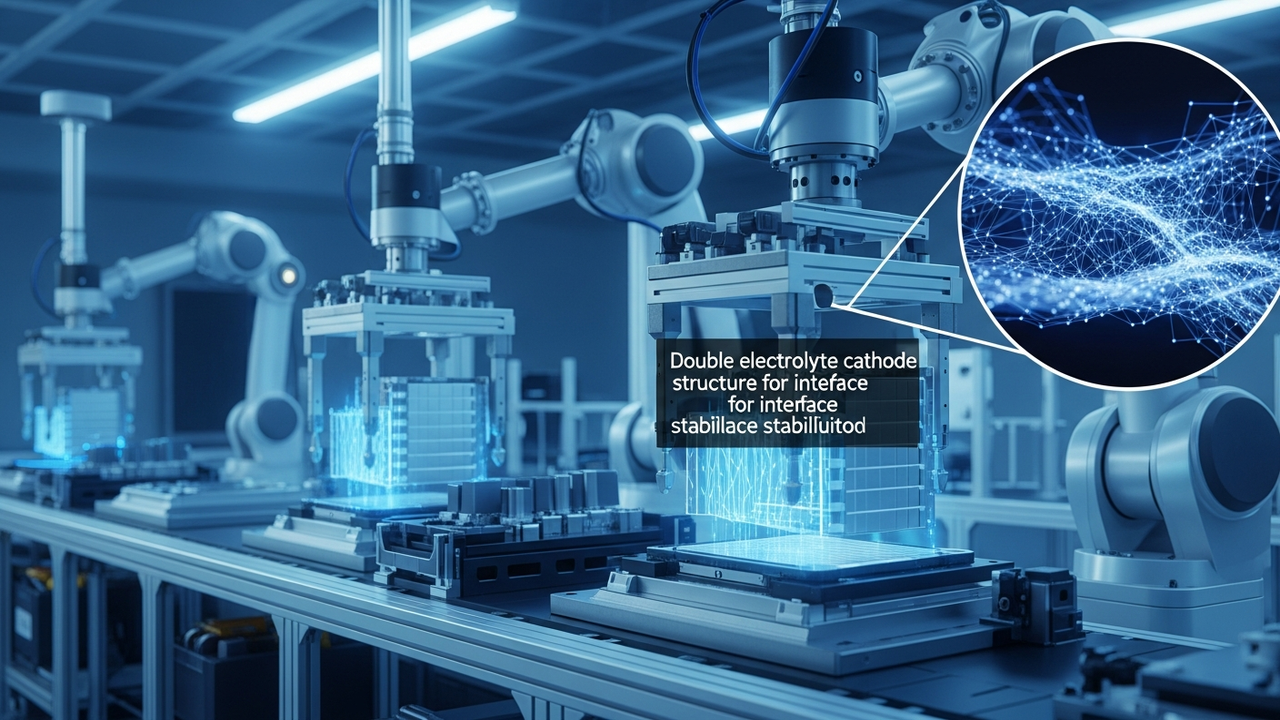
BYD has announced plans to commence small-scale test production of all-solid-state batteries (ASSBs) in 2027, including road tests in camouflaged vehicles. This initiative aims to significantly extend the range of electric vehicles (EVs) beyond 1,000 km. Concurrently, to address the critical challenge of interfacial stability between solid electrolytes and electrodes—a major hurdle for ASSB commercialization—BYD has filed six new patents, notably featuring a ‘dual-electrolyte cathode’ design that combines halide and sulfide materials.
Technical Details
The patents filed by BYD (e.g., a series of patents including CN202510126712.6) describe a dual-electrolyte cathode approach that integrates halide and sulfide materials with the cathode active material. This design aims to enhance lithium ion transmission efficiency while maintaining interfacial stability during repeated charge-discharge cycles. By combining fast but potentially unstable conductors with slower, more stable conductors, the dual-electrolyte system seeks to enable smooth and efficient energy transfer. As pointed out by BYD Group’s Chief Scientist, the instability of solid-solid interfaces has been a major cause of performance degradation and safety concerns, acting as a significant barrier to commercialization. These patents propose comprehensive solutions addressing this challenge across material chemistry, manufacturing processes, and quality control. Specific designs are incorporated to suppress the growth of lithium metal dendrites, ensuring reliable long-term operation.
Background & Context
All-solid-state batteries are globally recognized as the next-generation EV battery technology, primarily due to their lower risk of fire and potential for higher energy density compared to conventional lithium-ion batteries with liquid electrolytes. However, high interfacial resistance and mechanical property mismatches between solid electrolytes and electrodes have posed significant obstacles to mass production. Leveraging its unique vertically integrated production system and R&D capabilities, BYD is focusing on overcoming these complex technical barriers. The numerous patent applications underscore the company’s deep technical expertise and strong commercialization intent in this field.
Strategic Significance & Outlook
BYD’s plan to initiate small-scale test production and road tests of solid-state batteries in 2027 holds the potential to bring groundbreaking performance enhancements to its EV lineup. A driving range exceeding 1,000 km would significantly alleviate consumer anxiety about EVs, thereby promoting further expansion of the EV market. If the dual-electrolyte cathode technology proves successful, it could also improve the cost-effectiveness and manufacturing scalability of ASSBs, potentially redefining technical standards across the entire EV industry.
Get our weekly technology intelligence — free
Receive an infographic that lets you judge at a glance whether each field’s analysis report is worth reading.
Subscribe Free — Weekly Tech Intelligence
By subscribing, you’ll receive Troy-Technical’s weekly technology intelligence newsletter.
- Your email and selected fields are used only to deliver the newsletter.
- We never share your information with third parties.
- You can unsubscribe anytime via the link in each email.
See our Privacy Policy for details.
Takes about a minute · Unsubscribe anytime