Background
Drug delivery systems (DDS) aim to maximize therapeutic efficacy while minimizing off-target effects and systemic toxicity. Nanoparticle-based DDS hold great promise but face significant in vivo challenges, including rapid clearance by the immune system, inefficient delivery to target tissues, and short circulation times. To overcome these hurdles, bioinspired approaches, particularly coating nanoparticles with cell membranes derived from biological sources, have gained considerable attention. Among these, platelet membrane-coated nanoparticles (PM-NPs) are particularly promising due to the unique functionalities inherited from platelets.
Key Findings / Results
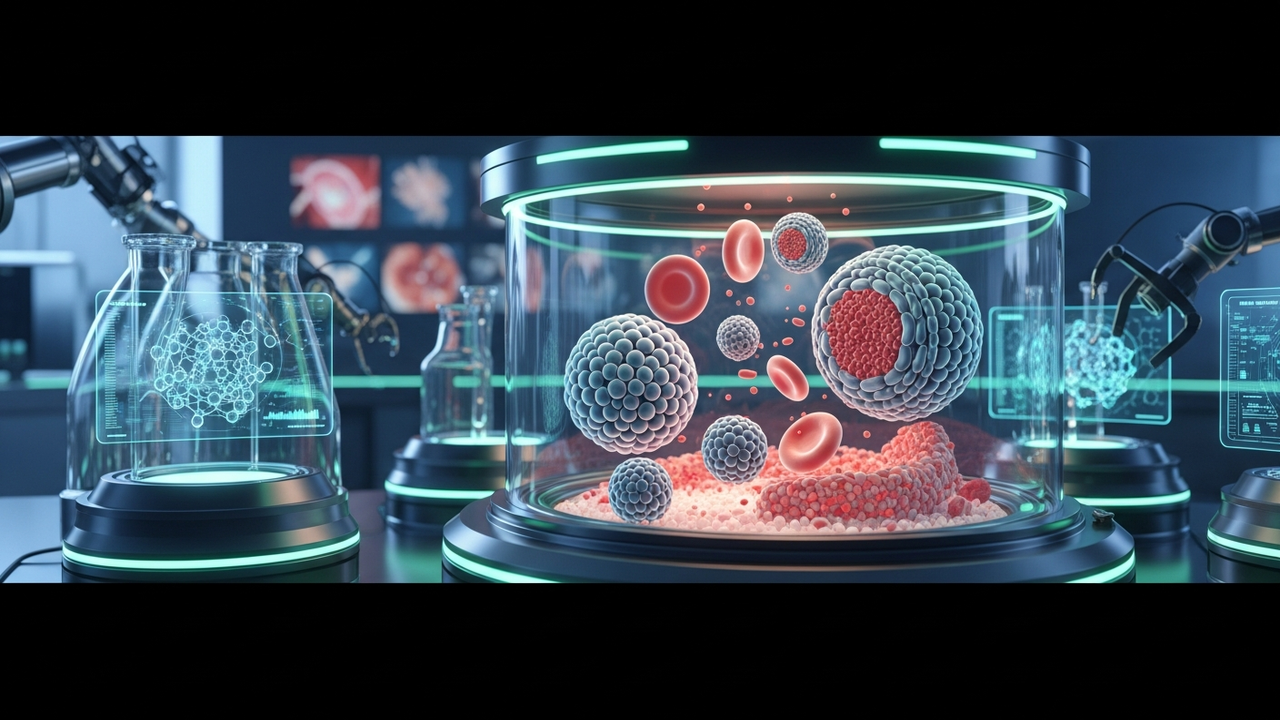
Platelet membrane-coated nanoparticles (PM-NPs) are advanced bioinspired carriers created by cloaking synthetic nanoparticles with natural platelet cell membranes. This coating confers various biological functionalities of platelets to the nanoparticles, dramatically enhancing their performance as targeted drug delivery systems. The core principles and functions of PM-NPs include:
- Immune Evasion and Prolonged Circulation: The presence of CD47 protein on the platelet membrane acts as a “Don’t Eat Me” signal, enabling PM-NPs to evade phagocytosis by macrophages and other immune cells. This significantly extends their circulation half-life compared to uncoated or conventionally coated nanoparticles.
- Disease Homing Properties: Platelet membranes are rich in specific surface proteins such as GPIb and P-selectin, which mediate adhesion to damaged endothelium, inflammatory sites, tumor microenvironments, and thrombus sites. This equips PM-NPs with an intrinsic “homing” ability, allowing them to selectively accumulate at diseased tissues.
- Applications in Oncology: Many cancers are characterized by leaky vasculature (the Enhanced Permeation and Retention, or EPR effect) and associated inflammatory responses. PM-NPs can leverage adhesion to damaged tumor endothelium and the EPR effect to efficiently deliver chemotherapeutics or immunotherapeutics to tumor tissues.
- Applications in Thrombosis Treatment: As platelets play a central role in thrombus formation, PM-NPs can directly deliver antithrombotic agents to the site of a clot, potentially enhancing therapeutic efficacy and reducing systemic side effects.
- Applications in Infectious Diseases: By exploiting their adhesion properties to specific pathogens or infected sites, PM-NPs can also be adapted for targeted delivery of antibiotics or antiviral agents.
The fabrication of PM-NPs typically involves preparing a nanoparticle core (often loaded with a drug), isolating platelets, extracting their membranes, and then fusing these membranes onto the nanoparticle surface. Stringent quality control is essential, including characterization of membrane uniformity, surface protein expression, particle size, stability, and in vitro/in vivo functional assays.
Technical Significance & Outlook
The development of platelet membrane-coated nanoparticles holds immense technical significance for transforming drug delivery systems and personalized medicine. By combining immune evasion with superior homing capabilities, PM-NPs offer the potential for more effective and targeted therapies for various challenging diseases, including cancer, cardiovascular diseases, inflammatory conditions, and infections. Unlike conventional nanoparticles that often rely on passive targeting, PM-NPs provide a more active and biologically relevant targeting mechanism. The outlook for PM-NPs involves further rigorous evaluation of their in vivo safety profile, the development of scalable and reproducible manufacturing processes, and expanding their application to a wider range of drugs and disease indications. Their potential in gene therapy and diagnostic imaging is also being explored. For clinical translation, standardization of quality control metrics and streamlined regulatory approval processes will be crucial. This technology represents a cutting-edge area of nanomedicine research with the potential to significantly improve disease-specific therapeutic outcomes and enhance patient care.
Source: https://pubs.aip.org/aip/apb/article/10/2/021505/3392577/Platelet-membrane-coated-nanoparticles







Comments