Background
The display technology landscape is in a constant state of evolution, driven by consumer demand for immersive and visually superior viewing experiences. Traditional Liquid Crystal Displays (LCDs) and early LED displays have faced inherent limitations in terms of color reproduction, brightness, and contrast ratios. Against this backdrop, Quantum Dot (QD) technology has emerged as a disruptive innovation, promising to dramatically elevate the performance of next-generation displays and redefine visual standards across various electronic devices.
Key Findings / Results
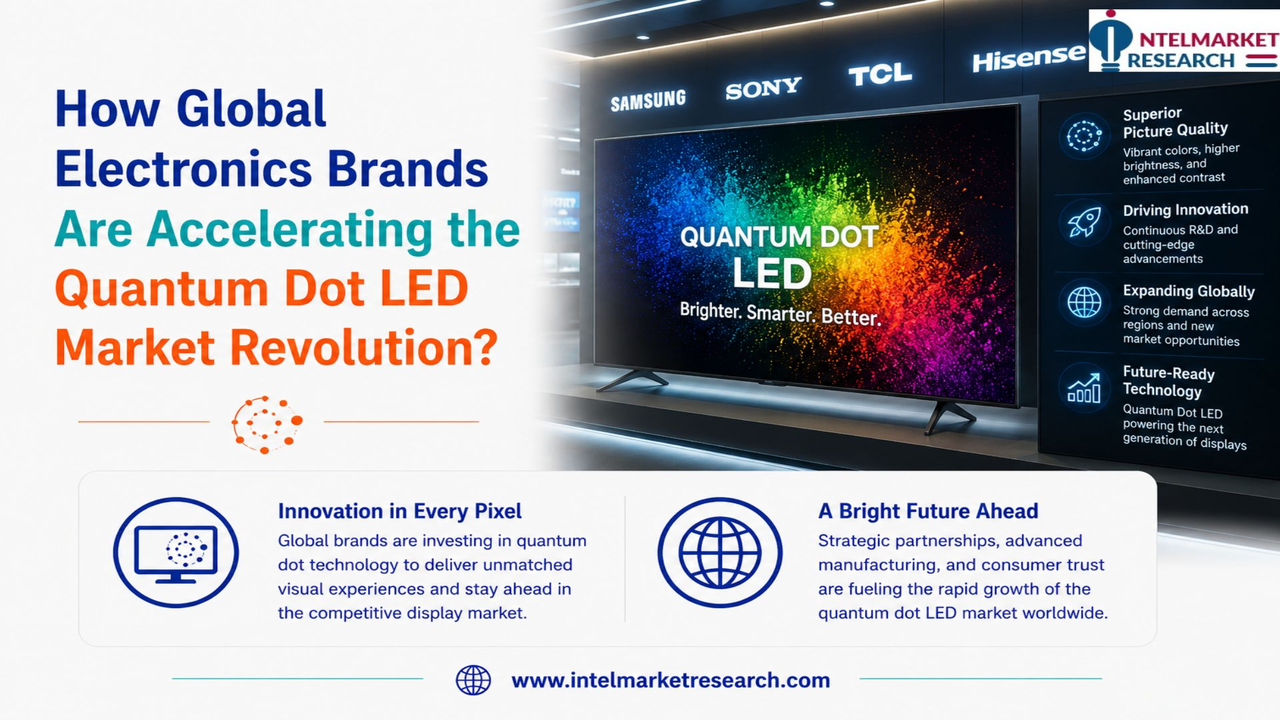
Global electronics brands are rapidly adopting Quantum Dot LED (QD-LED) technology as a primary driver for revolutionizing the display market. Quantum dots are nanoscale semiconductor crystals that, when exposed to light, re-emit light at a very narrow spectral width, with the emission wavelength precisely tunable by their size. This unique property enables QD-LEDs to deliver superior performance in several key areas:
- Exceptional Color Purity: QDs can produce highly pure red, green, and blue light, leading to an expansive color gamut (often exceeding 90% of Rec.2020) and remarkable color accuracy, resulting in more vibrant and lifelike images.
- High Brightness and Contrast: The QD layer efficiently converts light from the backlight, boosting the overall brightness of the display and enhancing contrast ratios between deep blacks and brilliant whites.
- Energy Efficiency: Due to their high light conversion efficiency, QDs require less power to achieve the same brightness levels, significantly reducing the energy consumption of displays.
- Cadmium-Free QDs: Driven by increasing environmental regulations and sustainability concerns, many manufacturers are actively developing and adopting cadmium-free quantum dot materials, such as indium phosphide (InP)-based QDs, to ensure safer and greener products.
Leading electronics brands, including Samsung, LG, and Sony, have already integrated QD technology into their premium TV offerings (e.g., QLED TVs), leveraging its performance advantages to differentiate their products. Beyond consumer televisions, the technology’s application is accelerating in critical sectors such as automotive displays (for enhanced clarity and visibility), medical imaging (for improved diagnostic accuracy through color fidelity), and energy-efficient consumer electronics.
Technical Significance & Outlook
The proliferation of Quantum Dot LED technology is technically significant not only for delivering high-quality viewing experiences to consumers but also for its profound impact across diverse industrial sectors. In the automotive industry, it enables higher-resolution and more legible infotainment systems and heads-up displays. In medical imaging, improved color fidelity and contrast can lead to more accurate diagnostics. Furthermore, the enhanced energy efficiency contributes to global sustainability goals. The outlook for QD-LED technology is promising, with ongoing research focusing on several key areas: further reducing manufacturing costs, improving the long-term durability and stability of QD materials, and optimizing the performance of cadmium-free alternatives. While facing competition from alternative technologies like MicroLEDs and OLEDs, QD-LEDs continue to play a crucial role as a hybrid solution that leverages existing LCD infrastructure to deliver superior picture quality. Research and development efforts are also extending QD applications beyond displays, into areas such as solar cells, sensors, and solid-state lighting. Quantum dot technology is poised to continue driving innovations that enrich our digital lives and contribute to a more sustainable future.






Comments