Key Findings
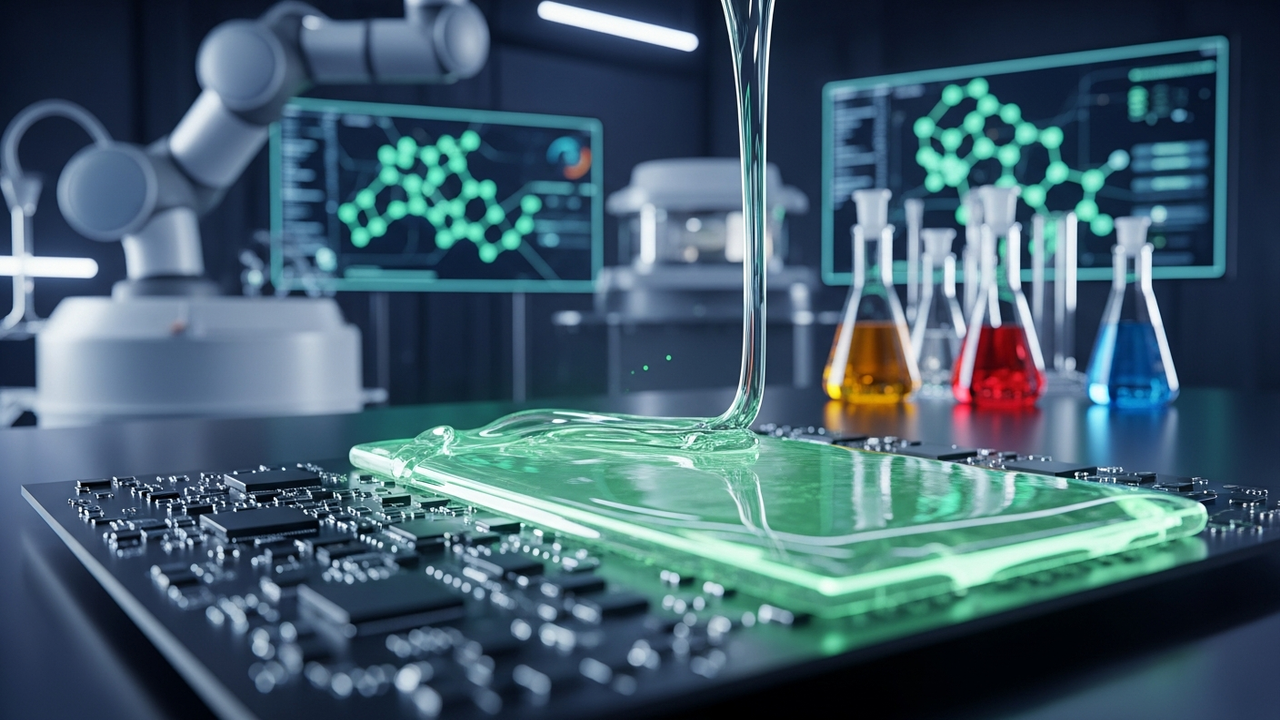
Photocurable polymer coatings, synthesized from renewable feedstocks, have been successfully developed and characterized for their ability to self-heal and exhibit vitrimer-like characteristics. Crucially, these systems demonstrate the reconstitution of thermoset molecular sites via dynamic covalent bonding, presenting a high potential for creating repairable coatings.
Technical Details
The research focused on utilizing various renewable structural precursors, such as those derived from plant oils and sugars, to formulate the polymer coatings. Diverse photopolymerization strategies were employed, including radical, cationic, and thiol-ene photocuring, allowing for tailored material properties. A significant aspect of this work is the demonstration of dynamic covalent bonds within the polymer network. These bonds allow for the reversible formation and reformation of crosslinks upon external stimuli (e.g., heat or light), enabling the material to autonomously repair damage. This mechanism provides a distinct advantage over conventional thermosets, which are typically difficult to repair or recycle once cured. The vitrimer-like behavior observed in these systems further underscores their reprocessability and extended lifecycle potential.
Background & Context
The increasing global demand for sustainable materials necessitates a shift away from fossil fuel-derived polymers. Bio-based alternatives offer a promising solution, reducing environmental impact and reliance on finite resources. In the electronics sector, there is a pressing need for high-performance, long-lasting coating materials that can withstand harsh operating conditions and contribute to a circular economy. Current electronic components often face premature failure due to microscopic damage, leading to significant e-waste. Self-healing and reprocessable polymers represent a critical advancement in addressing these challenges, offering avenues for extended product lifespans, reduced waste generation, and improved resource efficiency.
Strategic Significance & Outlook
These bio-based photocurable polymer coatings hold immense promise for a wide range of applications, including next-generation sustainable electronics, advanced surface protection, and multi-functional smart systems. Potential applications span from self-healing circuit boards and protective layers for flexible displays to durable coatings for medical devices and automotive components. The ability to repair and reprocess these materials significantly enhances their lifecycle sustainability, aligning with circular economy principles. Future work will likely focus on optimizing the scalability of these synthesis methods, assessing long-term performance under various environmental conditions, and integrating these coatings into complex industrial manufacturing processes. This development marks a significant step towards creating more resilient and eco-friendly polymer solutions.
Source: https://pubs.acs.org/doi/10.1021/acsmaterialsau.6c00087
Get our weekly technology intelligence — free
Receive an infographic that lets you judge at a glance whether each field’s analysis report is worth reading.
Subscribe Free — Weekly Tech Intelligence
By subscribing, you’ll receive Troy-Technical’s weekly technology intelligence newsletter.
- Your email and selected fields are used only to deliver the newsletter.
- We never share your information with third parties.
- You can unsubscribe anytime via the link in each email.
See our Privacy Policy for details.
Takes about a minute · Unsubscribe anytime




Comments