


Key Findings
The PLAP composite electrolyte achieved a room-temperature ionic conductivity of 3.8 × 10⁻⁴ S/cm and sustained lithium plating and stripping in symmetric cells for 750 hours at a current density of 10 mA/cm². When integrated into lithium iron phosphate full cells, the material retained most of its capacity after 2,000 cycles. These results significantly outperform unmodified hydroxyl-terminated analogues, which previously achieved only about 10⁻⁶ S/cm and showed severe polarization within 100 hours.
Technical Details
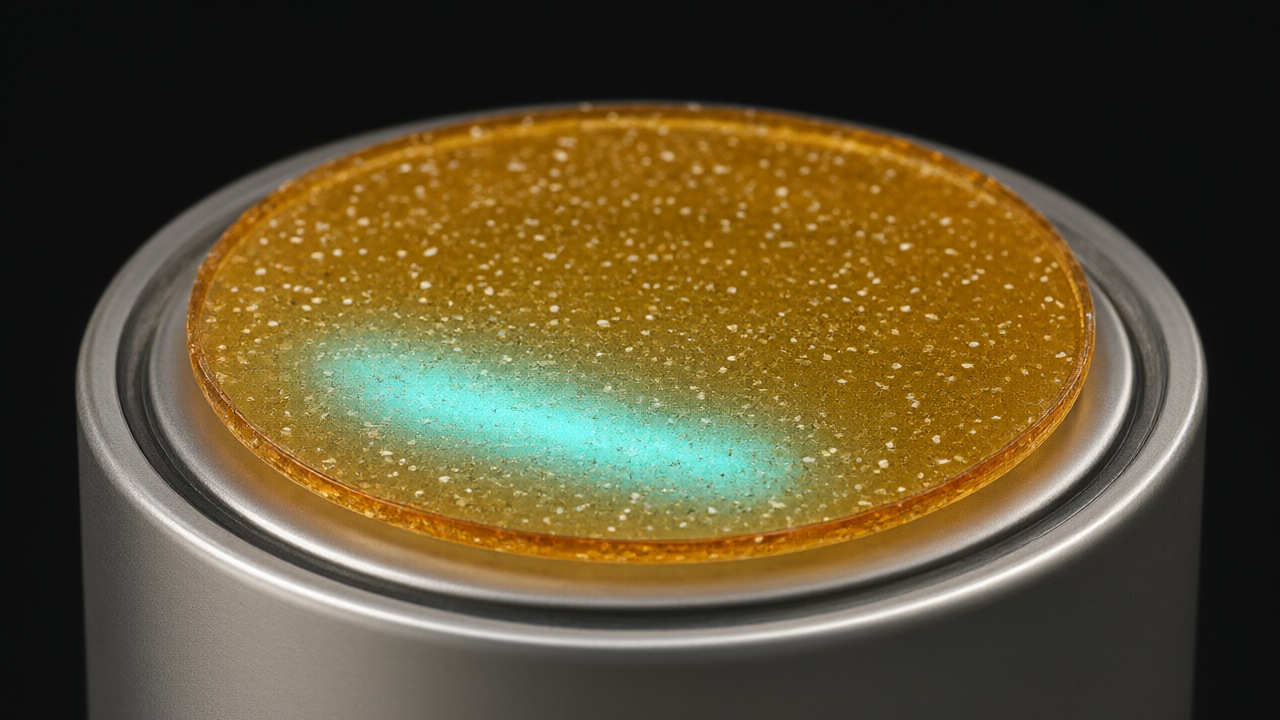
The PLAP material consists of a prelithiated polyurethane polymer paired with ceramic LAGP fillers. To prevent “interfacial ion trapping”—where electronegative terminal hydroxyl groups bind lithium ions via Coulombic Li-O interactions—the team treated the sucrose-based polyether soft segment with lithium hydroxide to create lithium alkoxide groups. The final composite, containing 40 wt% LAGP (particle sizes 1 to 500 nm), was cured at 120 °C for 48 hours.
- Mechanical Properties: The 40 wt% LAGP membrane showed a tensile strength of 5.47 MPa and an elongation at break of 192.4%.
- Thermal Stability: The glass transition temperature is approximately −43 °C, with decomposition beginning near 260 °C (5% weight-loss criterion).
- Transport: Conductivity rose to 1.01 × 10⁻³ S/cm at 80 °C, with an apparent activation energy of about 15.9 kJ/mol.
Background & Context
Solid-state batteries aim to replace flammable liquid electrolytes with solid conductors to improve safety and energy density. However, inorganic ceramics like LAGP are brittle and suffer from grain-boundary resistance, while polymers like polyurethane typically exhibit poor room-temperature conductivity (below 10⁻⁵ S/cm). While blending the two is common, excessive ceramic filler often weakens the membrane mechanically, creating a trade-off between conductivity and strength.
Significance & Outlook
By utilizing chemical prelithiation rather than simply increasing filler content, the PLAP electrolyte balances high ionic conductivity with a mechanical strength threshold capable of suppressing lithium dendrite propagation. This approach addresses the critical bottleneck of interfacial charge-transfer resistance in polymer-ceramic composites.
Get our weekly technology intelligence — free
Receive an infographic that lets you judge at a glance whether each field’s analysis report is worth reading.
Subscribe Free — Weekly Tech Intelligence
By subscribing, you’ll receive Troy-Technical’s weekly technology intelligence newsletter.
- Your email and selected fields are used only to deliver the newsletter.
- We never share your information with third parties.
- You can unsubscribe anytime via the link in each email.
See our Privacy Policy for details.
Takes about a minute · Unsubscribe anytime