


Key Findings
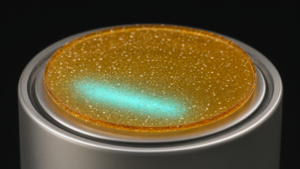
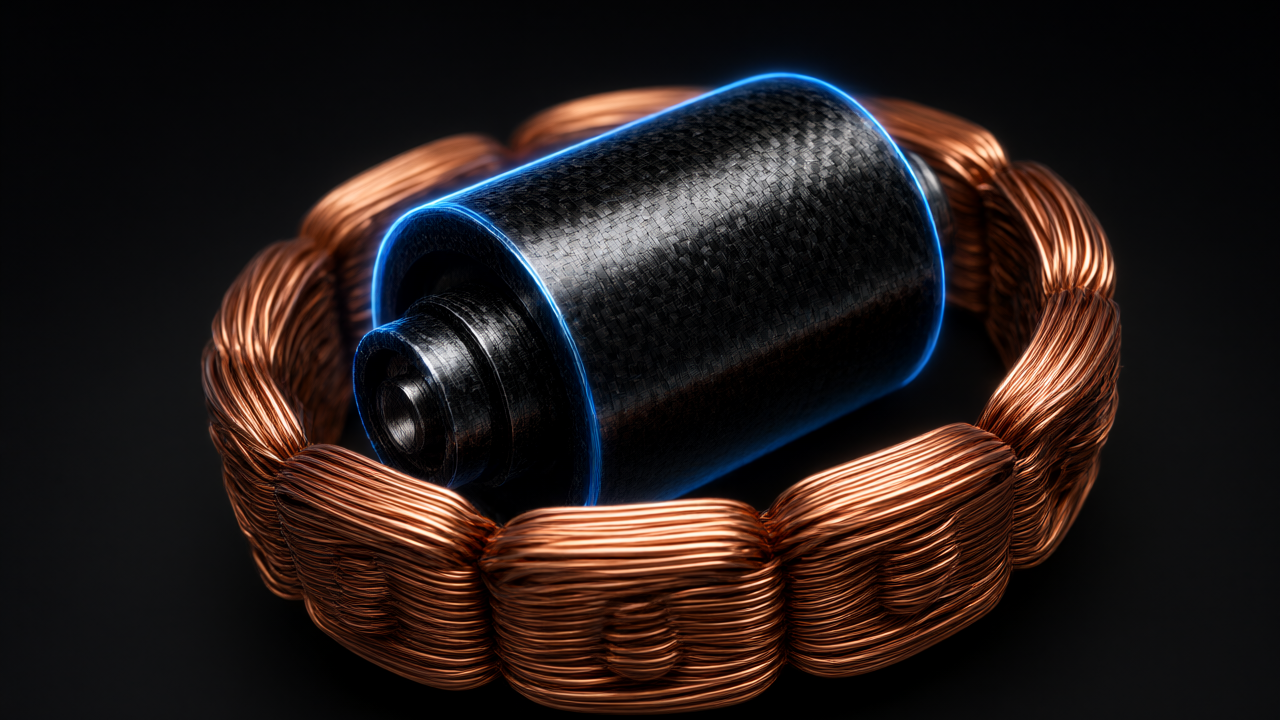
The primary achievement of this research is the creation of a composite rotor that cuts weight and rotational inertia by 38.12% relative to conventional electrical steel cores. The optimized material reached a density of 4857.95 kg/m³. Electromagnetic simulations indicate that the composite rotor can achieve a peak efficiency of 94.0%, which closely aligns with the 95.4% efficiency of the electrical steel benchmark.
Technical Details
The composite was fabricated using a hand lay-up method with dry particle deposition to uniformly integrate soft magnetic Fe₃Si microparticles into a carbon fiber-reinforced polymer matrix. This structure provides several technical advantages:
- Eddy Current Suppression: The insulating polymer matrix creates a discontinuous conductive network, breaking conductive pathways to reduce electrical conductivity and suppress core heating.
- Design Optimization: To compensate for the composite’s lower intrinsic magnetic permeability compared to electrical steel, researchers reduced the rotor magnetic pole arc angle from 145° to 130°.
Background and Context
Led by Anand Prakash Jaiswal and Minkook Kim, the study addresses the demand for lightweight, energy-efficient motors in industrial systems, aerospace, and electric vehicles. The research specifically targets the rotor core, using conventional electrical steel as the benchmark for comparison. The findings were published in Advanced Composites and Hybrid Materials.
Significance and Outlook
The combination of reduced density, lower rotational inertia, and suppressed eddy current losses positions this Fe₃Si-enhanced composite as a viable lightweight core material for next-generation electric machinery. However, the authors note that current performance figures are based on electromagnetic simulations rather than physical prototypes. Experimental validation and subsequent testing are required to translate these simulated gains into real-world motor performance.
Get our weekly technology intelligence — free
Receive an infographic that lets you judge at a glance whether each field’s analysis report is worth reading.
Subscribe Free — Weekly Tech Intelligence
By subscribing, you’ll receive Troy-Technical’s weekly technology intelligence newsletter.
- Your email and selected fields are used only to deliver the newsletter.
- We never share your information with third parties.
- You can unsubscribe anytime via the link in each email.
See our Privacy Policy for details.
Takes about a minute · Unsubscribe anytime